

Roof Arch Forming Machine – The Metal Arch Roll Forming Machine for Steel Buildings
Arched roofs are among the most efficient structures in metal building: an arch carries its own weight in pure compression, spans large distances without interior columns, sheds sand and rain cleanly, and gives the building a distinctive profile. From logistics warehouses to exhibition halls, sports facilities to aircraft hangars, the arched roof is a signature of the modern steel building — and every arched roof is built from arched panels, which is where the roof arch forming machine enters the production chain.
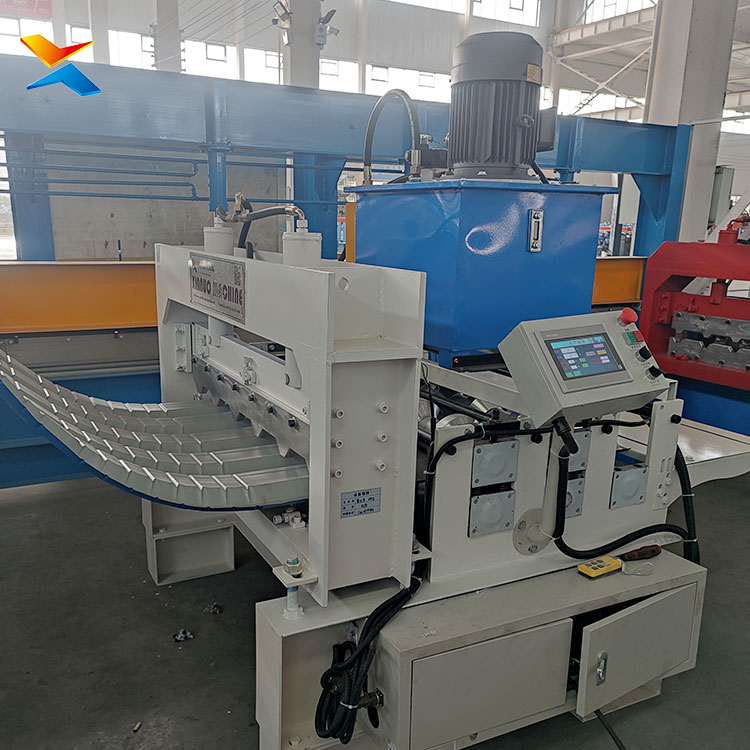
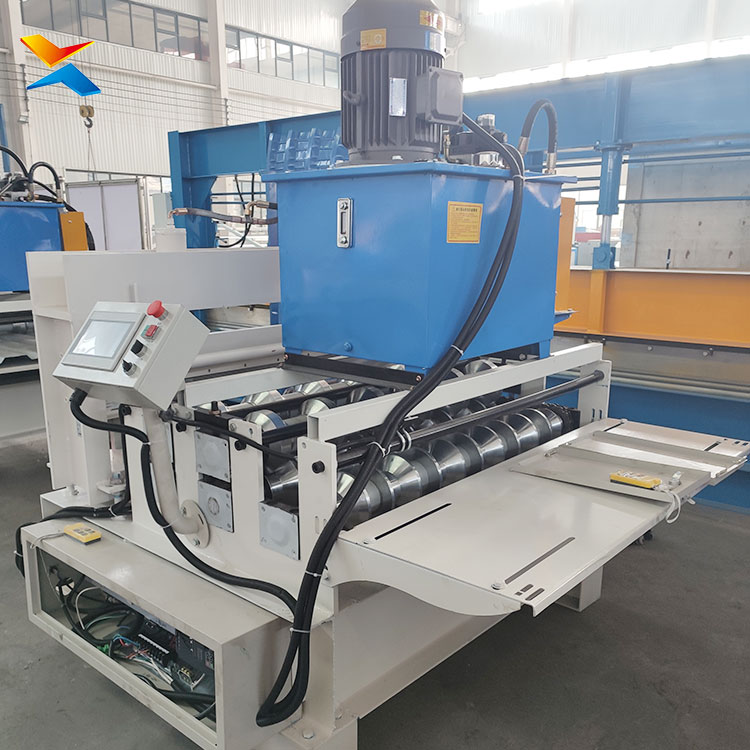
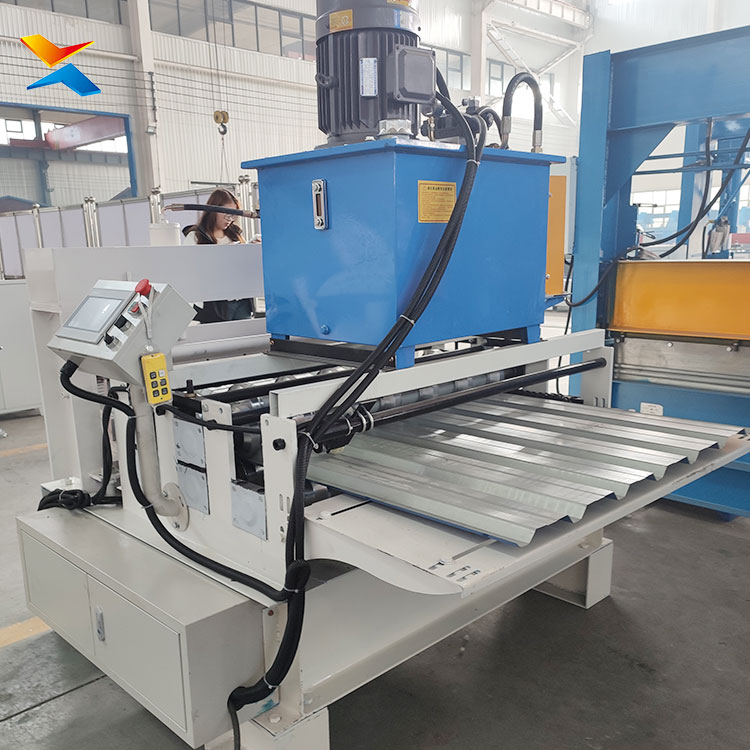
Hebei Xinnuo’s arch curving machines — the QG-series in-line curving machines and the DG/DB-series hydraulic arch-pressing machines — are the metal arch roll forming machines that produce curved metal roof panels for steel buildings. The QG-series machines combine panel forming and arch curving in one pass: coil in, curved trapezoidal panel out. The DG/DB-series machines curve pre-formed flat panels into arches with a wide, adjustable radius range. Together they cover the two production models of the arched roof industry — and both are built on the factory’s production-proven arch curving archive of 60 profiles (QG001–QG017 curving profiles, DG001–DG032 and DB033–DB043 arch-pressing profiles, with customer archives from 2011–2025).
How an Arched Roof Is Built — and Where the Machine Fits
The metal arched roof is built in two ways, and each has its production machine:
- The Framed Arch — arched panels laid over an arched steel frame (or curved purlins): the producer forms flat panels, curves them to the roof’s radius, and installs them over the frame. The DG/DB-series hydraulic arch-pressing machine is the curving station for this model: it takes pre-formed panels (from an existing roll former) and presses them through three hydraulic rollers into the target arc, with a wide adjustable radius (down to ~2 m and beyond, per the profile and material).
- The Self-Carrying Arch Panel System — long curved panels spanning between arch frames with minimal purlin support: the QG-series in-line curving machine produces curved panels directly from coil, combining forming and curving in one continuous pass at 8–15 m/min.
For Steel Buildings — the Middle East Context
The Middle East is an arched-roof market with its own logic: logistics warehouses and distribution centers need column-free spans for storage efficiency; exhibition halls and showrooms want the distinctive arch profile; sports facilities and hangars need the large clear spans that arches provide naturally; and the region’s climate — intense sun, dust, occasional heavy rain — favors the self-cleaning curves of an arch over flat-roof details. Xinnuo’s market data for the region (UAE, Saudi Arabia, Oman, Yemen, Bahrain) shows the 840/900-class profiles as the regional mainstream (1000 mm feed), with 1000-class profiles preferred in the UAE and Oman — and the machine line is configured to exactly these regional preferences.


♦ COMPANY PROFILE:
Hebei Xinnuo Roll Forming Machine Co., Ltd., not only produce different types of professional roll forming machines, but also develop intelligent automatic roll forming production lines, C&Z shape purline machines, highway guardrail roll forming machine lines, sandwich panel production lines, decking forming machines, light keel machines, shutter slat door forming machines, downpipe machines, gutter machines, etc.
Advantages of Roll Forming A Metal Part
There are several advantages of using roll forming for your projects:
- The roll forming process allows operations such as punching, notching, and welding to be performed in-line. Labor cost and time for secondary operations are reduced or eliminated, reducing part costs.
- Roll form tooling allows for a high degree of flexibility. A single set of roll form tools will make almost any length of the same cross-section. Multiple sets of tools for varying length parts are not required.
- It can provide better dimensional control than other competing metal forming processes.
- Repeatability is inherent in the process, allowing easier assembly of roll formed parts into your finished product, and minimizing problems due to “standard” tolerance build up.
- Roll forming is typically a higher speed process.
- Roll forming offers customers a superior surface finish. This makes roll forming an excellent option for decorative stainless steel parts or for parts requiring a finish such as anodizing or powder coating. Also, texture or pattern can be rolled into the surface during forming.
- Roll forming utilizes material more efficiently than other competing processes.
- Roll formed shapes can be developed with thinner walls than competing processes
Roll forming is a continuous process which converts sheet metal into an engineered shape using consecutive sets of mated rolls, each of which makes only incremental changes in the form. The sum of these small changes in form is a complex profile.
-
Heavy-Duty CNC Press Brake | Stable Operation |...
-
Metal Arch Roll Forming Machine Curved Roof She...
-
Roof Arch Roll Forming Machine Automatic Metal ...
-
Automatic Electric Bending Machine | High Preci...
-
Hydraulic Press Brake Machine CNC Sheet Metal P...
-
CNC Press Brake Hydraulic Sheet Metal Bending M...