
Double Layer Glazed Tile Roll Forming Machine for Sale | Glazed Roof Tile Making Machine Supplier UAE
Product Description
A buying guide to the double layer glazed tile roll forming machine offered for sale to UAE fabricators — what you are actually buying, what moves the price, and how to tell a serious supplier from a brochure.
If you are pricing a double layer glazed tile machine in the UAE, the first thing worth knowing is that this is not one product with one price. It is a family, and the quotation you receive will differ according to choices you make — choices that are all settled before the order and that are very expensive to change afterwards. This page is written for the buyer rather than the specifier: it explains what the machine does, which decisions drive the price, what a proper quotation must contain in writing, and what the UAE market specifically asks of a machine that will be installed far from the factory that built it.
What you are buying, in plain terms.
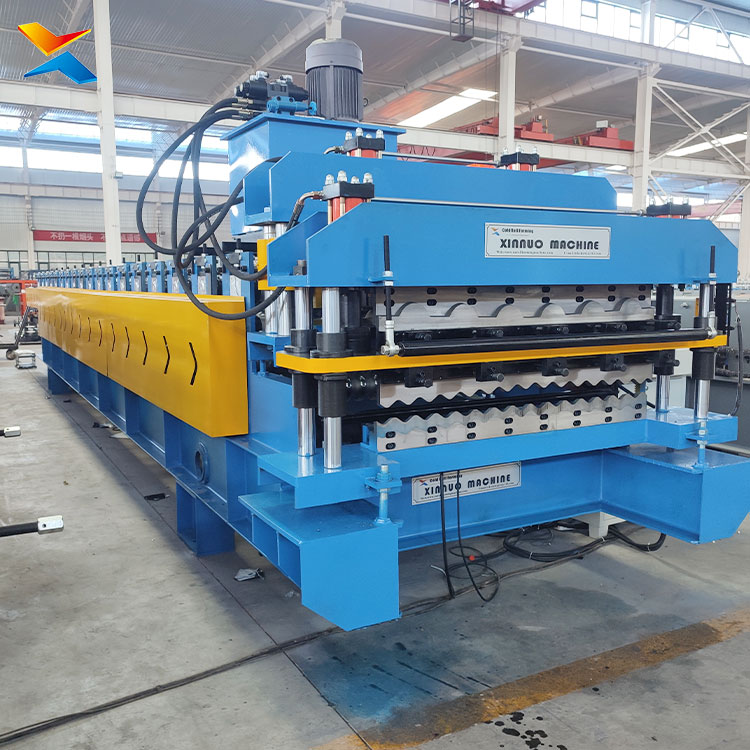
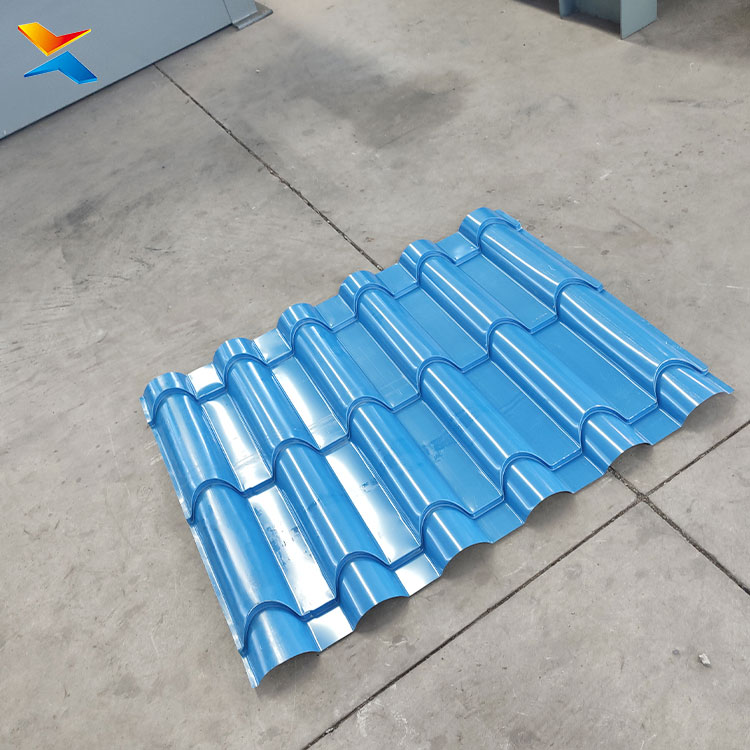
A double layer machine stacks two independent sets of forming rollers one above the other inside a single frame, driven from one shared transmission. By repositioning the guide plates and baffles that lead the coil into the machine, the operator sends the strip into the upper or the lower roller set and produces either panel from the same body. In this family, one of those two layers is a glazed tile layer: an arc-forming layer with an additional pitch-stamping device, which stamps an imprint across the peaks so the finished panel reads as rows of antique roof tile rather than as a smooth continuous wave.
Two facts about this should shape your purchase before anything else does. The first is that a double layer machine produces one panel at a time. It carries two tooling sets, not two production lines, and no supplier can give you simultaneous output from a single drive. If your order book genuinely runs both panels in parallel at volume, you want two single-layer machines, and a supplier who will not tell you that is optimising for their order value rather than your production. The second is that glazed tile means coated steel formed to imitate antique tile — a metal panel. It is not ceramic, clay or resin, and no machine in this category produces those materials. A seller who is vague about that is either unclear on their own product or willing to let you stay unclear.
The question a serious supplier asks you first.
Because the phrase “double layer glazed tile machine” covers two quite different builds, a competent supplier settles which one you mean before quoting. If the glazed tile is one of the two layers — the other being a conventional trapezoidal sheet or a curved wave sheet — you are buying the standard product, and there are two established pairings: trapezoidal plus glazed tile, which is the most commonly ordered combination in this range, and arc plus glazed tile, which is the most demanding of the common combinations because one layer needs curved forming tooling while the other needs pitch-stamped tooling. If both layers are glazed tile, you are buying a special build: the hardest combination in the family, requiring two independent pitch systems, with at least one layer servo-driven so that pitch error does not accumulate along the panel, and with the practical transmission arrangement of a shared main forming drive plus an independent servo for one layer’s pitch control. That build must be engineered rather than ordered off a shelf.
A supplier who quotes without asking which of those you want has not understood your requirement. Treat it as your first filter.
What actually moves the price you are quoted.
Buyers naturally compare a single figure, but the figure is the sum of specific decisions, and knowing them is how you compare two quotations honestly instead of comparing two numbers.
The pairing itself is the largest factor. A trapezoidal plus glazed tile pairing — both layers sharing the same basic forming method, one of them carrying the pitch device — is the most economical arrangement in the family. An arc plus glazed tile pairing costs more, because the curved layer and the pitch-stamped layer are two different processes sharing one frame, and more engineering has to be built into the machine to make them work together. The two-glazed-layer build is a further step again, and should be quoted as the custom engineering job it is.
The number of forming stages matters, and it follows from the panels rather than from a price list: a glazed tile layer carries the load of forming the arc and stamping the pitch, and the second layer’s requirements have to be met too. The frame and chain specification then follow from the heavier layer, and a double layer frame steps up a grade from the single-layer frame the same profile would need, because it carries both roller stacks and absorbs the vibration of both. Any quotation that carries single-layer frame or chain specifications on a double layer body is quoting you a lighter machine than the one you need.
The drive arrangement on the glazed layer is a real price step. A standard arrangement and a servo-driven arrangement are not the same machine, and on a double layer body the difference matters more than on a single-layer machine: the servo system positions the pitch with far greater precision than a clutch-based arrangement, and where a glazed pitch drifts, the fault is visible in the finished panel on the roof. If you are selling into villa, mosque, heritage or hospitality projects where the tile line is part of the design, this is not the place to save.
Whether the pitch tooling already exists is a further factor, and it is the one buyers most often fail to ask about. A pitch is a dedicated die. If the pitch you need is already in the factory’s archive, your machine builds on established tooling. If it is not, the die has to be designed and made for you, which changes both the cost and the schedule. Ask the question in writing and require a written answer — “your pitch is in our archive” and “we will design a new die for your pitch” are different purchases.
And the last factor is scope. Two quotations for the same machine can differ substantially in what comes with it: documentation, the electrical configuration matched to your site, commissioning with a factory technician present, operator training, the line layout drawing, spare parts and after-sales contact. A lower figure that omits commissioning support is not a lower price for the same thing; it is a price for less. Compare quotations line by line, never as a single number.
How to tell a serious supplier from a brochure.
You cannot inspect a machine before you buy it, and in this category you are buying from a distance. What you can inspect is the supplier’s behaviour during the enquiry. The following are all free to check and all revealing.
A serious supplier will ask which pairing you mean and will explain the difference. A serious supplier will tell you, without being prompted, that the machine produces one profile at a time. A serious supplier will state in writing whether your pitch exists in their tooling archive or requires a new die. A serious supplier will confirm the working material thickness for each layer separately, rather than giving you one figure for the machine. A serious supplier will describe a commissioning plan with a technician on site, a training plan for the operators who will perform the changeover, and an illustrated manual and video guidance for the settings adjusted most often — because on a double layer machine with a glazed tile layer, commissioning is longer than on a single-layer machine and the changeover procedure is a skill your people have to learn. A serious supplier will send the line layout drawing with the quotation rather than after the deposit. And a serious supplier will not object when you ask for the answers in the written quotation, because that is how a factory that knows its product works.
Conversely, a quotation that arrives without any question about which pairing you want, that gives a single thickness figure for a two-layer machine, or that presents a two-glazed-layer build as an off-the-shelf item, should be treated as a warning rather than a bargain.
What the written quotation should contain.
Before you compare figures, insist that each quotation states the pairing and which layer carries the glazed profile; the frame class and the chain specification, and that they are sized for the heavier layer; the working thickness range for each layer separately; whether the glazed pitch matches tooling already in the supplier’s archive or requires a new die; whether the glazed layer is standard-driven or servo-driven; the electrical configuration matched to your site’s voltage and frequency; the commissioning and training scope, stated as days on site and what is included; the documentation supplied; the spare parts listed and which wear parts are recommended to be held locally; the line layout drawing; and the delivery and payment terms in writing. A supplier who can produce all of that is a supplier you can hold to it later — which, at this distance, is the whole point.
What the UAE buyer specifically has to get right.
Buying for a UAE workshop puts a few questions ahead of the others, and they are worth settling before the specification is frozen rather than after.
Start with the coil you can actually buy. The feed width of the machine has to match a strip you can source locally, at a width your supplier actually stocks, in a coating system suited to where the building will stand. Along the Gulf coast, humidity and salt-laden air place the emphasis on the coil and its coating, because on an exposed roof the coating decides how long the appearance survives — the machine forms the geometry and nothing more. A lifespan question answered with a machine figure is an answer to a different question, and a quotation that never asks what coil you intend to run has skipped the part of the specification that determines your product’s reputation.
Then the electrical configuration. Confirm your site’s voltage and frequency with your electrician and have the machine’s electrical arrangement matched to it, in writing, rather than assuming that the machine will arrive ready for your supply. This is a standard engineering question, and a supplier who cannot answer it cleanly is not a supplier who will be easy to reach when something needs adjusting.
Then the building. A double layer machine is taller and heavier than the single-layer machine for either of its panels, and a glazed tile layer adds tooling weight. Check clear height for the machine and for lifting the upper roller set during commissioning and maintenance, check the floor, and check the access route and the position of roof trusses, crane rails and door openings — before the machine is shipped, not while it waits on the quayside.
Then, and this is where distance matters most, plan for support and parts. You are buying from a factory on another continent, and the machine will be commissioned in a hot, humid workshop where its own surface protection, lubrication routine and alignment checks matter more, not less, than they would in a temperate one. Ask what the commissioning support actually consists of, who trains your operators on the changeover, what documentation and video guidance you receive, which wear parts you should hold locally, and how quickly parts can reach you. Ask it during the enquiry, while your signature is still worth something to the supplier.
What the “for sale” price depends on that no one can give you over the counter.
Because a double layer glazed tile machine is configured rather than stocked, no honest supplier can quote a meaningful figure from a photograph, and any figure offered instantly is either for a different machine or has an assumption buried inside it. What you need in exchange for your requirement is a configured proposal: which pairing, which frame and chain, which drive arrangement on the glazed layer, whether the pitch die exists, what the commissioning and training scope is, and what the layout looks like in your building. That is what this range is supplied as, and the answer is specific to your two panels.
How this range is supplied to the UAE market.
These machines are built and supplied directly by the factory, not resold through intermediaries, and they are built from a tooling archive rather than designed from scratch for each order. That archive is what makes a specific question answerable: when you send a glazed tile profile together with your second profile, the factory identifies the closest production-proven blueprint, runs the two checks that decide whether the pair belongs on one body — the balance of forming stages between the two layers, and the feed width of each — and tells you in writing whether your pair matches an existing build or needs new tooling, and whether the glazed pitch you need already exists or has to be designed as a new die. The frame class, the chain specification and the commissioning plan then follow from the heavier of the two layers. The factory’s glazed tile archive records glazed tile machines supplied to markets with antique-architecture demand, the Middle East among them, so the product has been built for this market rather than merely aimed at it — and it is worth asking any supplier, including this one, to state its own delivery record in writing rather than leaving you to take a regional claim on trust.
To receive a configured quotation, send these items. Which reading of the phrase you mean — glazed tile as one of the two layers, or glazed tile on both layers. The glazed tile profile you want to sell: peak count, pitch, whether you are aiming for a fine-pitch, mainstream or broad-pitch appearance, and the effective width you need. Your second profile, with a cross-section drawing or a sample if you have one. The working thickness for each of the two layers. The coil widths you can actually buy in the UAE. The material and coating system you intend to run. Whether you want the glazed layer on a standard drive or on a servo system with more precise pitch positioning. Your workshop’s clear height, floor area and lifting arrangements. The panel lengths and the daily output you need. Your site’s voltage and frequency. Whether you also need to slit coil to width. And whether the machine will run one profile at a time or whether you genuinely need both profiles in parallel at volume — because that last answer decides between a double layer machine and two single-layer machines. With those answers the factory returns a configured proposal: the pairing, the frame and drive specification, whether the profiles and the pitch match proven tooling or need new tooling, a commissioning, training and documentation scope, a spare parts list, the delivery and payment terms, and the line layout drawing for your building.
In one sentence, the honest summary. A double layer glazed tile machine is worth buying when you need antique tile roofing plus a second structural panel from one footprint — and the way to buy it well is to make the supplier answer, in writing, which pairing you are buying, whether your pitch exists, how thick each layer runs, and who commissions the machine in your workshop.
♦ COMPANY PROFILE:
Hebei Xinnuo Roll Forming Machine Co., Ltd., not only produce different types of professional roll forming machines, but also develop intelligent automatic roll forming production lines, C&Z shape purline machines, highway guardrail roll forming machine lines, sandwich panel production lines, decking forming machines, light keel machines, shutter slat door forming machines, downpipe machines, gutter machines, etc.
Advantages of Roll Forming A Metal Part
There are several advantages of using roll forming for your projects:
- The roll forming process allows operations such as punching, notching, and welding to be performed in-line. Labor cost and time for secondary operations are reduced or eliminated, reducing part costs.
- Roll form tooling allows for a high degree of flexibility. A single set of roll form tools will make almost any length of the same cross-section. Multiple sets of tools for varying length parts are not required.
- It can provide better dimensional control than other competing metal forming processes.
- Repeatability is inherent in the process, allowing easier assembly of roll formed parts into your finished product, and minimizing problems due to “standard” tolerance build up.
- Roll forming is typically a higher speed process.
- Roll forming offers customers a superior surface finish. This makes roll forming an excellent option for decorative stainless steel parts or for parts requiring a finish such as anodizing or powder coating. Also, texture or pattern can be rolled into the surface during forming.
- Roll forming utilizes material more efficiently than other competing processes.
- Roll formed shapes can be developed with thinner walls than competing processes
Roll forming is a continuous process which converts sheet metal into an engineered shape using consecutive sets of mated rolls, each of which makes only incremental changes in the form. The sum of these small changes in form is a complex profile.