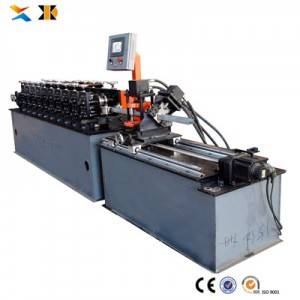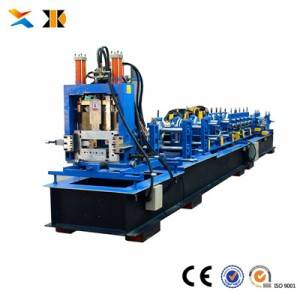


Hebei Xinnuo PV Bracket Roll Forming Machine – Detailed Specifications & Advantages
Product Overview
Key Features & Competitive Advantages
1. Customizable Forming Dies for Versatile Profiles
- Interchangeable Die Sets: Quick-change die design allows switching between C/U/Z-channel, solar panel mounting rails, and bracket angles in 30 minutes, eliminating long downtime for retooling.
- Profile Customization: Our R&D team designs dies based on client’s CAD drawings to produce non-standard PV brackets for special solar projects (e.g., rooftop, ground-mounted, tracking systems).
2. High-Precision & Consistent Output
- Servo Control System: Synchronized servo motor drives cutting and feeding, ensuring ±0.5mm length accuracy and uniform profile dimensions—critical for seamless assembly of solar support systems.
- Hardened Steel Rollers: Rollers are heat-treated to HRC 58–62, resistant to wear and deformation, maintaining precision even after 10,000+ hours of continuous operation.
3. Fully Automated & Labor-Saving
- One-Click Operation: The touchscreen interface stores up to 50 sets of production parameters; operators can start/stop production, adjust speed, and monitor status without professional training.
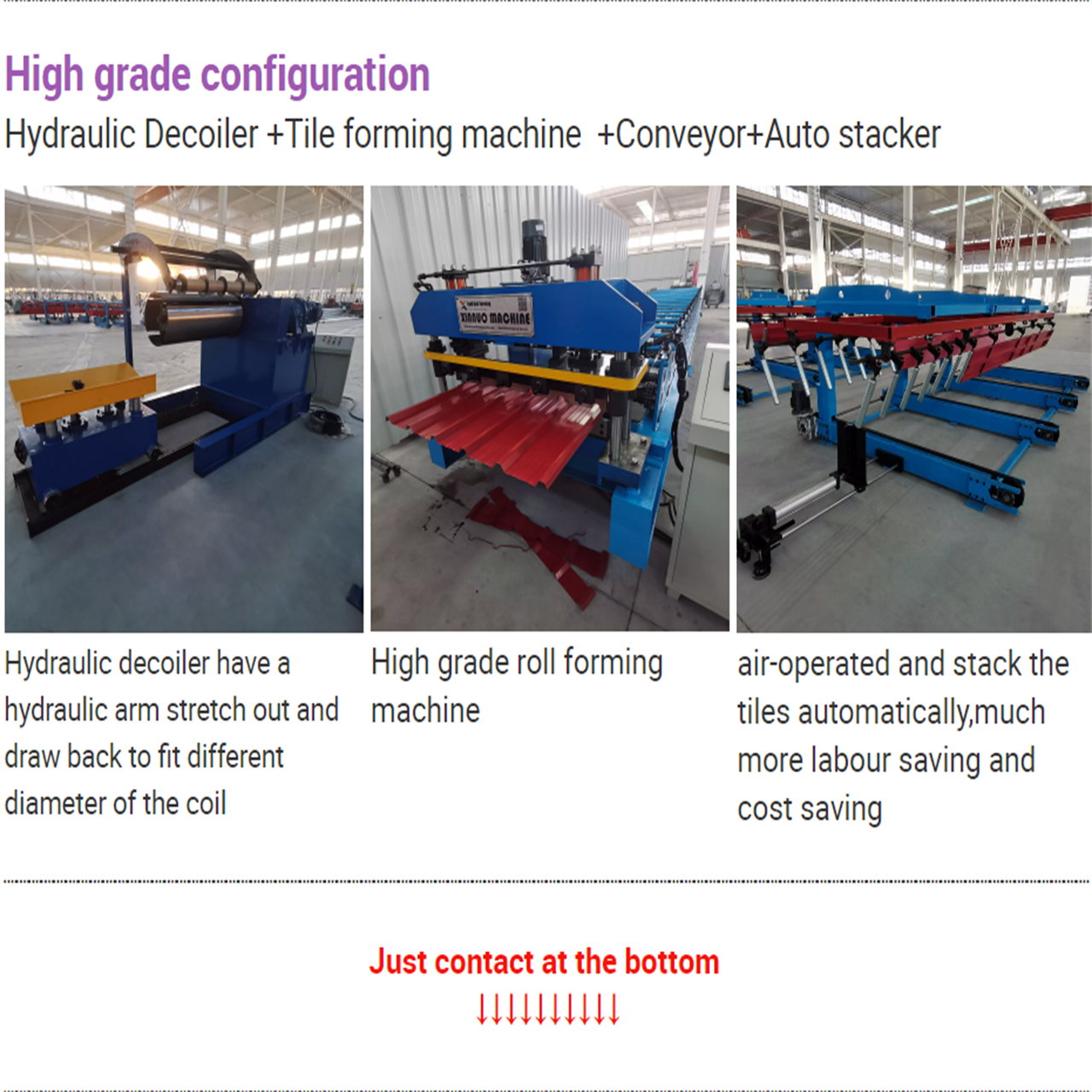
- Auto-Feeding & Stacking: Optional auto-feeding and stacking devices reduce manual handling, cutting labor costs by 60% and increasing production efficiency by 40%.
4. Durable & Low-Maintenance Design
- Heavy-Duty Frame: Welded steel frame with stress relief treatment, preventing vibration and deformation during high-speed operation.
- Minimal Maintenance: Sealed bearing design and centralized lubrication system reduce maintenance frequency; only routine cleaning and lubrication are required monthly.
5. Energy-Saving & Eco-Friendly
- Variable Frequency Drive (VFD): Adjusts motor speed according to production demand, saving 20–30% of electricity compared to conventional machines.
- Low Noise & Dust: Enclosed gearbox and dust-proof covers minimize noise (<75dB) and dust emission, complying with CE environmental standards.
Application Scenarios
- Solar Energy Projects: Produce brackets for rooftop solar systems, ground-mounted solar farms, and solar tracking systems.
- Metal Fabrication Factories: Mass-produce standard or custom PV brackets for wholesale to solar equipment distributors.
- Construction Companies: On-site or off-site production of solar support structures for residential and commercial solar installations.
Quality Assurance & After-Sales Service
- CE & ISO Certified: All machines pass strict quality tests before delivery, complying with international safety and quality standards.
- 12-Month Warranty: Free replacement of spare parts (excluding wear parts) for 12 months; lifetime technical support.
- On-Site Installation & Training: Our engineers provide on-site installation, commissioning, and operator training to ensure smooth production startup.
Why Choose Hebei Xinnuo?

Technical Specifications
| Parameter | Specification |
|---|---|
| Suitable material | Galvanized steel, Q235 / Q345 cold-rolled strip, A36 steel; stainless steel (Ss316) accepted at half thickness |
| Material thickness | 1.5 – 2.5 mm |
| Feeding width | 40 – 300 mm |
| Forming stations | 25 main stations + 12 auxiliary adjusting stations |
| Main frame | 450 mm H-beam, 25 mm mid plate, cast-steel tie plates |
| Main shaft | o80 mm, 45# steel, precision turned and ground |
| Rollers | Bearing steel, CNC machined, heat treated HRC 58-62, polished and chrome plated |
| Bearings | 6212, 140 x 140 mm bearing housings |
| Main drive | 2 x 15 kW vertical (K-series) gear motors, 2-inch chain drive |
| Forming speed | 18 m/min including punching and cutting |
| Punching | Servo tracking punching station, 7.5 kW servo, quick-change dies |
| Cutting | Servo tracking flying saw / hydraulic cut, Cr12MoV blade HRC 60-62, burr-free |
| Cutting tolerance | +/-1 mm (short-piece stop-cut system available down to 200 mm) |
| Profile accuracy | Straightness <= +/-1.5 mm / 1500 mm; angle error <= +/-1.5 mm / 1000 mm |
| Decoiler | Single-arm manual, inner diameter 420-580 mm, load capacity 3,500 kg |
| Leveler | 7-roll (3 over 4), o80 mm 45# steel shafts, 2 rows of o100 mm guide rollers |
| Control system | Delta PLC + Xinje touch screen + Omron encoder, English / Chinese interface |
| Power supply | 380 V / 50 Hz / 3-phase (220 V, 415 V, 440 V versions available) |
| Warranty | 12 months, lifetime technical support |
The table above shows a standard heavy-duty PV bracket line. Every machine is re-engineered around the customer’s own profile drawing and the target market standard (AS/NZS, ASTM, DIN, EN).
Application Scenarios
- Rooftop solar installations – C / U / Z channel rails and mounting brackets for residential and commercial rooftops.
- Ground-mounted solar farms – heavy-gauge purlins and posts for utility-scale photovoltaic plants.
- Solar tracking systems – dimensionally stable brackets that keep tracker torque tubes aligned.
- Agrivoltaics and solar carports – long profiles with repeatable hole patterns for fast site assembly.
- Solar equipment distributors – mass production of standard or customized PV brackets for wholesale supply.
Frequently Asked Questions
Can this machine run several bracket profiles?
Yes. The dies are interchangeable and the punching station uses quick-change moulds, so one line can produce different rail, angle and channel profiles. A die change normally takes about 30 minutes.
What thickness can be formed?
1.5 – 2.5 mm for carbon and galvanized steel. Stainless steel (Ss316) is formed at roughly half the thickness of the equivalent carbon steel part. Material thickness, width and driven shaft size are matched to your profile so the machine is not over- or under-built.
How accurate is the finished bracket?
Cut length is held within +/-1 mm, straightness within +/-1.5 mm per 1,500 mm and angular accuracy within +/-1.5 mm per 1,000 mm. Punched holes are positioned by the servo tracking unit, so hole pitch stays consistent from the first piece to the last.
Is the machine suitable for a hot, humid or coastal site?
Yes. Rollers are chrome plated, shafts are ground and the electrical cabinet is supplied with cooling and dust protection. For coastal projects we specify additional anti-corrosion treatment on rollers and frames.
What is included in the delivery and after-sales service?
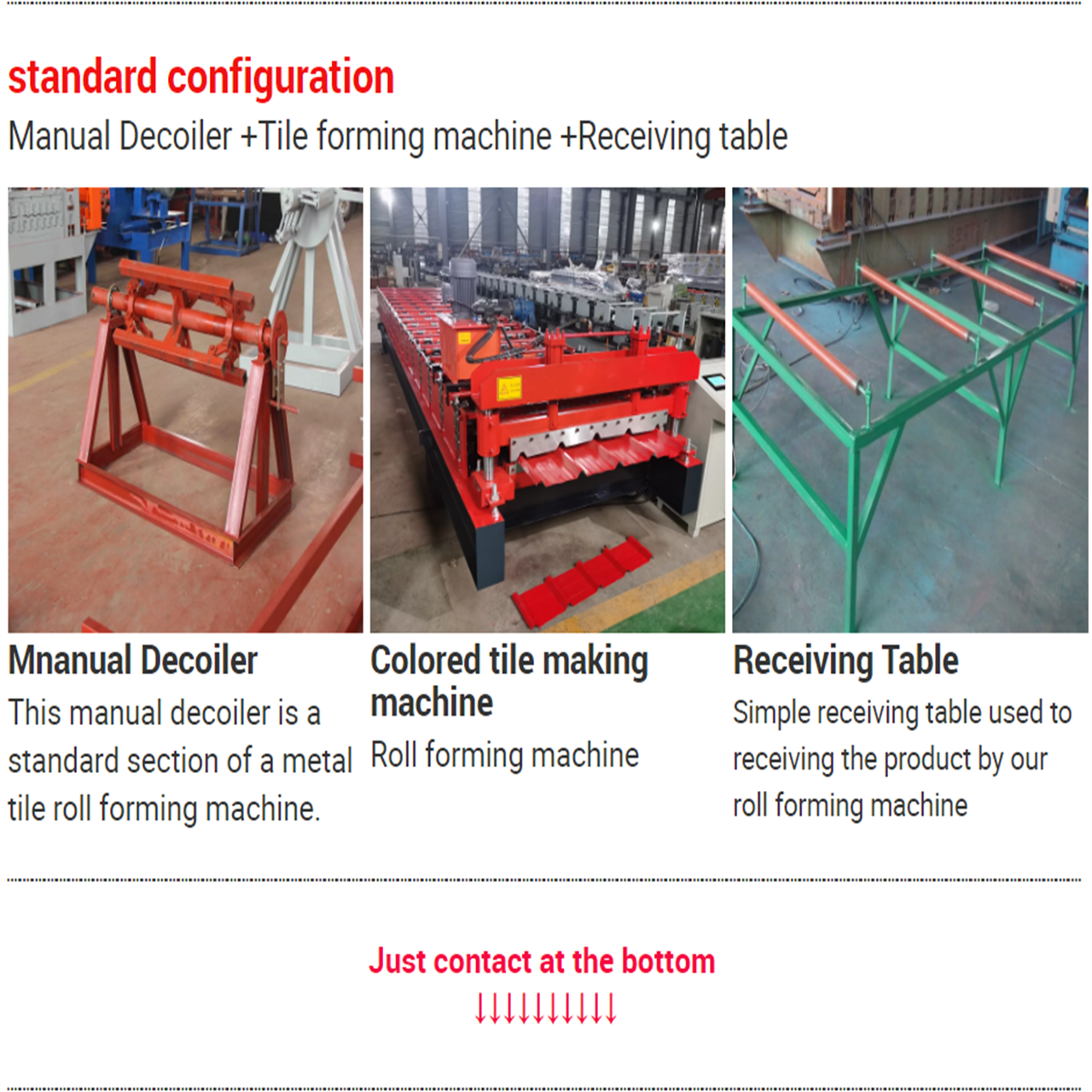
Each line ships with the decoiler, leveler, forming host, punching and cutting units, output table, PLC cabinet and a standard spare-parts kit, plus English manuals and circuit diagrams. Engineers are available for overseas installation, commissioning and operator training, backed by a 12-month warranty and lifetime technical support.


♦ COMPANY PROFILE:
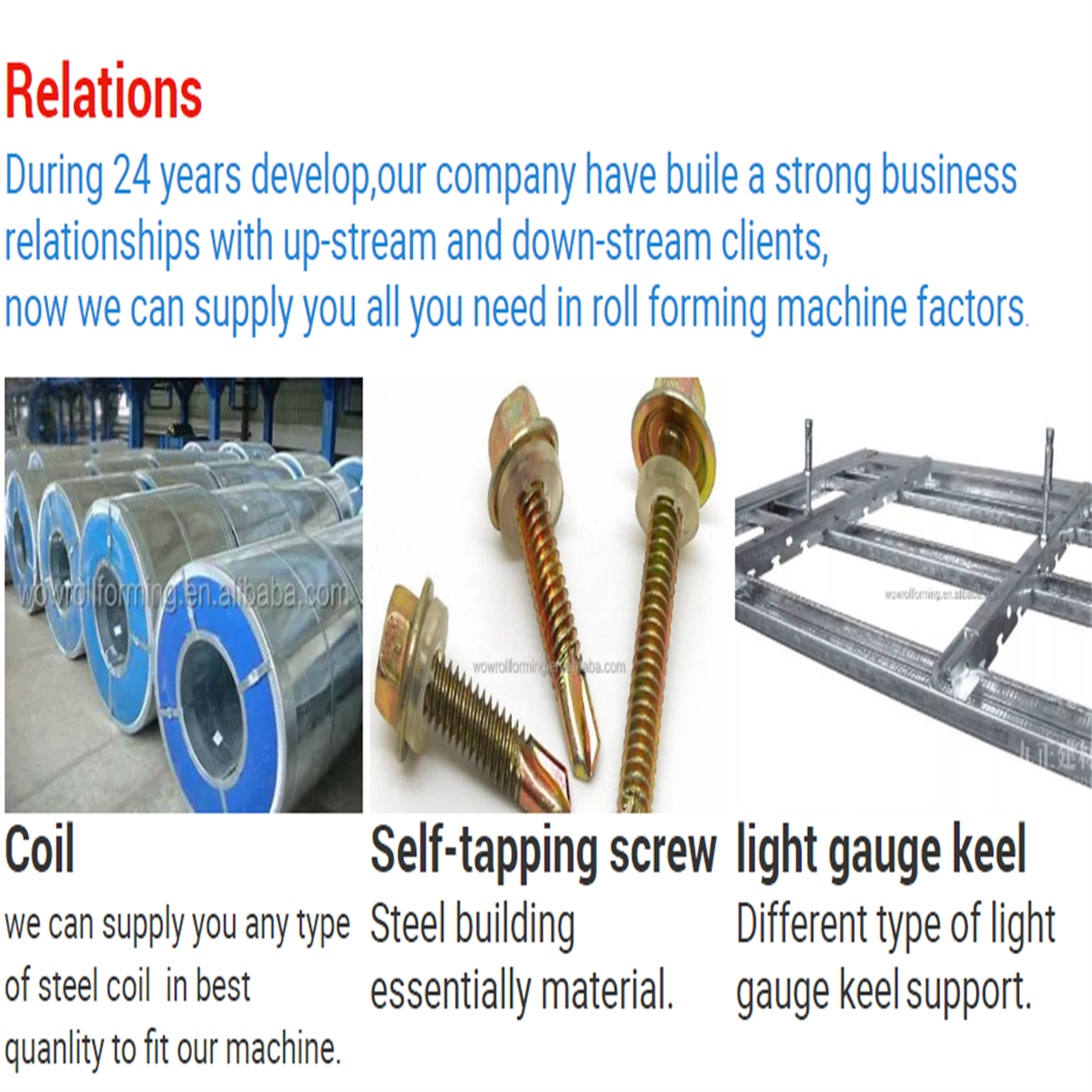
Hebei Xinnuo Roll Forming Machine Co., Ltd., not only produce different types of professional roll forming machines, but also develop intelligent automatic roll forming production lines, C&Z shape purline machines, highway guardrail roll forming machine lines, sandwich panel production lines, decking forming machines, light keel machines, shutter slat door forming machines, downpipe machines, gutter machines, etc.
Advantages of Roll Forming A Metal Part
There are several advantages of using roll forming for your projects:
- The roll forming process allows operations such as punching, notching, and welding to be performed in-line. Labor cost and time for secondary operations are reduced or eliminated, reducing part costs.
- Roll form tooling allows for a high degree of flexibility. A single set of roll form tools will make almost any length of the same cross-section. Multiple sets of tools for varying length parts are not required.
- It can provide better dimensional control than other competing metal forming processes.
- Repeatability is inherent in the process, allowing easier assembly of roll formed parts into your finished product, and minimizing problems due to “standard” tolerance build up.
- Roll forming is typically a higher speed process.
- Roll forming offers customers a superior surface finish. This makes roll forming an excellent option for decorative stainless steel parts or for parts requiring a finish such as anodizing or powder coating. Also, texture or pattern can be rolled into the surface during forming.
- Roll forming utilizes material more efficiently than other competing processes.
- Roll formed shapes can be developed with thinner walls than competing processes
Roll forming is a continuous process which converts sheet metal into an engineered shape using consecutive sets of mated rolls, each of which makes only incremental changes in the form. The sum of these small changes in form is a complex profile.
-
High Performance Stud Truss High Speed Light St...
-
New designed Xinnuo cable tray cold roll formin...
-
Super Purchasing for China Ibr Roofing Sheet Ir...
-
China Factory for Steel Round Downspouts Roll F...
-
Factory Price For Ridge Tile Manufacturing Roof...
-
Special Design for High Speed Full Automactic C...