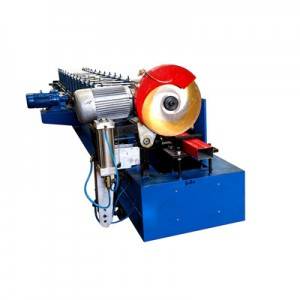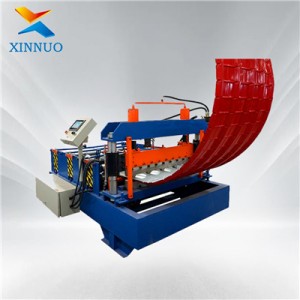

The Gutter Machine — the Last Ten Percent of a Steel Building
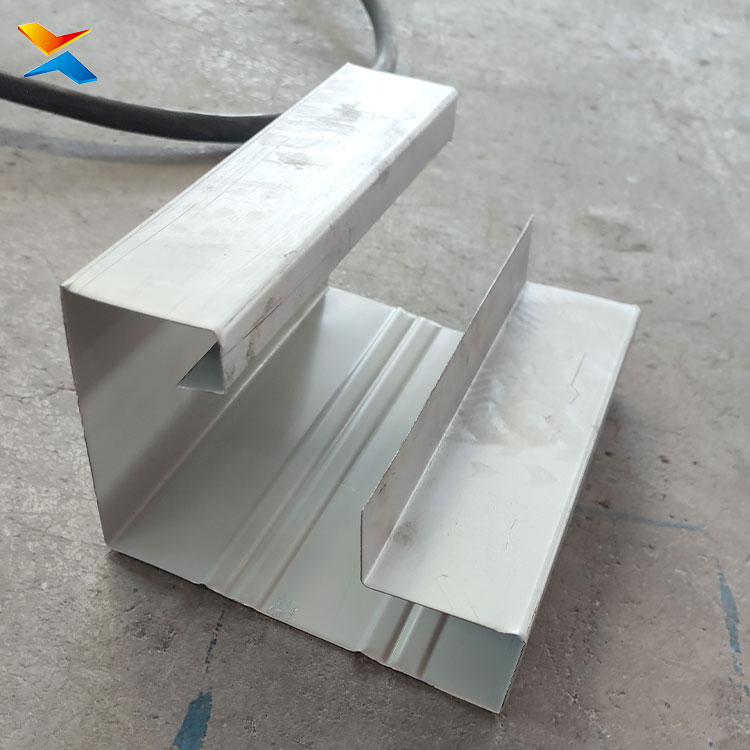
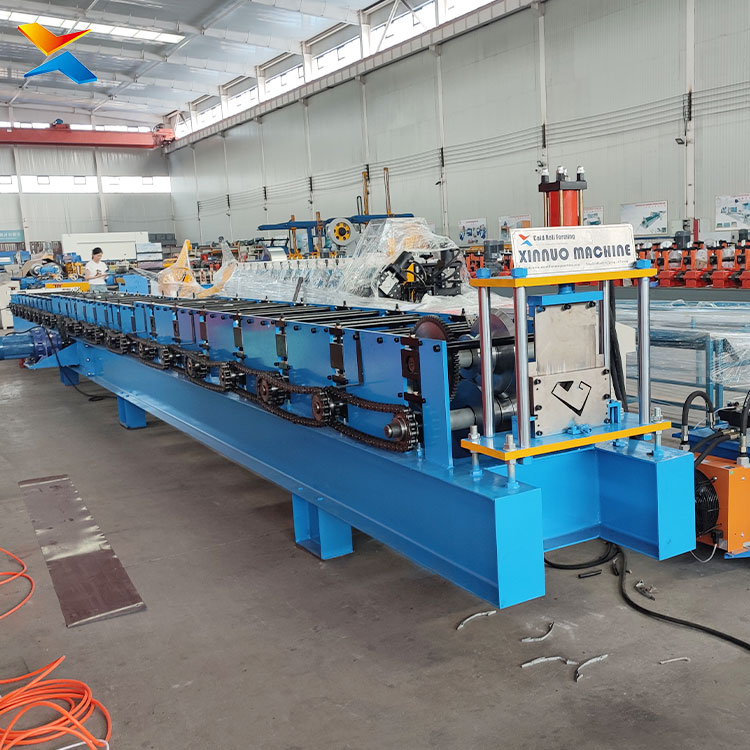
A steel building’s roof is finished long before its rainwater system is. The cladding sheds water onto the edge; the gutter collects it; the downspout takes it to the ground. In a steel structure project, that final chain — gutter and downspout — is what the building’s owner notices every time it rains, and it is the component most often bought in as an imported set. A gutter roll forming machine puts that chain in the fabricator’s own workshop: flat metal coil in, formed gutter and downspout out, in the same lengths and quantities the project needs.
This page covers the roof rainwater family — gutter, flashing channel, half-round channel, and downspout/downpipe. The archive’s wire-channel machines (线槽/走线槽) are a related but distinct application and are labelled separately in Section 3, so buyers are not sent the wrong machine for the wrong job.
The one clarification that matters (最重要的澄清)
This is a metal roll forming machine. It forms gutters and downspouts from metal coil — steel, galvanised steel, or aluminium — by cold roll forming. It is not a PVC or plastic extrusion line, and it does not produce moulded plastic gutter. If your project’s specification is PVC gutter (a common choice on residential work), this machine is not the answer; if your specification is a metal rainwater system for a steel building, it is. Presenting the product honestly on this point is the difference between a satisfied buyer and a returns dispute.
Why a Steel Building Needs the Metal Version (为什么钢建筑需要金属版本)
A metal gutter on a steel building is not only a cost choice, it is a system choice:
- Coil to finished part, in-house — the fabricator cuts the gutter to the building’s actual lengths rather than ordering standard lengths and joining.
- Colour matching — the gutter is formed from the same colour-coated coil family as the roof cladding, so the rainwater system matches the building instead of being bought in a different finish.
- Load and fixing compatibility — a metal gutter and its brackets are designed to fix to the steel structure the building actually uses.
- Export economics — gutter and downspout are bulky, low-density products; shipping them is mostly shipping air. Forming them on site from coil changes that calculation.
♦ COMPANY PROFILE:
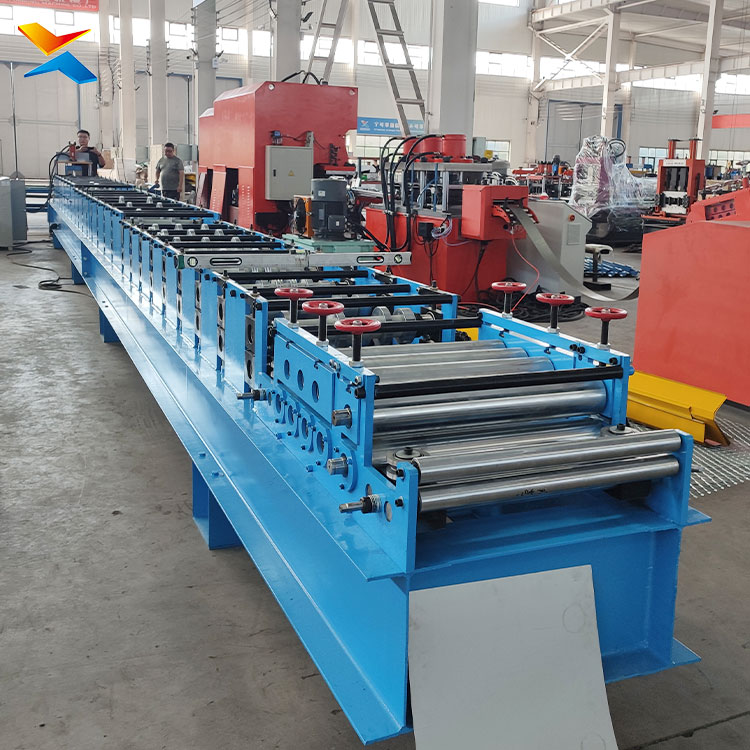
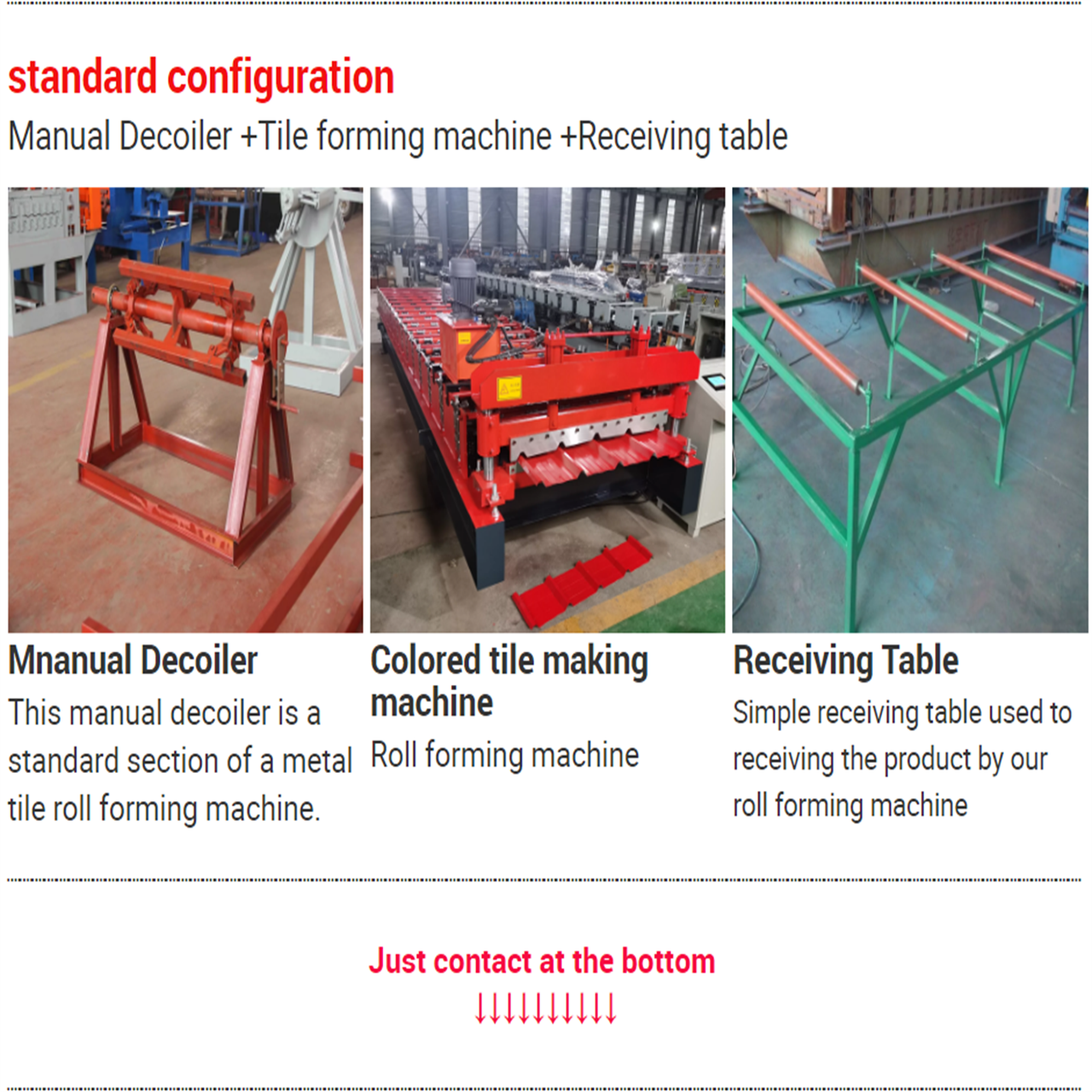
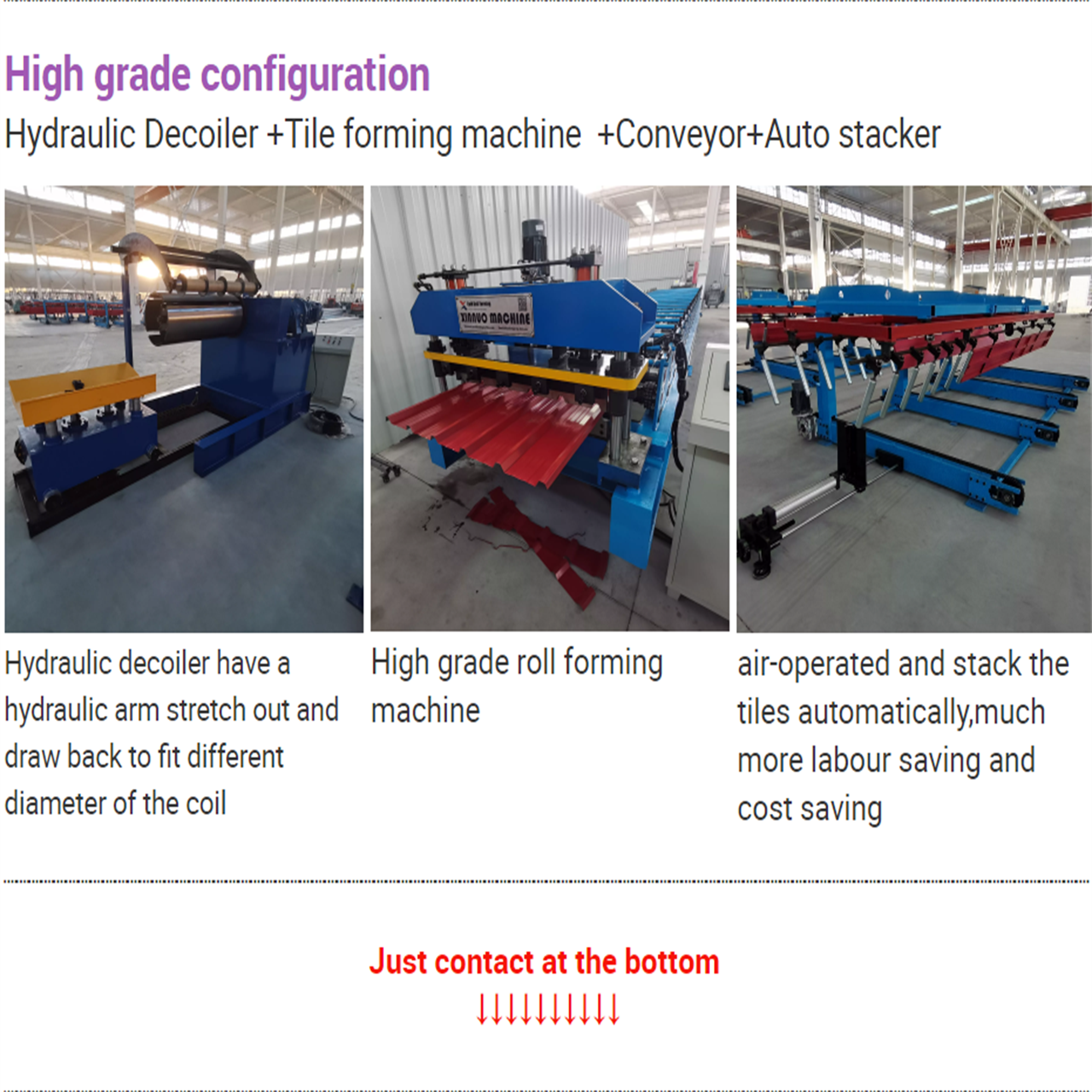
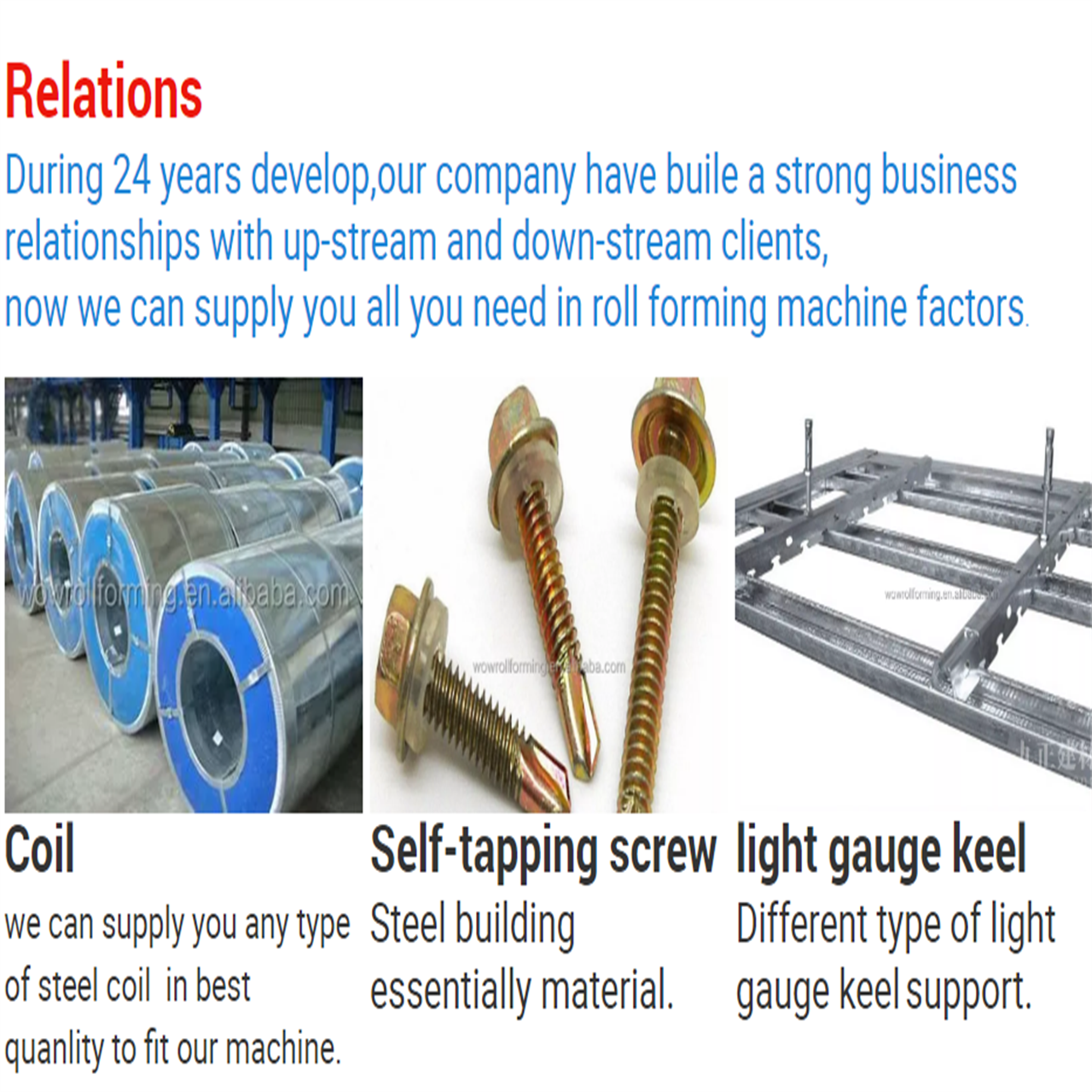
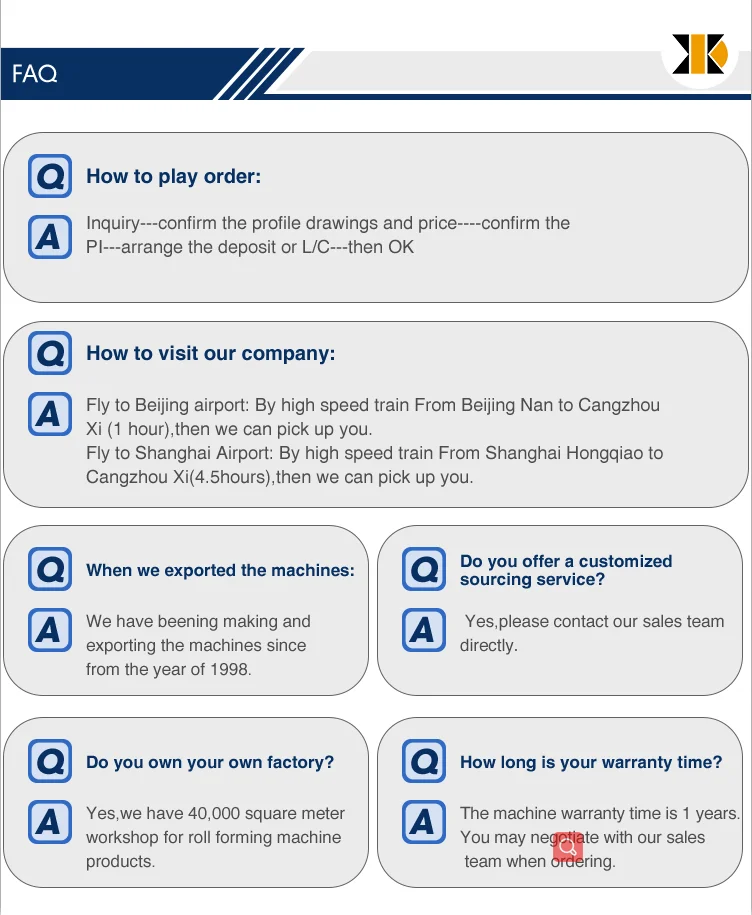
Hebei Xinnuo Roll Forming Machine Co., Ltd., not only produce different types of professional roll forming machines, but also develop intelligent automatic roll forming production lines, C&Z shape purline machines, highway guardrail roll forming machine lines, sandwich panel production lines, decking forming machines, light keel machines, shutter slat door forming machines, downpipe machines, gutter machines, etc.
Advantages of Roll Forming A Metal Part
There are several advantages of using roll forming for your projects:
- The roll forming process allows operations such as punching, notching, and welding to be performed in-line. Labor cost and time for secondary operations are reduced or eliminated, reducing part costs.
- Roll form tooling allows for a high degree of flexibility. A single set of roll form tools will make almost any length of the same cross-section. Multiple sets of tools for varying length parts are not required.
- It can provide better dimensional control than other competing metal forming processes.
- Repeatability is inherent in the process, allowing easier assembly of roll formed parts into your finished product, and minimizing problems due to “standard” tolerance build up.
- Roll forming is typically a higher speed process.
- Roll forming offers customers a superior surface finish. This makes roll forming an excellent option for decorative stainless steel parts or for parts requiring a finish such as anodizing or powder coating. Also, texture or pattern can be rolled into the surface during forming.
- Roll forming utilizes material more efficiently than other competing processes.
- Roll formed shapes can be developed with thinner walls than competing processes
Roll forming is a continuous process which converts sheet metal into an engineered shape using consecutive sets of mated rolls, each of which makes only incremental changes in the form. The sum of these small changes in form is a complex profile.