


CNC Press Brake Hydraulic Sheet Metal Bending Machine for Steel Plate Folding – Factory Direct Price from Hebei Xinnuo
The CNC press brake is the backbone machine of any metal fabrication workshop. It is the equipment that takes flat steel plate, aluminum sheet, stainless steel, and galvanized sheet and turns them into precision-bent components: brackets, channels, enclosures, panels, doors, cable trays, gutters, flashing, structural fittings, and thousands of other formed parts that every construction project, factory, and workshop in the Middle East depends on every day.
Hebei Xinnuo Roll Forming Machinery Co., Ltd. — a 14-year Alibaba Gold Supplier and a National High-Tech Enterprise located in Botou, Hebei Province, China’s leading manufacturing hub for metal forming equipment — supplies CNC hydraulic press brakes directly from the factory floor to fabrication shops across the GCC and MENA region. No trading company in the middle, no inflated price tag, no “black box” quoting. You talk to the manufacturer that builds the machine, and you pay the factory-direct price for a machine engineered, welded, assembled, tested, and exported under one roof.
This page explains, in plain engineering language, what a CNC press brake is, what its forming capacity framework covers, how the CNC control system upgrades your bending precision and labor efficiency, and why the Middle East’s fast-growing steel structure, cold storage, container house, solar mounting, and metal fabrication sectors make the CNC press brake one of the highest-ROI machines a workshop can install — especially when purchased factory-direct from a manufacturer with CE and ISO 9001 certification.
What is a CNC Press Brake?
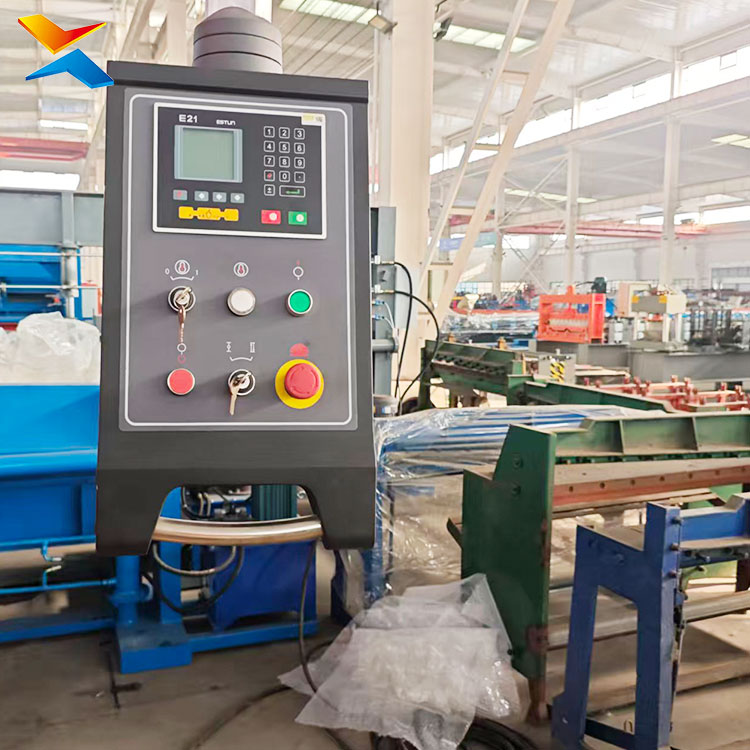
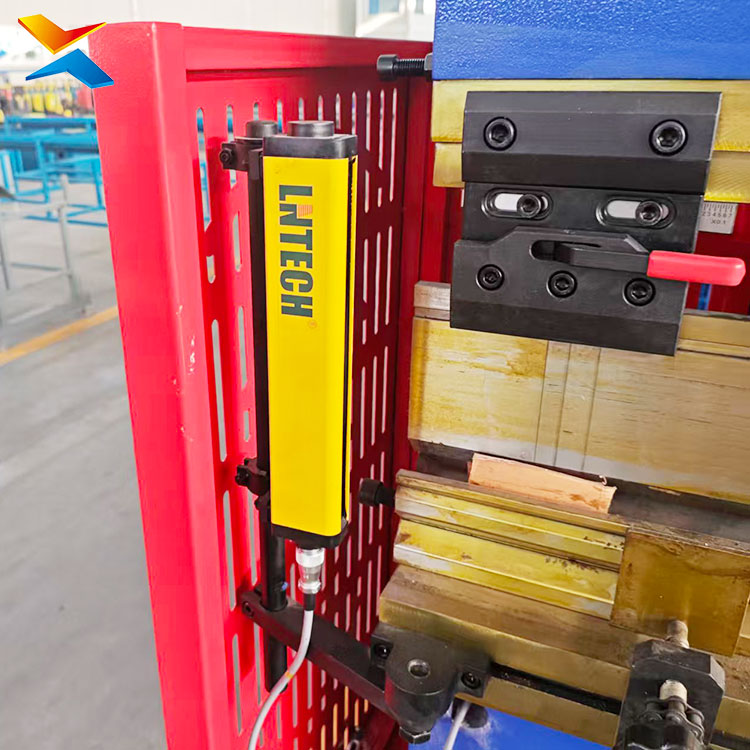
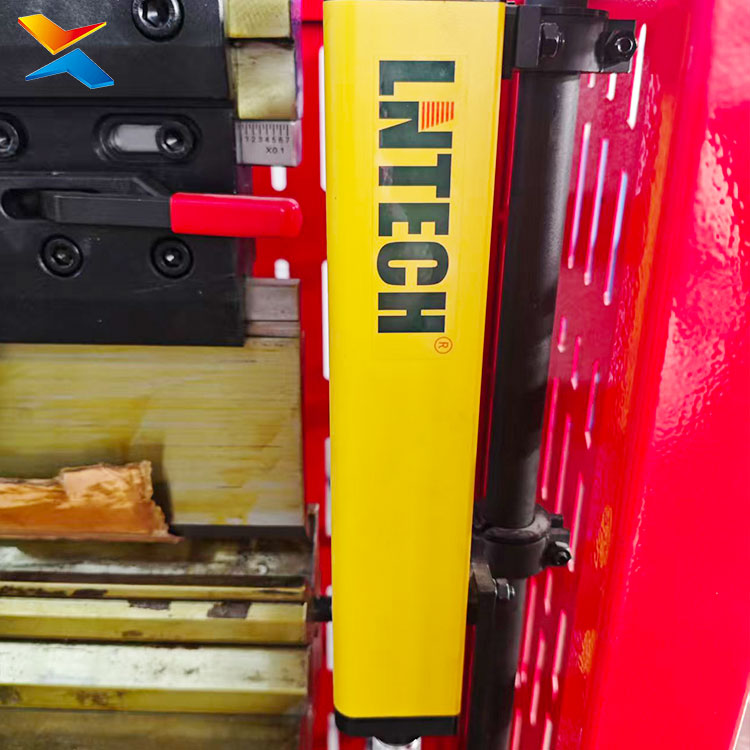
A press brake is a machine tool that bends sheet metal and plate. The workpiece is placed between an upper punch (male die) and a lower die (female V-die); the machine’s hydraulic cylinders drive the punch downward, pressing the sheet into the V-die to create a precise bend angle along a straight line. A CNC press brake adds computer numerical control to this process: the bending angle, the ram stroke, the back gauge position, and the bending sequence are programmed digitally, so every bend is repeatable to the same accuracy — shift after shift, operator after operator.
In simple terms: if a roll forming machine produces long, continuous profiles by the meter, a press brake produces discrete, precise bent parts by the piece — flanges, boxes, brackets, enclosures, panels, and structural components. The two technologies are complementary. A Middle East metal building company typically runs both: roll formers for roofing and purlin profiles, and CNC press brakes for the hundreds of different bent components that hold a building together.
Why the Middle East Needs CNC Press Brakes Now
The GCC and MENA region is in the middle of a historic construction and industrialization cycle: NEOM and giga-projects in Saudi Arabia, the UAE’s ongoing development of Abu Dhabi and Dubai, Qatar’s post-World Cup infrastructure build-out, Iraq’s reconstruction, Egypt’s New Administrative Capital and industrial zones, and massive logistics, cold storage, and solar energy programs across the region. Every one of these programs generates demand for fabricated steel components:
- Steel structure workshops need to bend gusset plates, base plates, and connection brackets.
- Container house manufacturers need to fold wall panel edges, door frames, and corner posts.
- HVAC contractors need to form ductwork fittings and flanges.
- Solar mounting fabricators need to bend rail brackets and clamps.
- Cold storage panel producers need to fold flashings, trims, and corner profiles.
- Metal furniture and shopfitting shops need to fold sheet steel into cabinets, shelves, and enclosures.
Without a CNC press brake on the shop floor, a fabrication shop must outsource every bent part — paying another shop’s markup and losing control over lead time and quality. With a CNC press brake, the workshop brings bending in-house: faster turnaround, lower cost per part, better quality control, and a new service line to offer customers. This is why CNC press brakes are among the fastest-selling machine tools in the Middle East market today, and why buying one factory-direct — from the manufacturer, not a trader — makes a decisive difference to the buyer’s total cost of ownership.



♦ COMPANY PROFILE:
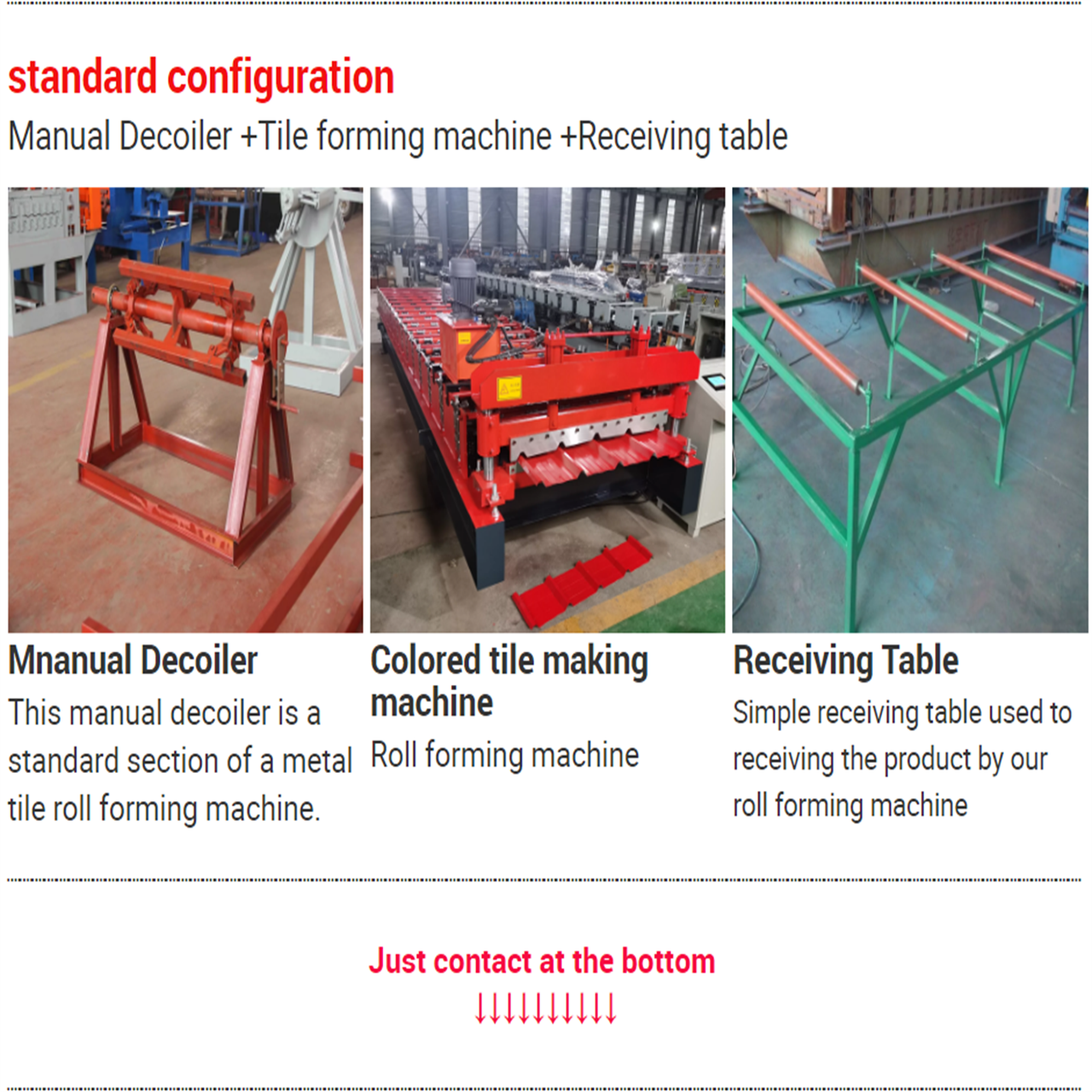
Hebei Xinnuo Roll Forming Machine Co., Ltd., not only produce different types of professional roll forming machines, but also develop intelligent automatic roll forming production lines, C&Z shape purline machines, highway guardrail roll forming machine lines, sandwich panel production lines, decking forming machines, light keel machines, shutter slat door forming machines, downpipe machines, gutter machines, etc.
Advantages of Roll Forming A Metal Part
There are several advantages of using roll forming for your projects:
- The roll forming process allows operations such as punching, notching, and welding to be performed in-line. Labor cost and time for secondary operations are reduced or eliminated, reducing part costs.
- Roll form tooling allows for a high degree of flexibility. A single set of roll form tools will make almost any length of the same cross-section. Multiple sets of tools for varying length parts are not required.
- It can provide better dimensional control than other competing metal forming processes.
- Repeatability is inherent in the process, allowing easier assembly of roll formed parts into your finished product, and minimizing problems due to “standard” tolerance build up.
- Roll forming is typically a higher speed process.
- Roll forming offers customers a superior surface finish. This makes roll forming an excellent option for decorative stainless steel parts or for parts requiring a finish such as anodizing or powder coating. Also, texture or pattern can be rolled into the surface during forming.
- Roll forming utilizes material more efficiently than other competing processes.
- Roll formed shapes can be developed with thinner walls than competing processes
Roll forming is a continuous process which converts sheet metal into an engineered shape using consecutive sets of mated rolls, each of which makes only incremental changes in the form. The sum of these small changes in form is a complex profile.


