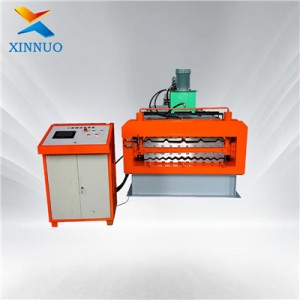

Double Layer Roll Forming Machine | Roof & Wall Panel Making Machine Supplier for Steel Building UAE
Product Description
Double layer roll forming machine supplier for steel buildings in the UAE — one machine body for the two profiles a fabricator uses most: the roof sheet and the wall sheet.
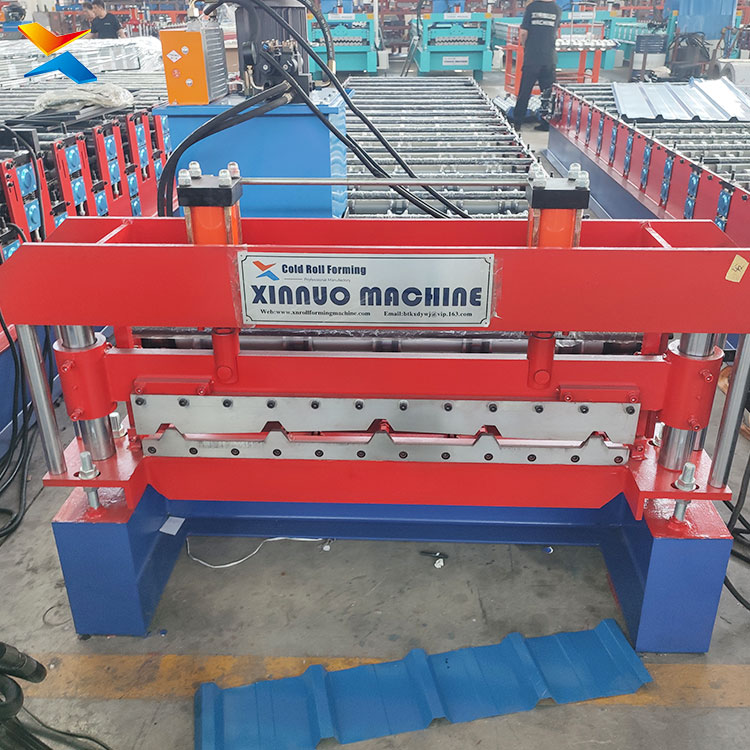
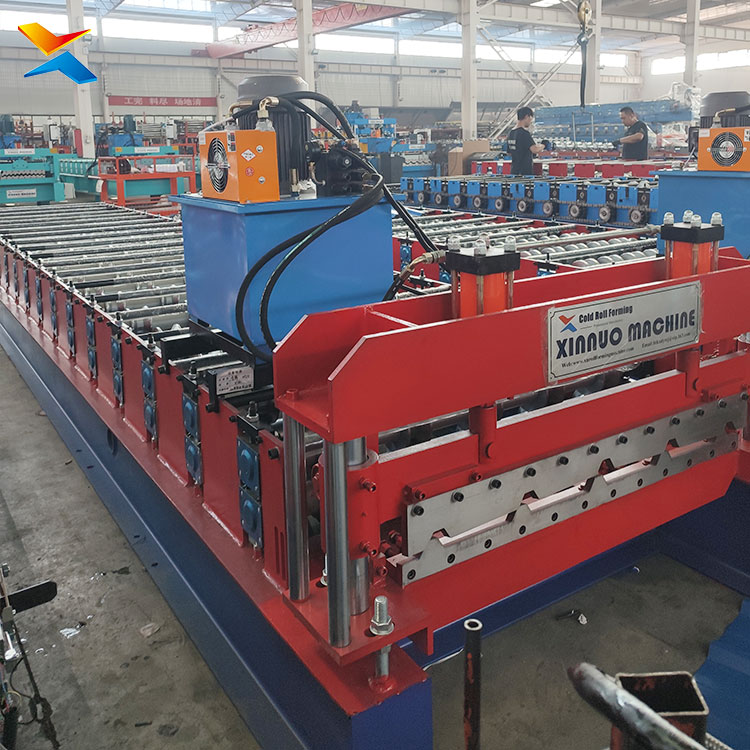
A double layer roll forming machine carries two independent sets of forming rollers stacked one above the other inside a single frame, driven from one shared transmission. The machine is built around a pairing, and the pairing this page describes is the one a steel building fabricator reaches for more than any other: the everyday roof sheet and the everyday wall sheet. By moving the guide plates and baffles that lead the coil into the machine, the operator directs the strip into the upper or the lower roller set, and the same body then produces the other panel. One machine, one footprint, one drive, two of the profiles that pay the bills.
It should be said plainly at the outset: a double layer machine produces one profile at a time. It carries two tooling sets, not two production lines. Changeover is a matter of minutes of guide adjustment rather than a machine swap, but the roof sheet and the wall sheet cannot be run simultaneously from a single drive. That is not a drawback for most fabricators, because roof work and wall work usually arrive as different jobs on different days — and the roof-and-wall pair is a natural fit for a machine that is switched a few times a week rather than continuously. Buyers who genuinely need both profiles running in parallel at volume are better served by two single-layer machines, and a supplier who suggests otherwise is selling the wrong product.
“Wall panel” has two meanings, and only one of them belongs to this machine.
Before the specification discussion, settle what you mean by a wall panel, because the phrase covers two different products made on two different lines.
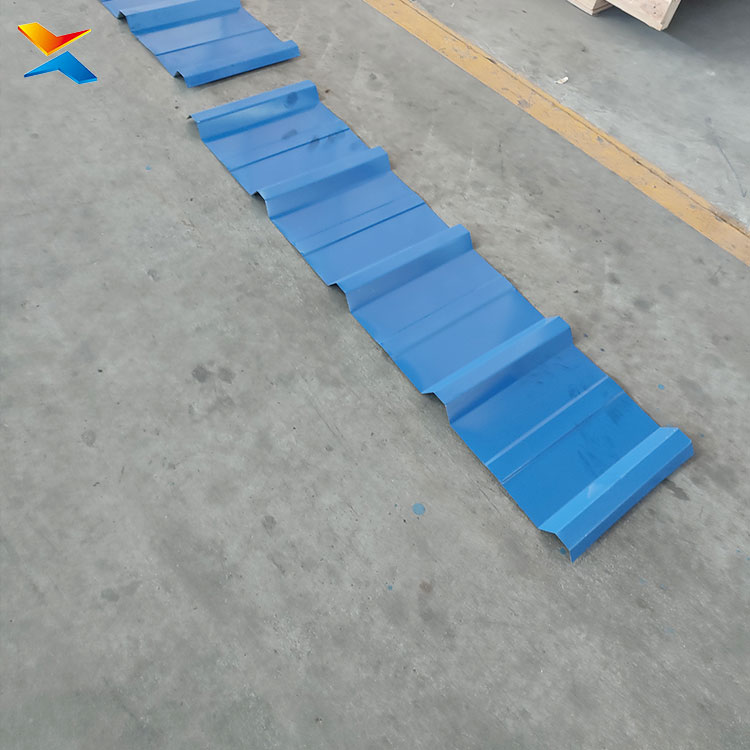
On this machine, a wall panel means a single-skin profiled steel wall cladding sheet, formed from coated steel coil into a ribbed profile. It is the cladding that closes the side of a steel building: light, weather-tight, and finished in the colour of the coil.
It is not an insulated sandwich panel — the composite panel with a foam, mineral wool or polyurethane core bonded between two steel skins. A sandwich panel comes off a different line, which forms two separate skins and laminates an insulating core between them, and it is a different product family with a different machine, a different building application and a different budget. Buyers who search for a wall panel machine often have the sandwich panel line in mind. If that is what you need, say so at the enquiry stage, because the two are not interchangeable and a double layer forming machine will not produce an insulated panel.
Why the roof-and-wall pairing is the easiest double layer to get right.
Roof sheet and wall sheet are both trapezoidal profiles, formed by straightforward continuous rolling. Neither layer needs a pitch-stamping device, and neither needs curved tooling. Because both layers share the same forming method, the machine is simpler to build, simpler to commission and easier to keep consistent than combinations that mix processes — an arc layer against a glazed tile layer, for example, which is one of the hardest builds in the range.
That is also why the trapezoidal-plus-trapezoidal family sits at the least expensive end of the double layer range: two tooling sets built on the same principle cost less than two tooling sets built on different ones. The factory’s own records describe the everyday trapezoidal roof and wall sheet profiles as its highest-frequency double layer builds, with a standard configuration established across many repeat builds — a body of precedent that makes a roof-and-wall enquiry one of the easiest to answer.
But “easiest to get right” is not the same as “automatic”. Three engineering checks decide whether your particular roof sheet and your particular wall sheet belong on one body, and a buyer can use them to test any quotation that arrives.
Check one: row-count balance between the roof layer and the wall layer.
The two layers must be reasonably matched in the number of forming stages they need. A roof profile is usually the deeper and more heavily formed of the two, while a wall profile is finer — a smaller, closer rib pattern that has to look clean on a façade. If one layer carries many more forming stages than the other, the lightly formed layer tends to show panel defects, and because both layers run at one speed from a shared drive, unequal roller diameters make the strip travel less steadily through the machine. A roof-and-wall pair whose two profiles need a similar number of forming stages is the cleanest design and the most predictable to commission. A modest difference can be accommodated in the design. A large difference needs compensating work, such as adjusting the drive ratio or adding power to the slower layer, and an extreme difference should be treated as an engineering question with a written answer rather than a catalogue choice.
Check two: feed width — the most common practical problem in a roof-and-wall pair.
This is where roof-and-wall enquiries most often come unstuck, because roof sheets and wall sheets are frequently specified at different widths. If both layers accept the same strip width, the machine shares one decoiler and one feed frame, and the whole arrangement stays simple: one coil position, one material path, a quick changeover. If the two widths are close, guide blocks can bridge the difference. But if they are far apart, the machine needs two guide systems and a manual adjustment every time you switch — workable, but it erodes exactly the convenience the double layer was bought for, and the operator has to be trained to do it correctly every time. Two profiles that happen to fall out of the same coil width make a materially better double layer machine than two profiles that do not, and this is the first thing worth checking before a quotation is discussed.
Check three: frame and drive specification set by the heavier layer.
The frame of a double layer machine is determined by the heavier of the two layers, and it steps up a grade from the single-layer frame that the same profile would need on its own, because the frame is carrying the weight of both roller stacks and absorbing the vibration of both. The chain is specified for the layer with the greatest torque demand, which is usually the roof layer. This is why a double layer quotation runs above the price of the heavier of its two single-layer equivalents — the saving comes from the shared frame, decoiler and control system, not from a lighter build. A quotation that carries single-layer frame and chain specifications on a double-layer body should be questioned before it is compared on price.
Gauge: the two layers are not automatically rated for the same thickness.
Roof sheet and wall sheet usually run at different material thicknesses. The roof sheet carries load and takes the weather on an exposed plane, so it is normally the heavier of the two; the wall sheet is cladding, where appearance and weather-tightness matter more than structural span, so it is often lighter. The machine must be specified for the heavier layer, and the buyer should confirm the working gauge range for each layer separately and in writing, rather than assuming that a machine able to form the roof panel is automatically rated to form the wall panel at the same thickness. Material thickness on a double layer machine is a per-layer question, and the honest answer is written into the order rather than inferred from a headline figure.
Where a roof-and-wall double layer earns its keep in the UAE.
The emirates’ construction market mixes the two demands in a way that suits this machine. Industrial and logistics buildings, workshops, factories, warehouses, storage and agricultural sheds all need a conventional trapezoidal roof sheet, ordered again and again in large quantities and in repeat widths. The same fabricator is then asked for finer wall cladding for commercial and residential work, showrooms, workshops and villa projects around the industrial building itself. A single client may need both roles: the roof profile for the shed and the wall profile for the office block or the boundary elevation attached to it.
For a fabricator in that position, a double layer machine covers two demand streams from one footprint and one capital outlay, which matters most to smaller workshops where floor space and money are both finite, and where buying two single-layer lines means buying two of everything — two frames, two drives, two control systems, two installation visits. Where a fabricator’s order book is genuinely split, half roof work and half wall work across a month, one machine switched between the two is a better use of capital than two machines each idle half the time.
Two UAE-specific points belong with the specification. Along the coast, humidity and salt-laden air place the emphasis squarely on the coil and the coating system the buyer chooses, because roof and wall sheets on a coastal building are exposed on both faces and the coating decides how long the appearance and the weather-tightness last. The machine forms the geometry; it does not decide the service life of the envelope, and a lifespan question answered with a machine figure rather than a coil specification is an answer to a different question. Second, a double layer machine is taller and heavier than the single-layer machine for either profile, and it is installed in a hot, humid workshop where the machine’s own surface protection and lubrication routine matter more, not less. Clear height for the machine and for lifting the upper roller set during commissioning and maintenance, floor capacity, access routes and the position of roof trusses, crane rails and door openings all belong in the pre-order checklist rather than the post-delivery surprises.
As the manufacturer and supplier.
This range is built and supplied directly by the factory, not resold through intermediaries. When a buyer sends a roof profile and a wall profile, the factory identifies the closest production-proven blueprint in its double layer archive, runs the two checks that decide the pairing — row-count balance and feed width — and states in writing whether the pair matches an existing build or requires new tooling. Frame class, chain specification and the commissioning plan follow from the heavier layer. Documentation, electrical configuration matched to the destination market, installation and commissioning with factory technicians on site, operator training, illustrated commissioning manuals, video guidance, around-the-clock engineering support and spare parts supply form part of the supply relationship, and the specific scope should be written into the order rather than assumed.
To quote a roof-and-wall double layer machine, send these items. The roof sheet profile and the wall sheet profile, each with a cross-section drawing or sample — peak count, pitch, rib and trough detail, and effective width. The working gauge for each of the two layers. The coil widths you can actually buy in your market, because the feed width of the machine has to match a strip you can source. Whether roof and wall work run in parallel at volume, because that single answer decides between a double layer machine and two single-layer machines. Your workshop’s clear height, floor area and lifting arrangements. The panel lengths and the daily output you need for each profile. Your site’s voltage and frequency. And whether you also need to slit coil to width. With those answers the factory can propose a combination, state the frame and drive specification the pair requires, confirm whether the profiles match proven tooling or need new tooling, and return an itemised factory-direct quotation with the line layout drawing for the configuration.
In one sentence, the honest summary. A roof-and-wall double layer machine is a capital-efficiency decision for a fabricator who needs both profiles but not both at the same time — and it is the wrong machine for anyone who needs them running side by side.

♦ COMPANY PROFILE:
Hebei Xinnuo Roll Forming Machine Co., Ltd., not only produce different types of professional roll forming machines, but also develop intelligent automatic roll forming production lines, C&Z shape purline machines, highway guardrail roll forming machine lines, sandwich panel production lines, decking forming machines, light keel machines, shutter slat door forming machines, downpipe machines, gutter machines, etc.
Advantages of Roll Forming A Metal Part
There are several advantages of using roll forming for your projects:
- The roll forming process allows operations such as punching, notching, and welding to be performed in-line. Labor cost and time for secondary operations are reduced or eliminated, reducing part costs.
- Roll form tooling allows for a high degree of flexibility. A single set of roll form tools will make almost any length of the same cross-section. Multiple sets of tools for varying length parts are not required.
- It can provide better dimensional control than other competing metal forming processes.
- Repeatability is inherent in the process, allowing easier assembly of roll formed parts into your finished product, and minimizing problems due to “standard” tolerance build up.
- Roll forming is typically a higher speed process.
- Roll forming offers customers a superior surface finish. This makes roll forming an excellent option for decorative stainless steel parts or for parts requiring a finish such as anodizing or powder coating. Also, texture or pattern can be rolled into the surface during forming.
- Roll forming utilizes material more efficiently than other competing processes.
- Roll formed shapes can be developed with thinner walls than competing processes
Roll forming is a continuous process which converts sheet metal into an engineered shape using consecutive sets of mated rolls, each of which makes only incremental changes in the form. The sum of these small changes in form is a complex profile.
-
double layer roll forming machine roll forming ...
-
High-efficiency double-layer single-board formi...
-
Automatic Double Layer Roll Forming Machine Cor...
-
Portable Trapezoidal Roof Sheet Machine | On-Si...
-
Automatic Double Layer Roll Forming Machine | 2...
-
High Speed Double Layer Roll Forming Machine fo...