

Double Layer Glazed Tile Roll Forming Machine Manufacturer | Glazed Roof Tile Making Machine Supplier
Product Description
Double layer glazed tile roll forming machine, built and supplied factory-direct — one machine body carrying an antique glazed tile layer alongside a second profile, for markets that build modern steel buildings and traditional roofs side by side.
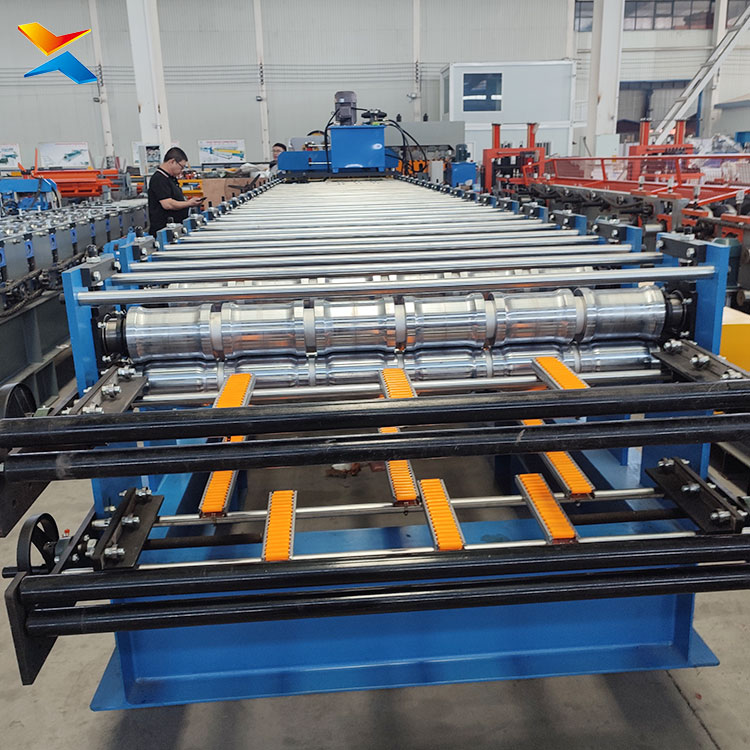
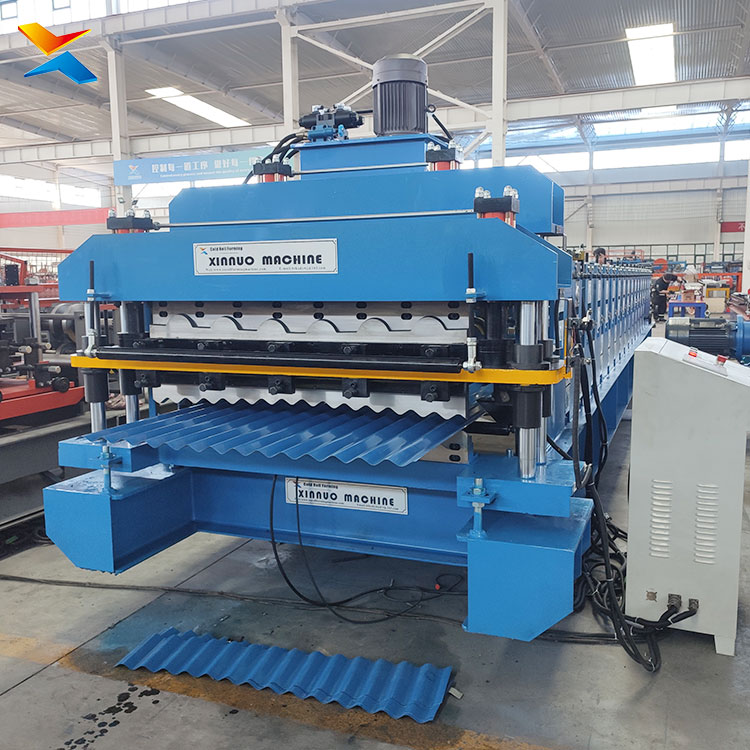
A double layer machine stacks two independent sets of forming rollers one above the other inside a single frame, running from one shared transmission. By repositioning the guide plates and baffles that lead the coil into the machine, the operator directs the strip into the upper or the lower roller set, and the same body produces the other panel. What makes this page specific is one of the two layers: the glazed tile layer, the layer that produces panels reading as rows of antique tile rather than as a smooth wave.
What a glazed tile layer actually is, and why the name matters commercially.
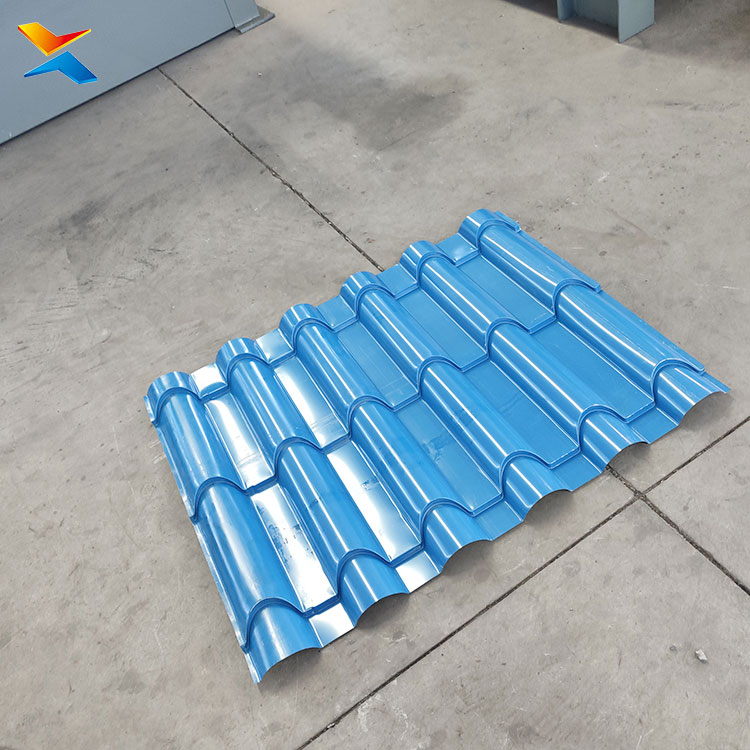
A glazed tile machine is not simply an arc machine with a different roller shape. It is an arc-forming machine with an additional pitch-stamping device. The arc forming gives the panel its curved cross-section; the pitch device then stamps across the peaks, so each peak carries a pitch imprint and the finished panel reads as individual tiles laid in courses rather than as a continuous corrugation. That additional device is the whole character of the product: it is what allows a coated steel panel to stand in for traditional clay roofing on a villa, a mosque, a heritage building or a tourism development, at a fraction of the weight and with the installation speed of a steel sheet.
The naming convention in this category carries real money, and buyers who do not know it buy the wrong machine. A profile whose name contains the character for peak is a glazed tile profile — it has the pitch-stamping device and the antique tile appearance. A profile named only by its wave is a plain arc profile — a continuous sine-wave sheet, smooth and modern, with no pitch texture at all. The two are not the same product, they do not serve the same building type, and the glazed version sits in a higher price band than the plain arc version, with the servo-driven variants higher again. A buyer who orders from a photograph, or from a name, without confirming which family the profile belongs to can end up with a machine that produces a perfectly good sheet for the wrong building — which is the most expensive kind of mistake in this category, because it is discovered after delivery.
The essential clarification: “double layer glazed tile” has two readings, and only one of them is the standard product.
Before any specification is discussed, settle which machine you are asking for, because the phrase genuinely covers two different builds.
The first reading — and the standard product — is a double layer machine in which the glazed tile is one of the two layers. The other layer is a different profile: usually a conventional trapezoidal sheet, or a curved wave sheet. This is the machine the factory builds and ships most often in this family, and it is the one this page describes in detail. Two pairings dominate. Trapezoidal plus glazed tile is the most commonly ordered combination in the double layer range: one layer produces the ordinary structural roofing sheet for industrial and commercial work, the other produces the antique tile panel for the higher-value traditional project, and a dealer or fabricator can serve both kinds of customer from one machine body and one capital outlay. Arc plus glazed tile is the second pairing, and it is the most demanding of the common combinations, because one layer needs curved forming tooling while the other needs pitch-stamped tooling — two substantially different processes sharing one frame, one drive and one material path.
The second reading is a double layer machine in which both layers are glazed tile. This is technically within this range, but it should be described honestly rather than sold casually: it is the hardest combination in the family, and the factory’s double layer drawings archive records no such build. There is no proven precedent to point at. A machine of this kind must be engineered for the requirement, and the practical difficulties are specific and real. Each layer stamps its own pitch, so the two pitch systems have to be controlled independently rather than from one setting. Unless at least one layer is driven by a servo system, pitch error accumulates along the panel, and on a two-glazed-layer machine that error is doubled because both layers are stamping. Both pitch die sets must be levelled together during commissioning, which takes an experienced technician and considerably longer than a standard double layer build. The practical transmission arrangement is to keep the main forming drive shared while giving one layer’s pitch control its own servo motor, so the tile pattern of each layer is set independently while the forming load stays on one drive.
So the honest guidance is this: if you need a glazed tile panel alongside a trapezoidal or curved panel, you are ordering an established, repeated build and the conversation is straightforward. If you need two different glazed tile profiles from one body, you are ordering a special build, and you should raise it as a specific engineering requirement in writing — with the two pitches, the peak counts and the widths stated — rather than assume it from a generic double layer quotation. Any supplier who presents a two-glazed-layer machine as an off-the-shelf catalogue item without asking those questions is not being straight with you.
The three checks that decide whether your glazed tile layer and your second layer belong on one body.
Three engineering rules govern any double layer pairing, and in a glazed tile pairing each of them has a specific edge worth knowing before a quotation is compared.
The first is row-count balance between the two layers. A glazed tile layer typically needs a substantial number of forming stages, because it is doing two jobs in one pass: forming the arc cross-section and then stamping the pitch across it. If the second layer — commonly a trapezoidal sheet — is a much lighter profile needing far fewer stages, the lightly formed layer tends to show panel defects, and because both layers run at one speed from a shared drive, unequal roller diameters make the strip travel less steadily through the machine. A pairing whose two layers need a comparable number of forming stages is the cleanest, most predictable build. A modest difference can be absorbed in the design. A large difference needs compensating work, such as adjusting the drive ratio or adding power to the slower layer. An extreme difference should be answered in writing by engineering, not chosen from a catalogue.
The second is feed width, and this is where glazed tile pairings most often come unstuck, because glazed tile profiles and trapezoidal profiles are frequently specified at different feed widths. Where both layers accept the same strip width the machine shares one decoiler and one feed frame, and changeover stays a simple matter of moving the guide plates. Where the widths are close, guide blocks can bridge the difference. Where they are far apart, the machine needs two guide systems and a manual adjustment at every switch — workable, but it erodes precisely the convenience the double layer was bought for, and it places the changeover squarely on the operator’s discipline. Two profiles that happen to fall out of the same coil width make a materially better double layer machine than two that do not, and because a coiled steel supplier in the Gulf may stock a narrower range of widths than the profile drawings assume, it is worth confirming what you can actually buy before the machine is specified around it.
The third is frame and drive specification. The frame of a double layer machine is set by the heavier of the two layers and steps up a grade from the single-layer frame that the same profile would need on its own, because it is carrying the weight of both roller stacks and absorbing the vibration of both. The chain is specified for the layer with the greatest torque demand. This is why a double layer quotation runs above the price of the heavier of its two single-layer equivalents — the saving comes from the shared frame, decoiler and control system, not from a lighter build. A quotation carrying single-layer frame and chain specifications on a double-layer body should be questioned before it is compared on price, and on a glazed tile pairing that question is more important than usual, because the pitch-stamping device adds a load the plain forming layers in other pairings do not have.
Gauge, and why it is a per-layer question.
The two layers will rarely run the same material thickness. A glazed tile panel is a decorative roof covering, usually formed from light-gauge coated steel, because the pitch-stamping device imposes its own limits on what the tooling can mark cleanly and because the panel is judged on appearance before structure. The neighbouring trapezoidal layer is often specified heavier, since it may be carrying roof load on an exposed plane. The machine must be specified for the heavier layer, and the buyer should confirm the working gauge range for each layer separately and in writing, rather than assuming that a machine able to form the trapezoidal panel is automatically rated to stamp the glazed profile at the same thickness. On a double layer machine, thickness is not one number; it is two, and the honest answer is written into the order.
Commissioning: the part where a glazed tile pairing asks for more.
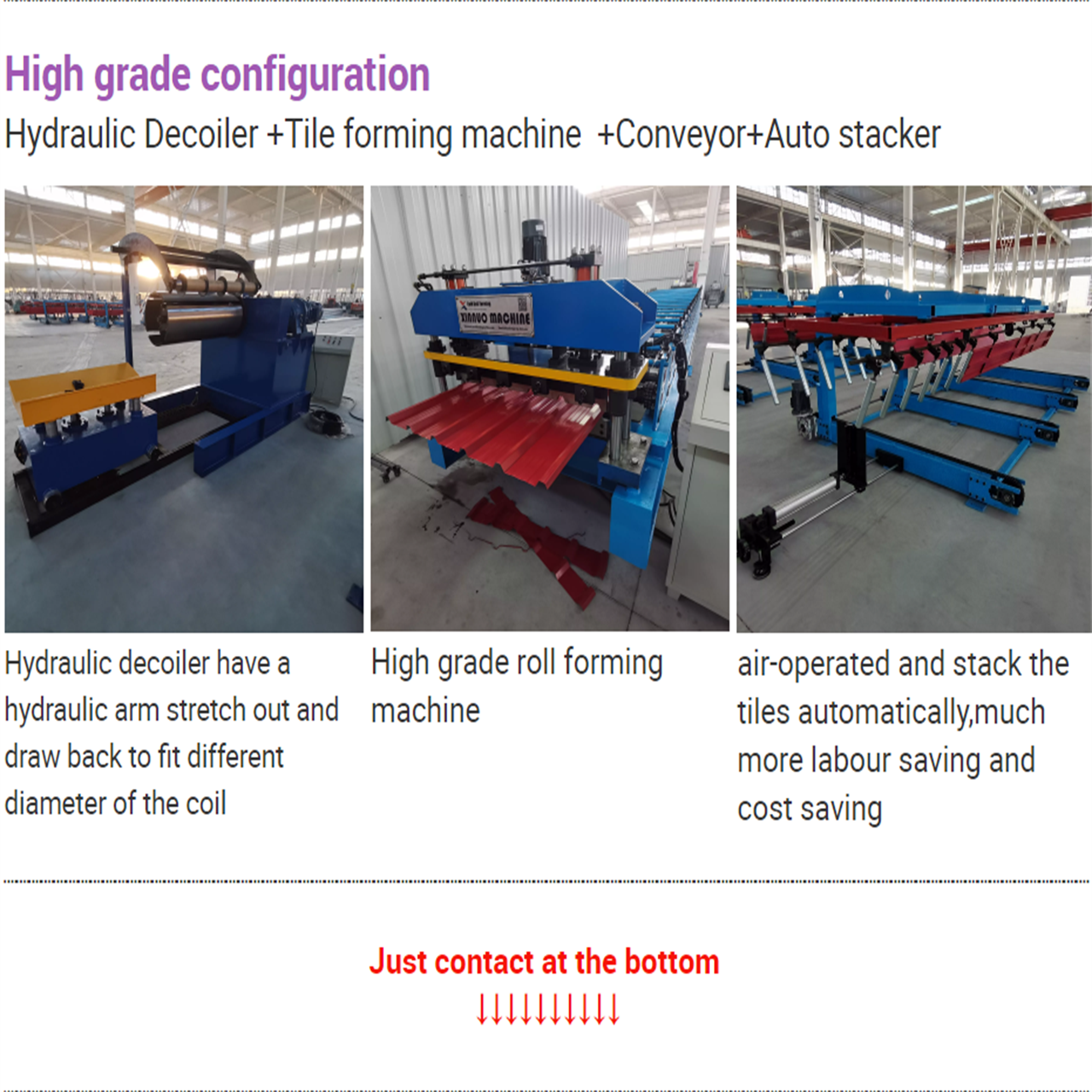
This is where a buyer should slow down rather than speed up. A double layer machine already takes longer to bring into production than a single-layer machine of either profile, because two roller sets must be centred and gapped together inside one frame. A pairing that includes a glazed tile layer takes longer again, because on top of the two-stack alignment the pitch-stamping tooling has to be levelled and brought into agreement with the material path of the other layer. It is not a reason to avoid the machine; it is a reason to plan the commissioning properly and to insist on the right support: a factory commissioning technician on site rather than documentation alone, an illustrated commissioning manual, video guidance for the settings that are adjusted most often, a written training plan for the operators who will run the changeover, and after-sales contact that stays reachable while the team learns the machine. The archive of glazed tile machines behind this range includes long experience of designing pitch tooling across many different pitches, and that design experience is what a buyer is actually relying on during commissioning.
Machine height, weight, and the workshop that has to hold it.
Stacking two roller sets makes a double layer machine taller and heavier than the single-layer machine for either profile, and a glazed tile layer adds tooling weight of its own. Three consequences belong in the pre-order checklist rather than in post-delivery surprises: the workshop needs clear height for the machine and for lifting the upper roller set during commissioning and maintenance; the floor and the installation plan must carry the weight; and the machine’s overall height and access route should be checked against the building itself — roof trusses, crane rails, door openings and the path the machine takes to its position — before the order is placed. Where the profiles are very wide or the glazed pitch is very large, a double layer body may not be the right answer at all, and the conversation should move back to two single-layer machines.
Where a double layer glazed tile machine earns its keep in the Middle East.
The Gulf construction market mixes the two demand streams in a way that suits this machine unusually well. Industrial and logistics buildings, factories, warehouses, workshops, agricultural and storage sheds and general commercial structures need conventional trapezoidal or curved metal roofing, ordered repeatedly and in quantity. In the same district, and often from the same client list, villas, mosques and religious buildings, heritage and tourism developments, hospitality projects and new-Chinese-style elevations need an antique tile panel — the market where a glazed tile layer belongs. A fabricator serving both from one machine body covers decorative and structural roofing without buying two production lines, which matters most to workshops where floor space and capital are both finite. The factory’s glazed tile archive records export of glazed tile machines to markets with antique-architecture demand including the Middle East, so this is a market the product has been built for rather than a market it is being aimed at.
Two climate points belong with the specification. Along the Gulf coast, humidity and salt-laden air put the emphasis squarely on the coil and the coating system the buyer chooses: the machine forms the geometry, but the coating decides how long the appearance survives on an exposed roof, and a lifespan question answered with a machine figure is an answer to a different question. Inland, intense solar loading, strong thermal cycling and wind-borne dust do the same. And because a double layer machine is taller, heavier and more loaded with tooling than a single-layer machine, and is installed in a hot, humid workshop, its own surface protection, lubrication routine and alignment checks matter more, not less — the maintenance plan should be part of the purchase conversation rather than an afterthought.
As the manufacturer and supplier.
This range is built and supplied directly by the factory, not resold through intermediaries. When a buyer sends a glazed tile profile together with the second profile, the factory identifies the closest production-proven blueprint in its archive, runs the two checks that decide the pairing — row-count balance and feed width — and states in writing whether the pair matches an existing build or requires new tooling, and whether the glazed pitch you need already exists in the archive or has to be designed as a new die. Frame class, chain specification and the commissioning plan follow from the heavier layer. Documentation, electrical configuration matched to the destination market, installation and commissioning with factory technicians on site, operator training, illustrated manuals, video guidance, engineering support and spare parts supply form part of the supply relationship, and the specific scope should be written into the order rather than assumed.
To quote a double layer glazed tile machine, send these items. Which reading of the phrase you mean — glazed tile as one layer of the pair, or glazed tile on both layers — because that single answer changes the machine entirely. The glazed tile profile: peak count, pitch, whether the pattern is a fine-pitch, mainstream or broad-pitch look, and the effective width you need. The second profile, with a cross-section drawing or sample if one exists. The working gauge for each of the two layers. The coil widths you can actually buy in your market. The material and coating system you intend to run. Whether you want the glazed layer driven by a standard arrangement or by a servo system with more precise pitch positioning. Your workshop’s clear height, floor area and lifting arrangements. The panel lengths and daily output you need. Your site’s voltage and frequency. Whether you also need to slit coil to width. And whether the machine will run one profile at a time or whether you genuinely need both profiles running in parallel at volume — because that last answer is what decides between a double layer machine and two single-layer machines. With those answers the factory can propose a combination, state the frame and drive specification the pair requires, confirm whether the profiles and the pitch match proven tooling, and return an itemised factory-direct quotation with the line layout drawing for the configuration.
In one sentence, the honest summary. A double layer machine with a glazed tile layer gives a fabricator antique tile roofing and a second structural profile from one footprint and one capital outlay — provided the buyer states which pairing they mean, accepts that one profile runs at a time, and plans for a commissioning period that is longer than a single-layer machine’s.

♦ COMPANY PROFILE:
Hebei Xinnuo Roll Forming Machine Co., Ltd., not only produce different types of professional roll forming machines, but also develop intelligent automatic roll forming production lines, C&Z shape purline machines, highway guardrail roll forming machine lines, sandwich panel production lines, decking forming machines, light keel machines, shutter slat door forming machines, downpipe machines, gutter machines, etc.
Advantages of Roll Forming A Metal Part
There are several advantages of using roll forming for your projects:
- The roll forming process allows operations such as punching, notching, and welding to be performed in-line. Labor cost and time for secondary operations are reduced or eliminated, reducing part costs.
- Roll form tooling allows for a high degree of flexibility. A single set of roll form tools will make almost any length of the same cross-section. Multiple sets of tools for varying length parts are not required.
- It can provide better dimensional control than other competing metal forming processes.
- Repeatability is inherent in the process, allowing easier assembly of roll formed parts into your finished product, and minimizing problems due to “standard” tolerance build up.
- Roll forming is typically a higher speed process.
- Roll forming offers customers a superior surface finish. This makes roll forming an excellent option for decorative stainless steel parts or for parts requiring a finish such as anodizing or powder coating. Also, texture or pattern can be rolled into the surface during forming.
- Roll forming utilizes material more efficiently than other competing processes.
- Roll formed shapes can be developed with thinner walls than competing processes
Roll forming is a continuous process which converts sheet metal into an engineered shape using consecutive sets of mated rolls, each of which makes only incremental changes in the form. The sum of these small changes in form is a complex profile.


