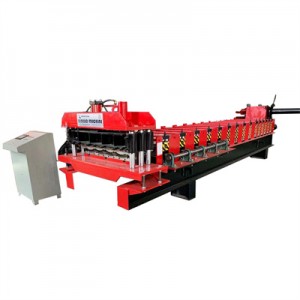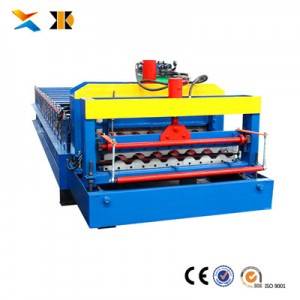


Glazed Tile Roll Forming Machine – Metal Roof Tiles with the Antique Profile
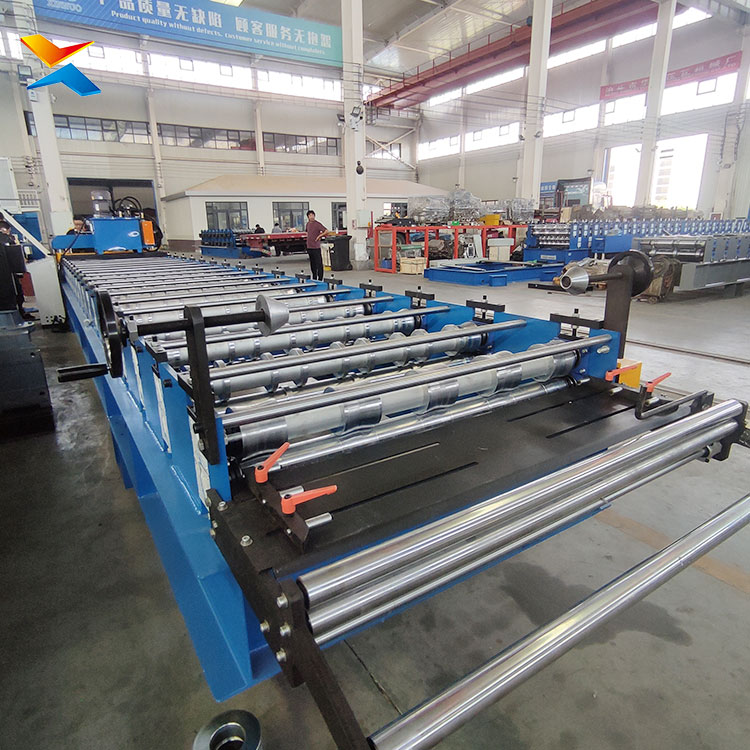
The glazed tile machine produces metal roof tiles with a traditional appearance: not ceramic tiles, but steel coil formed into the curved, segmented profile of classical roof tiles — an antique look in a modern, lightweight material. The machine is a roll forming line with a second function: after the arc forming section shapes the wave, a pitch-stamping device presses the segment lines into each crest, so every wave carries the tile-joint texture that gives the antique roof its character.
Xinnuo’s glazed tile programme is built on 137 production-proven blueprints (DB056–DB192, 2006–2025) covering the small-, medium-, and large-pitch families, supplied to more than 50 export markets including markets with antique-architecture demand in Southeast Asia, the Middle East, Africa, and South America.
What the Title Says, Decoded
- Glazed Tile Roll Forming Machine — the machine that forms metal roof tiles with the classical glazed-tile profile: arc forming plus the pitch-stamping device that creates the tile-segment texture.
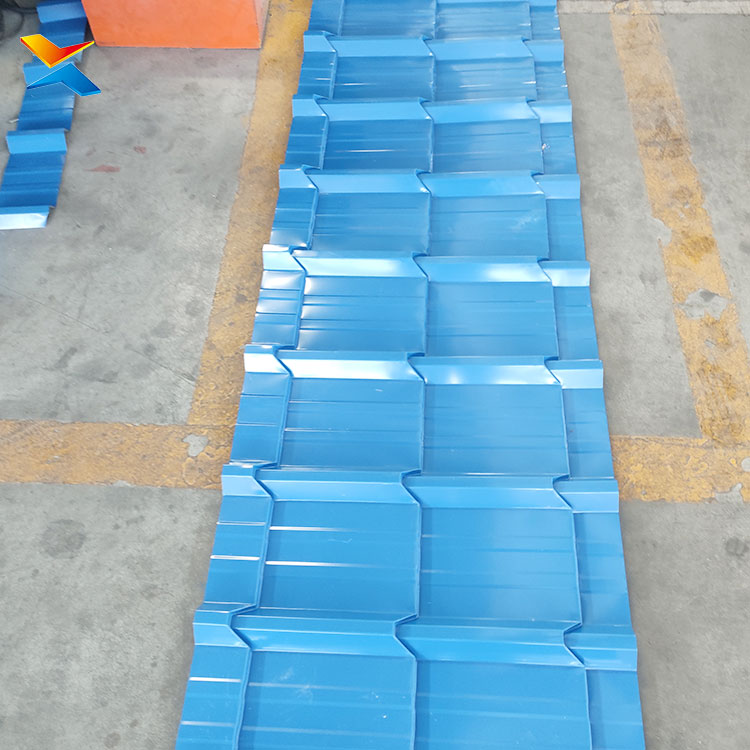
- Metal Roof Tile Forming Machine — the output: metal roof tiles (彩钢琉璃瓦) — steel coil formed into tile-shaped sheets, lighter and faster to install than ceramic tiles.
- for Building Roof — the application: building roofs where the classical tile appearance is wanted — religious buildings, resorts, villas, heritage-style projects.
Important Distinction: Metal Glazed Tile, Not Ceramic
The “glazed tile” this machine produces is a metal roof tile (彩钢琉璃瓦): 0.3–0.8 mm coated steel formed into the classical tile shape. It is not fired ceramic. That difference is the product’s value: it gives the antique roof appearance at a fraction of the weight, installs on steel structures with standard fasteners, and is manufactured on site from coil — the practical way to build the classical look on modern buildings.
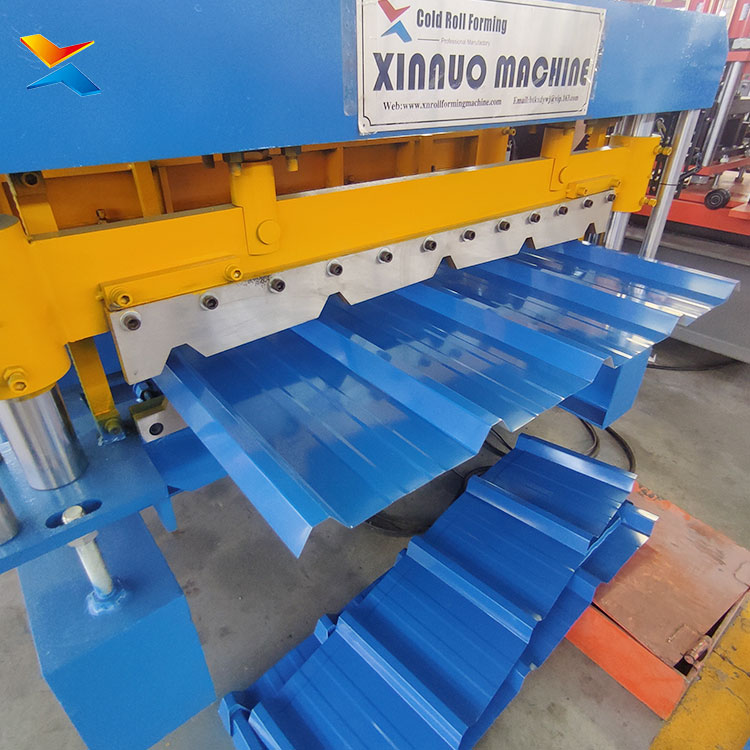



♦ COMPANY PROFILE:
Hebei Xinnuo Roll Forming Machine Co., Ltd., not only produce different types of professional roll forming machines, but also develop intelligent automatic roll forming production lines, C&Z shape purline machines, highway guardrail roll forming machine lines, sandwich panel production lines, decking forming machines, light keel machines, shutter slat door forming machines, downpipe machines, gutter machines, etc.
Advantages of Roll Forming A Metal Part
There are several advantages of using roll forming for your projects:
- The roll forming process allows operations such as punching, notching, and welding to be performed in-line. Labor cost and time for secondary operations are reduced or eliminated, reducing part costs.
- Roll form tooling allows for a high degree of flexibility. A single set of roll form tools will make almost any length of the same cross-section. Multiple sets of tools for varying length parts are not required.
- It can provide better dimensional control than other competing metal forming processes.
- Repeatability is inherent in the process, allowing easier assembly of roll formed parts into your finished product, and minimizing problems due to “standard” tolerance build up.
- Roll forming is typically a higher speed process.
- Roll forming offers customers a superior surface finish. This makes roll forming an excellent option for decorative stainless steel parts or for parts requiring a finish such as anodizing or powder coating. Also, texture or pattern can be rolled into the surface during forming.
- Roll forming utilizes material more efficiently than other competing processes.
- Roll formed shapes can be developed with thinner walls than competing processes
Roll forming is a continuous process which converts sheet metal into an engineered shape using consecutive sets of mated rolls, each of which makes only incremental changes in the form. The sum of these small changes in form is a complex profile.