


Product Overview
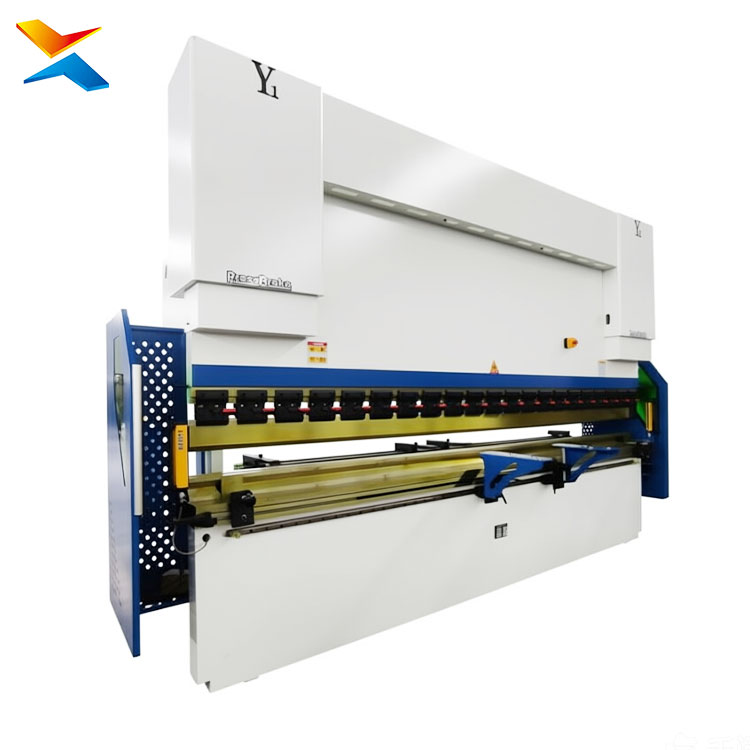
The Heavy-Duty CNC Press Brake is a premium, high-performance metal bending solution engineered to tackle the most demanding and rigorous industrial applications. Designed for exceptional stability and long-term durability, this machine provides the robust power and precise control necessary for processing thick, high-tensile plates and executing complex bending tasks. It serves as a highly reliable cornerstone for heavy machinery manufacturing, shipbuilding, and large-scale steel fabrication.
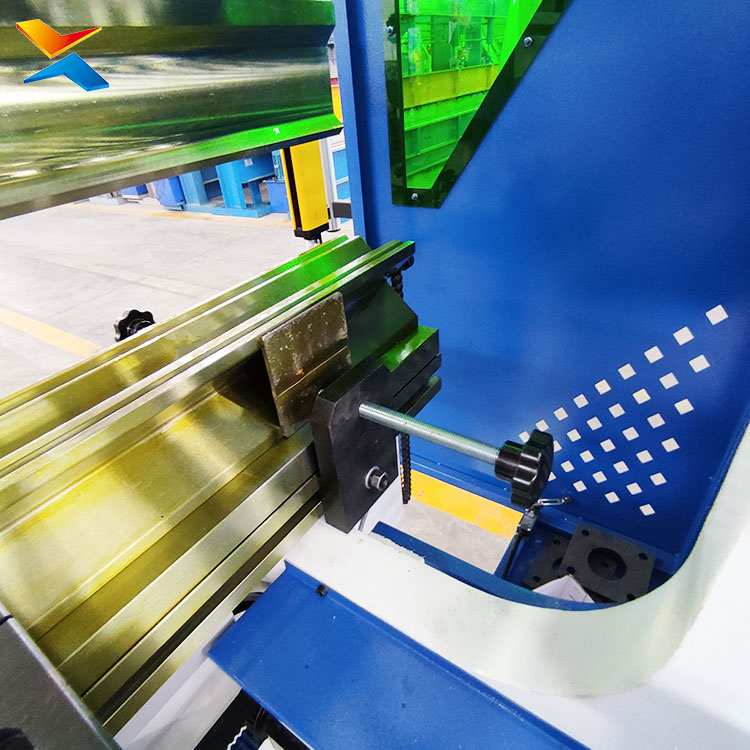
Stability is the defining characteristic of this heavy-duty equipment. It utilizes an advanced electro-hydraulic servo synchronization system featuring a fully closed-loop control mechanism. This intelligent setup continuously monitors and adjusts the ram’s movement in real time, ensuring perfect parallelism and exceptional bending accuracy. To further enhance stability during heavy loads, the worktable is equipped with a sophisticated crowning system and throat deformation compensation mechanisms, which automatically counteract structural deflection and maintain consistent precision across the entire bending length.
Built to withstand extreme industrial stress, the machine’s main structure is fabricated from high-quality steel plates and precision-machined on large five-sided machining centers, guaranteeing superior structural integrity and longevity. The hydraulic cylinders feature a spherical floating support structure and a specially guided piston rod, providing an outstanding anti-off-center load capability. Additionally, the ram utilizes a dual-rail structure with self-lubricating materials, ensuring smooth, precise, and wear-resistant operation over prolonged periods.
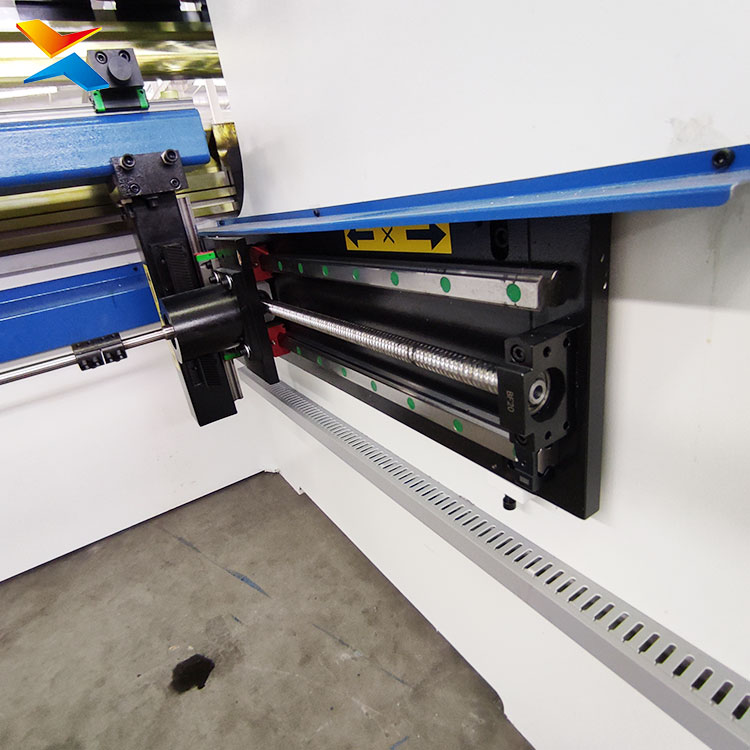
Despite its heavy-duty capabilities, the machine is highly automated and efficient. The backgauge system is driven by a digital AC servo motor, utilizing precision ball screw transmission and linear guide rails for fast, accurate positioning. The integrated CNC control system acts as the machine’s brain, allowing operators to effortlessly input bending parameters, program complex sequences, and monitor real-time machine status. This intelligent automation significantly reduces labor intensity and maximizes production throughput.



♦ COMPANY PROFILE:
Hebei Xinnuo Roll Forming Machine Co., Ltd., not only produce different types of professional roll forming machines, but also develop intelligent automatic roll forming production lines, C&Z shape purline machines, highway guardrail roll forming machine lines, sandwich panel production lines, decking forming machines, light keel machines, shutter slat door forming machines, downpipe machines, gutter machines, etc.
Advantages of Roll Forming A Metal Part
There are several advantages of using roll forming for your projects:
- The roll forming process allows operations such as punching, notching, and welding to be performed in-line. Labor cost and time for secondary operations are reduced or eliminated, reducing part costs.
- Roll form tooling allows for a high degree of flexibility. A single set of roll form tools will make almost any length of the same cross-section. Multiple sets of tools for varying length parts are not required.
- It can provide better dimensional control than other competing metal forming processes.
- Repeatability is inherent in the process, allowing easier assembly of roll formed parts into your finished product, and minimizing problems due to “standard” tolerance build up.
- Roll forming is typically a higher speed process.
- Roll forming offers customers a superior surface finish. This makes roll forming an excellent option for decorative stainless steel parts or for parts requiring a finish such as anodizing or powder coating. Also, texture or pattern can be rolled into the surface during forming.
- Roll forming utilizes material more efficiently than other competing processes.
- Roll formed shapes can be developed with thinner walls than competing processes
Roll forming is a continuous process which converts sheet metal into an engineered shape using consecutive sets of mated rolls, each of which makes only incremental changes in the form. The sum of these small changes in form is a complex profile.
-
High Efficiency Cambering Machine For Steel Sheet
-
Automatic Electric Bending Machine | High Preci...
-
Heavy Duty Hydraulic Press Brake CNC Sheet Meta...
-
CNC Bending Machine | High Precision | Automatic
-
Hydraulic Sheet Metal Bending Machine CNC Press...
-
Roof Arch Roll Forming Machine Automatic Metal ...


