


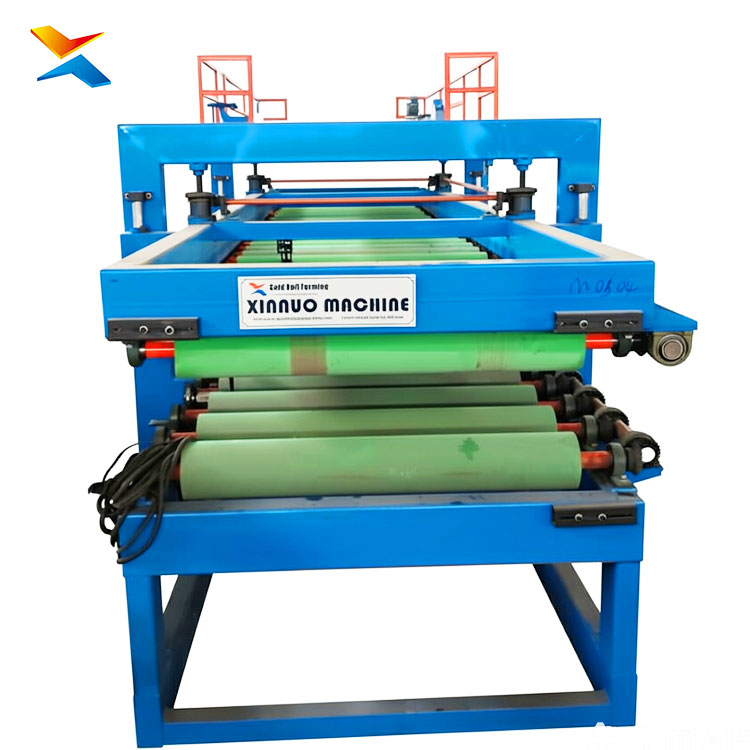
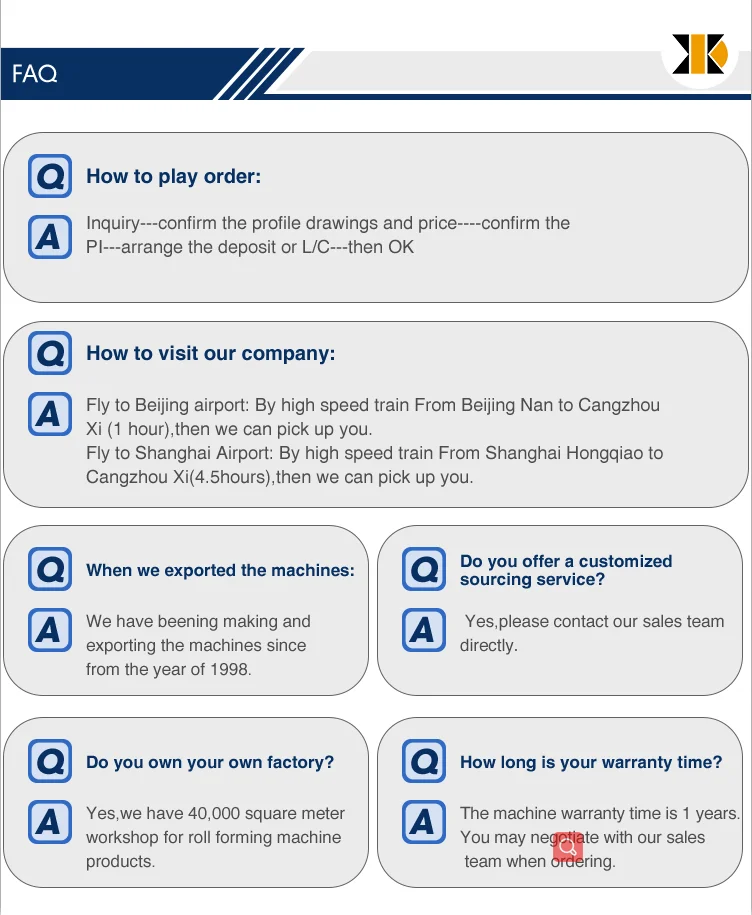
The Xinnuo XN-SP Lap Joint Sandwich Panel Production Line is the proven workhorse of our composite panel machine portfolio — a machine configuration that has produced more square meters of insulated building envelope than any other variant in our 28-year manufacturing history. The model designation is deliberately straightforward: XN for Xinnuo engineering, SP for sandwich panel, and the specification — 14 rows, 300H frame — describes exactly what the buyer receives without marketing embellishment. This is the most widely deployed composite panel machine configuration globally for one reason: it is the optimal intersection of production capability, capital cost, operational reliability, and output quality for the largest-volume application in the insulated panel industry — the lap-joint wall and roof panels that enclose warehouses, logistics centers, distribution hubs, and industrial facilities.
The lap-joint connection system that gives this machine its name is the global standard for a reason that is simultaneously simple and commercially profound: it is the fastest panel system to install on-site, requiring the least skilled labor, the fewest components per square meter, and the shortest installation time per panel of any joint type. A lap-joint panel is installed by overlapping the edges of adjacent panels by approximately 50–80mm and driving self-drilling screws through both layers into the steel substructure at 300–500mm spacing — a sequence that a two-person crew can complete in 30–45 seconds per panel, compared to 60–90 seconds for concealed-cap panels and 90–120 seconds for self-locking panels that require precise alignment and snap-fit engagement. On a 50,000-square-meter logistics warehouse — the typical scale of a single building in Saudi Arabia’s rapidly expanding logistics sector — the installation speed difference between lap-joint and self-locking panels translates to approximately 2,500–4,000 person-hours of on-site labor. In Saudi Arabia’s construction labor market, where skilled installation crews command premium rates and project timelines are compressed by seasonal construction windows around the summer heat, this labor efficiency is not a marginal advantage — it is often the determining factor in panel system selection for logistics projects where the building envelope is a functional requirement, not an architectural statement.
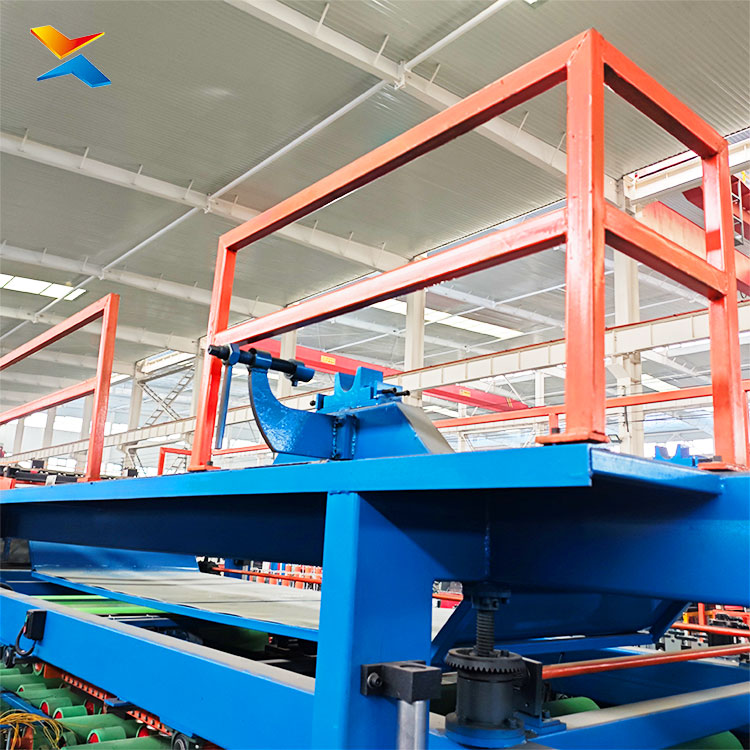
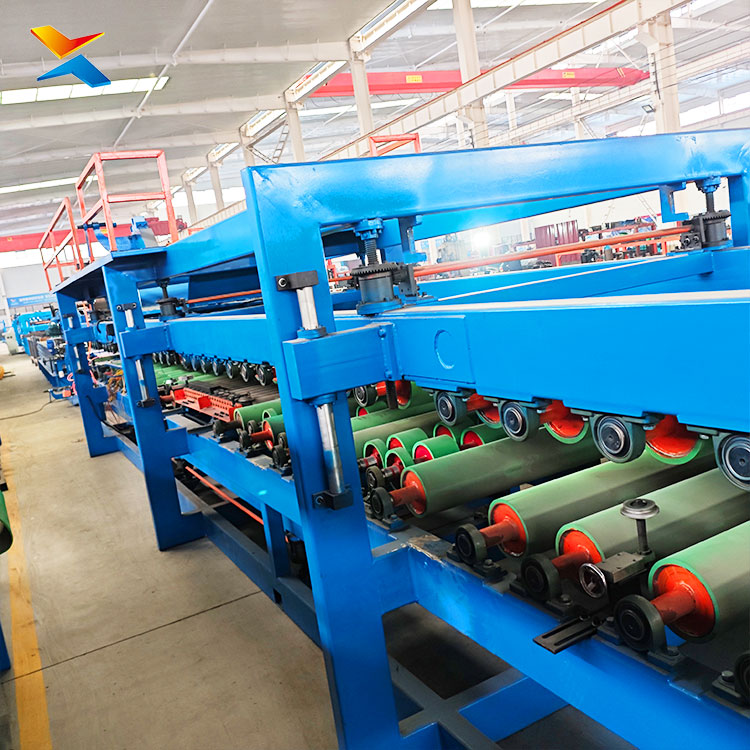
The 14-row forming configuration with 300H structural frame represents the engineering sweet spot for lap-joint panel production. Unlike self-locking panels that require 6–8 dedicated edge-forming stations for their compound snap-fit geometry, lap-joint panels need only 2–4 simple edge-forming stations — a 90° vertical flange, a return fold for stiffness, and a shallow interlock lip — leaving 10–12 stations for the panel body profile. This abundant body-forming allocation allows each rib to be shaped across multiple incremental passes of 8–15° per station, producing a smoother, more dimensionally consistent rib profile than machines that compress the same forming work into fewer stations. The 300H frame provides exactly the right rigidity for the forming forces involved — the 0.3–0.8mm steel yields under modest bending loads, and the 300H section’s deflection under these loads is well within the ±0.3mm tolerance band that lap-joint panels require for consistent on-site fit. A heavier frame (350H) would add cost and machine weight without improving output quality, because the limiting factor for lap-joint panel quality is not frame deflection — it is roller surface finish, glue-lamination bed flatness, and cutting accuracy, all of which the XN-SP addresses with the same 0.05mm bed, 54-roller glue section, and dual-blade fly-cut system used on our highest-spec machines.
The machine is configured for Saudi Arabia’s logistics construction boom — a market that the Saudi government’s Vision 2030 has designated as a pillar of economic diversification, with the goal of transforming the Kingdom into a global logistics hub connecting three continents. The National Industrial Development and Logistics Program (NIDLP) targets over USD 100 billion in logistics infrastructure investment, including the expansion of Jeddah Islamic Port, King Abdullah Port, and Dammam’s King Abdulaziz Port, the construction of integrated logistics cities (ILCs) and dry ports in Riyadh, Dammam, and Jeddah, and the development of a nationwide network of temperature-controlled food security warehouses under the Saudi Grains Organization (SAGO) and private sector cold chain operators. Every one of these facilities — from a 200,000-square-meter Amazon-style fulfillment center on the outskirts of Riyadh to a 5,000-pallet-capacity cold storage distribution hub near Dammam’s port — requires an insulated building envelope constructed from lap-joint sandwich panels. The XN-SP is the machine that produces these panels at the speed, volume, and cost structure that Saudi logistics construction demands: fast enough to meet the compressed project timelines of EPC (Engineering, Procurement, Construction) contracts, reliable enough to run two shifts continuously during peak demand periods, and cost-effective enough that the panel producer’s pricing remains competitive in a market where volume is the primary profit driver.
The machine carries Hebei Xinnuo’s full quality and certification suite: ISO 9001:2015 certified manufacturing processes, CE certification issued by an EU Notified Body under the Machinery Directive 2006/42/EC, a self-programmed Delta PLC with SD-card batch logging and 24/7 WeChat/WhatsApp remote diagnostic capability, the patented one-way steel belt system, 54-roller 9-meter glue-lamination section with 0.05mm bed flatness, dual-motor dual-inverter quad-glue-pump adhesive delivery, dual-blade fly-cut with enclosed dust collection, and 5.6-ton forming unit mass for vibration-damped, precision-stable production. Standard after-sales includes on-site installation and commissioning by a senior engineer, comprehensive operator training, and ongoing remote support. With 28 years of continuous engineering, 14 years of Alibaba Gold Supplier verification, and 150+ machines annual output, Hebei Xinnuo ensures that your XN-SP is backed by the supply chain depth and technical expertise that Saudi logistics panel production demands.


♦ COMPANY PROFILE:
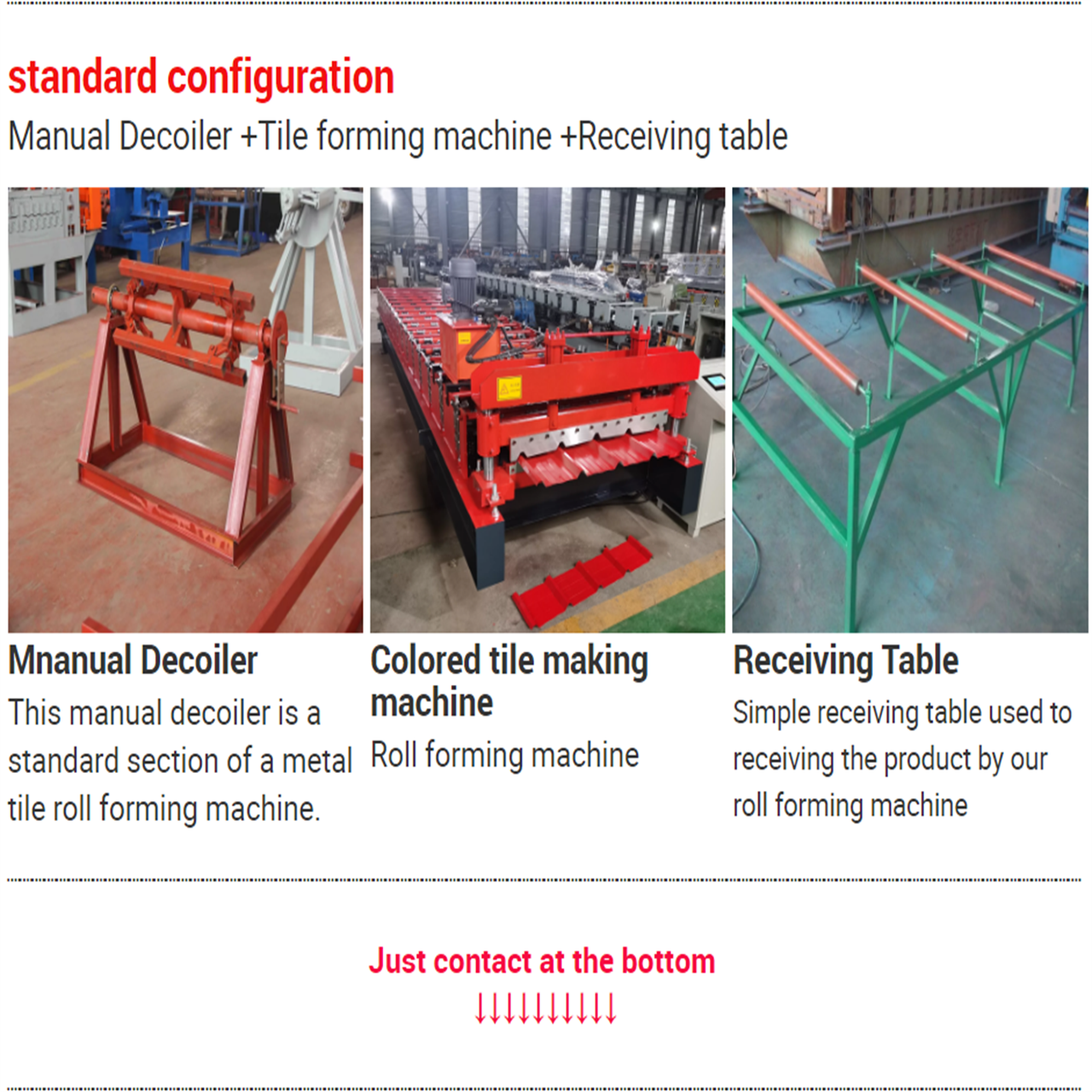
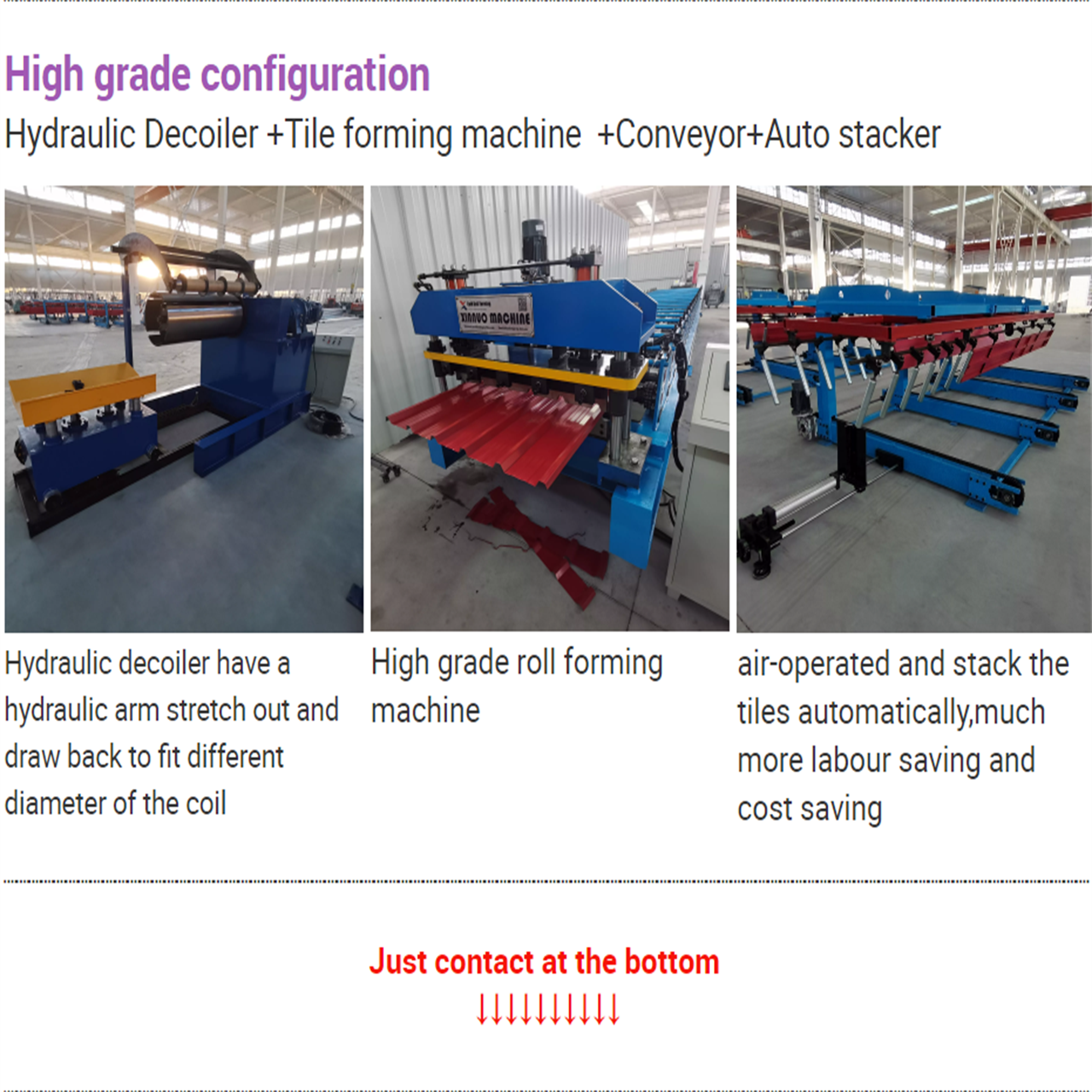
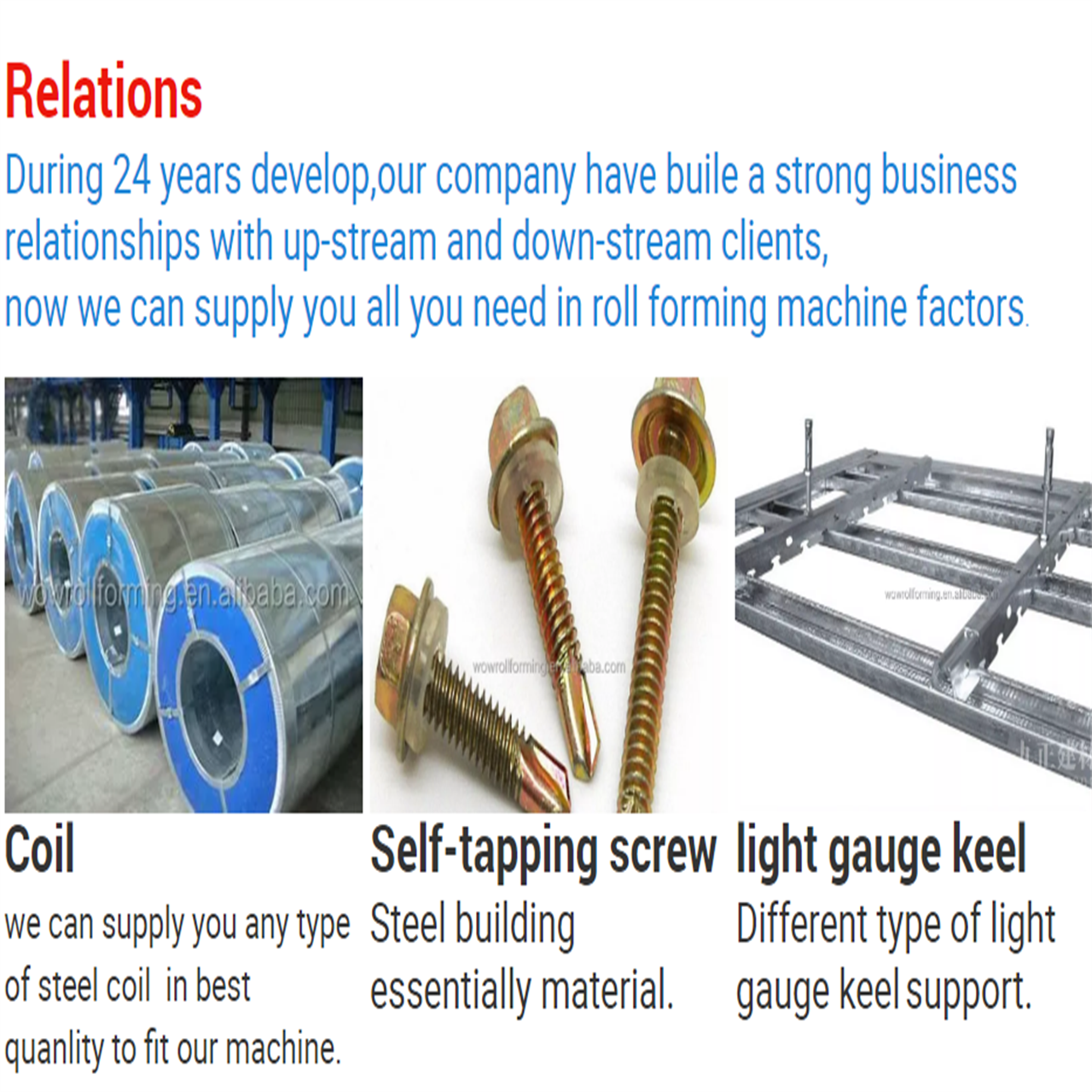
Hebei Xinnuo Roll Forming Machine Co., Ltd., not only produce different types of professional roll forming machines, but also develop intelligent automatic roll forming production lines, C&Z shape purline machines, highway guardrail roll forming machine lines, sandwich panel production lines, decking forming machines, light keel machines, shutter slat door forming machines, downpipe machines, gutter machines, etc.
Advantages of Roll Forming A Metal Part
There are several advantages of using roll forming for your projects:
- The roll forming process allows operations such as punching, notching, and welding to be performed in-line. Labor cost and time for secondary operations are reduced or eliminated, reducing part costs.
- Roll form tooling allows for a high degree of flexibility. A single set of roll form tools will make almost any length of the same cross-section. Multiple sets of tools for varying length parts are not required.
- It can provide better dimensional control than other competing metal forming processes.
- Repeatability is inherent in the process, allowing easier assembly of roll formed parts into your finished product, and minimizing problems due to “standard” tolerance build up.
- Roll forming is typically a higher speed process.
- Roll forming offers customers a superior surface finish. This makes roll forming an excellent option for decorative stainless steel parts or for parts requiring a finish such as anodizing or powder coating. Also, texture or pattern can be rolled into the surface during forming.
- Roll forming utilizes material more efficiently than other competing processes.
- Roll formed shapes can be developed with thinner walls than competing processes
Roll forming is a continuous process which converts sheet metal into an engineered shape using consecutive sets of mated rolls, each of which makes only incremental changes in the form. The sum of these small changes in form is a complex profile.


