


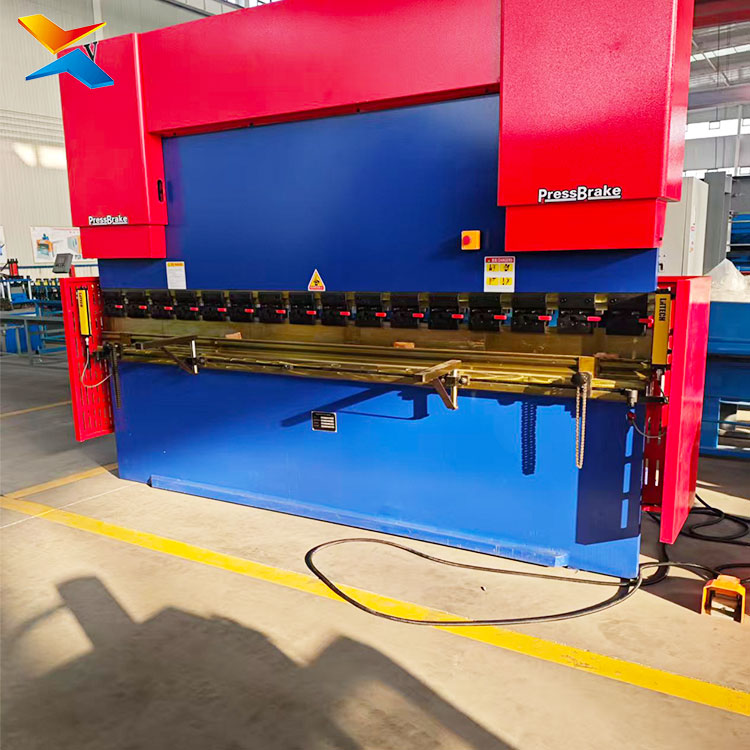
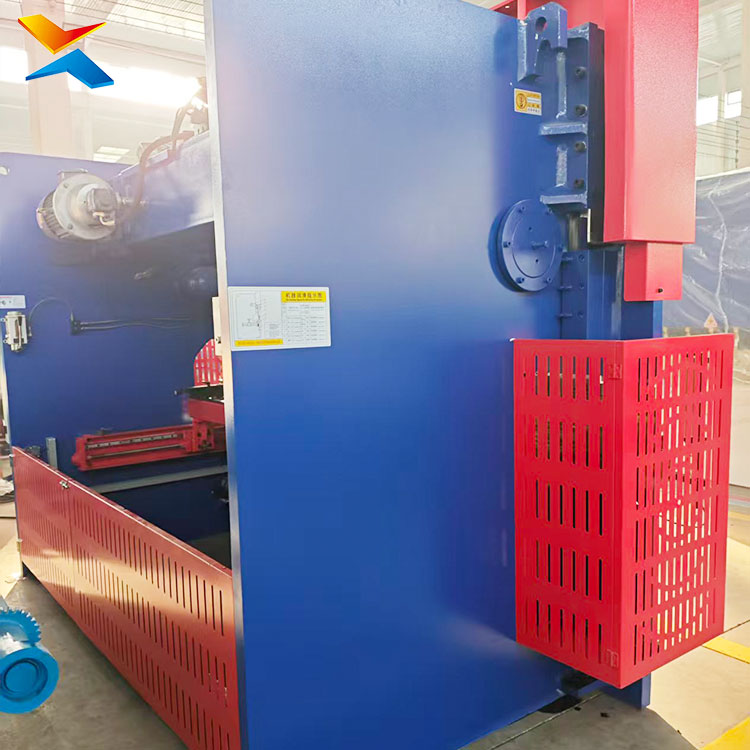
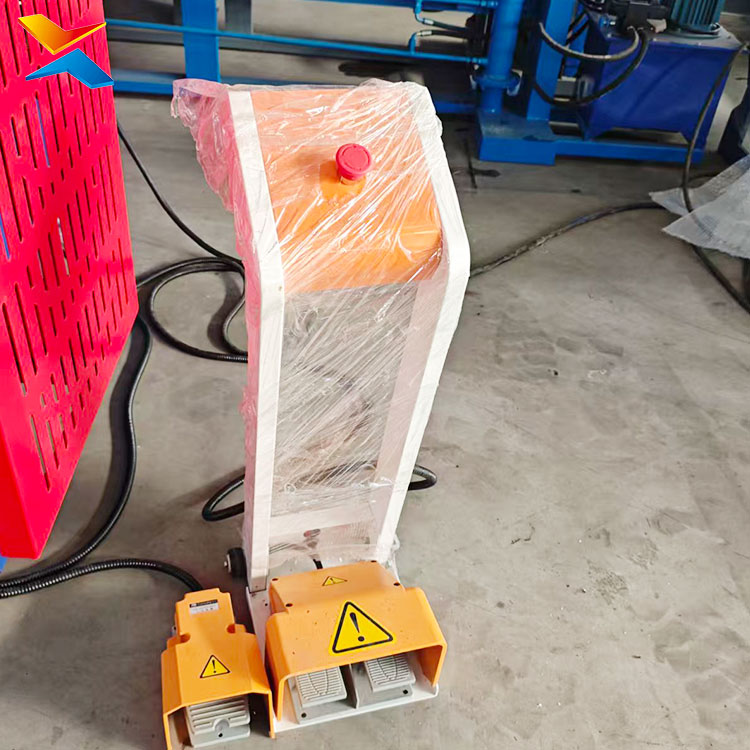
Hydraulic Sheet Metal Bending Machine CNC Press Brake for Steel Plate Folding – The Core Machine of Every Metal Fabrication Shop
Metal fabrication is the industry that turns flat steel into useful things. It is the industry behind every warehouse frame, every container house, every duct system, every solar mounting array, every machine guard, every cabinet and enclosure in the Middle East. And at the heart of metal fabrication sits one machine: the press brake — the hydraulic sheet metal bending machine that folds flat plate into precise, three-dimensional parts.
Hebei Xinnuo Roll Forming Machinery Co., Ltd. manufactures hydraulic sheet metal bending machines and CNC press brakes for steel plate folding, engineered for metal fabrication shops that serve the construction, infrastructure, and industrial sectors of the GCC and MENA region. From light sheet metal work — ducts, cabinets, flashings — to heavy structural plate bending for steel buildings, Xinnuo’s press brake line covers the full capability range a fabrication shop needs, configured individually to each buyer’s workpiece list and backed by a 14-year Alibaba Gold Supplier record, CE certification, ISO 9001 quality management, and National High-Tech Enterprise status.
This page is written for metal fabrication professionals — workshop owners, production managers, and engineers — who are evaluating press brakes for their fabrication line. It explains where the press brake fits in the fabrication workflow, how to size it for your workshop, how the CNC system upgrades your bending accuracy and labor economics, and how the press brake works together with shearing machines, plate rolls, and roll forming lines to form a complete in-house fabrication capability.
Metal Fabrication: The Industry That Cannot Run Without a Press Brake
Think about any steel product in the Middle East today, and trace it back to the workshop that made it. A steel structure warehouse: the purlins and cladding come from roll forming lines, but the gusset plates, base plates, brackets, and splices are press-brake parts. A container house: the panel bodies are roll formed, but the door frames, corner posts, base channels, and edge trims are press-brake parts. An HVAC system: the long duct sections are folded on a press brake, and the flanges, fittings, and transitions are press-brake parts. A solar array: the mounting rails may be roll formed, but the brackets, clamps, and base plates are press-brake parts.
The pattern is consistent across every metal fabrication sector: long continuous profiles come from roll forming; discrete precise parts come from the press brake. A fabrication shop without a press brake is a shop that must outsource every bent part — paying another shop’s margin, waiting on their schedule, and trusting their quality. A fabrication shop with a CNC press brake is a complete fabricator: it quotes, bends, and delivers in-house, with full control over cost, quality, and lead time.
That is why the press brake is called the backbone machine of metal fabrication — and why workshops across Saudi Arabia, the UAE, Qatar, Iraq, and Egypt are investing in CNC hydraulic press brakes as they upgrade from manual bending (brake presses, folding machines, or hand-bending with hammers and jigs) to computer-controlled precision bending.



♦ COMPANY PROFILE:
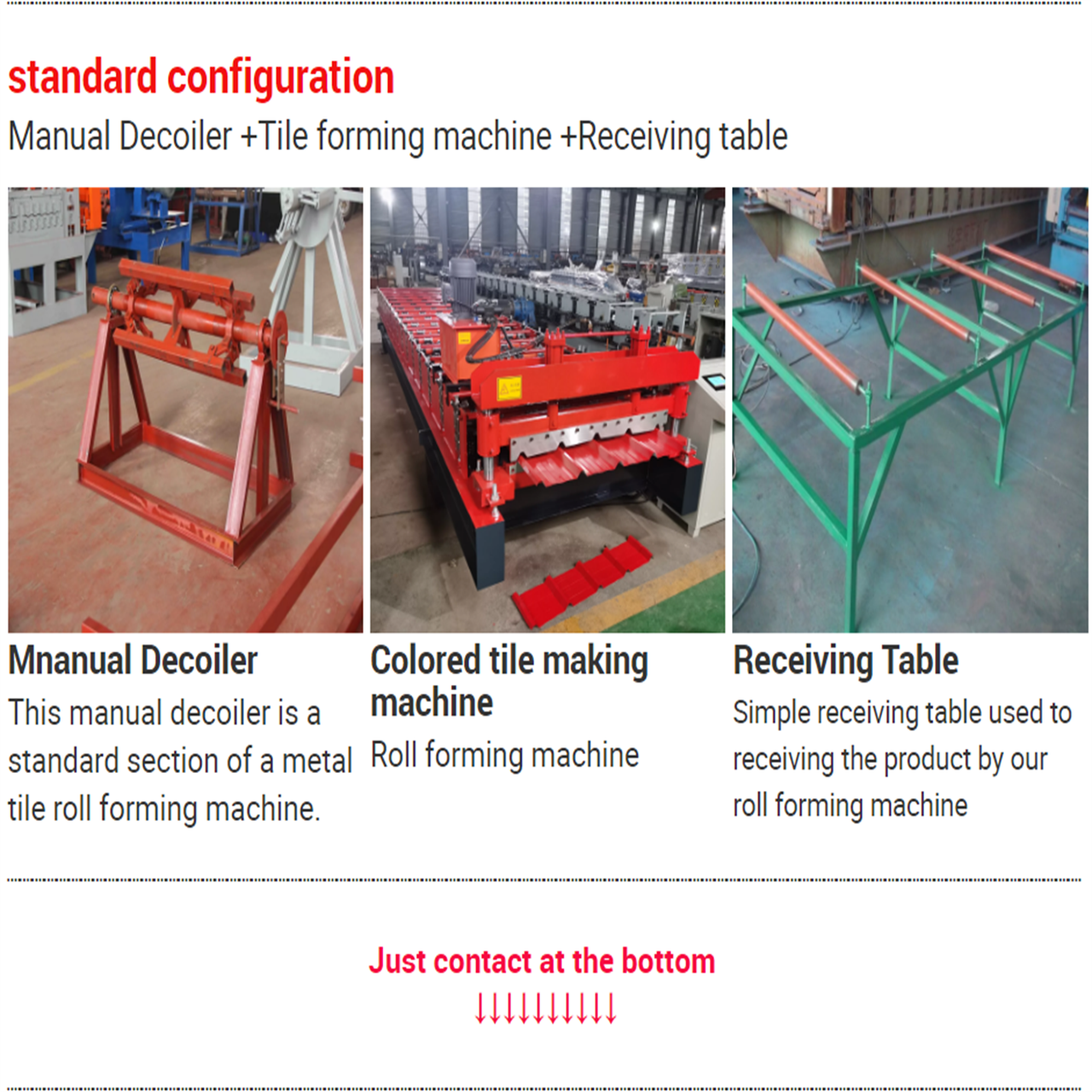
Hebei Xinnuo Roll Forming Machine Co., Ltd., not only produce different types of professional roll forming machines, but also develop intelligent automatic roll forming production lines, C&Z shape purline machines, highway guardrail roll forming machine lines, sandwich panel production lines, decking forming machines, light keel machines, shutter slat door forming machines, downpipe machines, gutter machines, etc.
Advantages of Roll Forming A Metal Part
There are several advantages of using roll forming for your projects:
- The roll forming process allows operations such as punching, notching, and welding to be performed in-line. Labor cost and time for secondary operations are reduced or eliminated, reducing part costs.
- Roll form tooling allows for a high degree of flexibility. A single set of roll form tools will make almost any length of the same cross-section. Multiple sets of tools for varying length parts are not required.
- It can provide better dimensional control than other competing metal forming processes.
- Repeatability is inherent in the process, allowing easier assembly of roll formed parts into your finished product, and minimizing problems due to “standard” tolerance build up.
- Roll forming is typically a higher speed process.
- Roll forming offers customers a superior surface finish. This makes roll forming an excellent option for decorative stainless steel parts or for parts requiring a finish such as anodizing or powder coating. Also, texture or pattern can be rolled into the surface during forming.
- Roll forming utilizes material more efficiently than other competing processes.
- Roll formed shapes can be developed with thinner walls than competing processes
Roll forming is a continuous process which converts sheet metal into an engineered shape using consecutive sets of mated rolls, each of which makes only incremental changes in the form. The sum of these small changes in form is a complex profile.
-
High Precision Hydraulic Press Brake Machine fo...
-
Heavy Duty Hydraulic Press Brake CNC Sheet Meta...
-
Automatic Electric Bending Machine | High Preci...
-
CNC Press Brake Hydraulic Sheet Metal Bending M...
-
Roof Arch Roll Forming Machine Automatic Metal ...
-
CNC Bending Machine | High Precision | Automatic


