

English
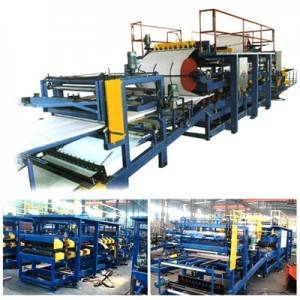
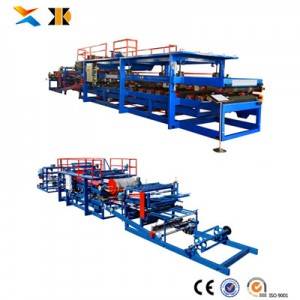
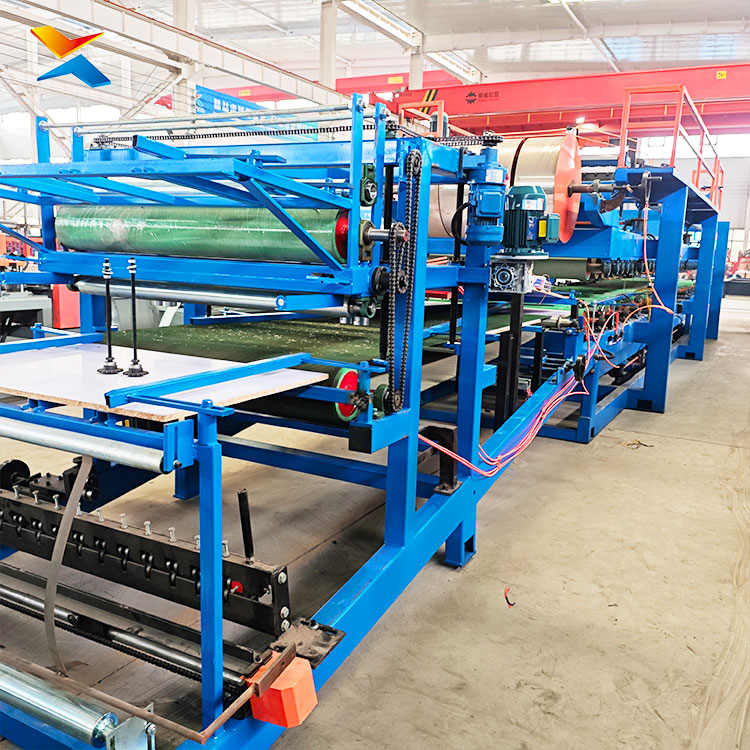
The Xinnuo Coastal Anti-Corrosion Composite Panel Production Line is a specialized variant of our proven automatic fly-cut sandwich panel machine, engineered from the ground up for the unique environmental challenges of the Arabian Gulf coastline. Dubai (Jebel Ali, Dubai Maritime City, Dubai South) and Dammam (King Abdulaziz Port, Dammam Industrial City) are not just hot — they are hot, humid, and perpetually bathed in salt-laden marine aerosol. Standard composite panel machines, designed for inland factories in temperate climates, degrade rapidly in these conditions: unprotected steel frames rust through within 3–5 years, electrical contacts corrode and cause intermittent faults that are nearly impossible to diagnose remotely, and standard powder coating chalks and peels under the combined assault of UV radiation and salt crystallization cycles. The panels these compromised machines produce carry microscopic chloride contamination from the degraded machinery into the building envelope, initiating premature corrosion of the very structures they were meant to protect.
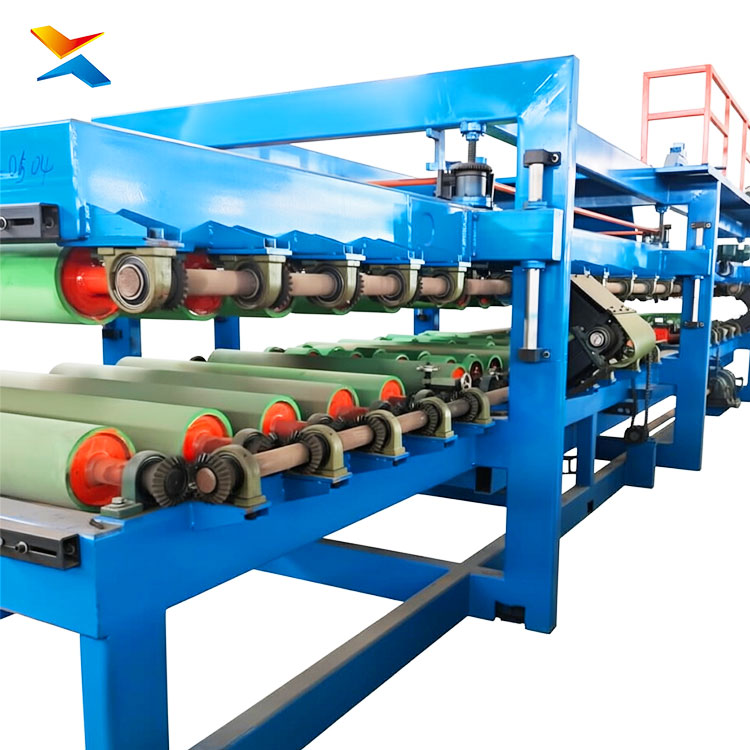
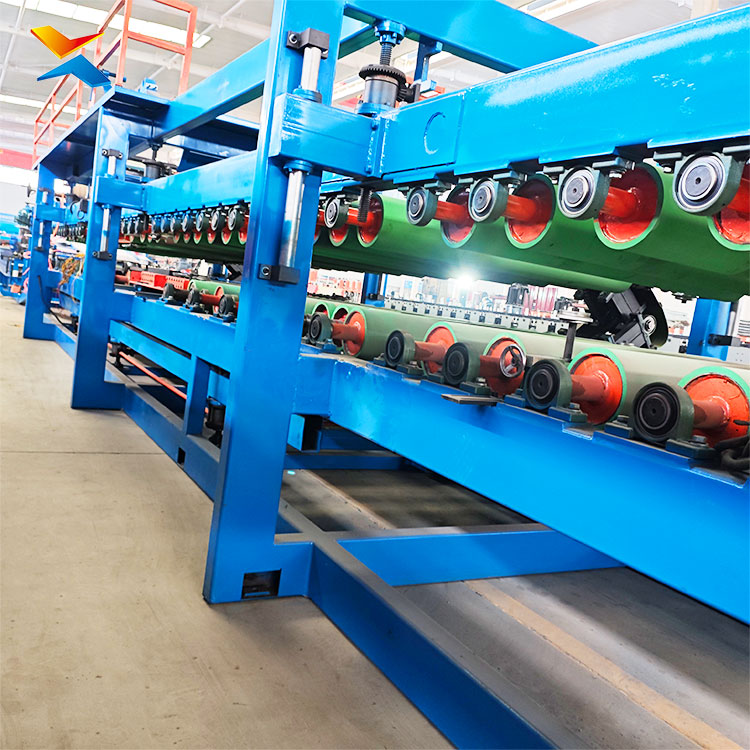
Our Coastal Anti-Corrosion variant addresses every link in this chain of degradation. Every structural steel component — from the 300H main frame and 200×100mm rectangular tube sub-frame to the decoiler arms and conveyor supports — undergoes our standard shot-blast descaling followed by a marine-grade zinc-rich epoxy primer before the final electrostatic powder topcoat and oven cure. This is not the single-layer powder coat used on standard machines; it is a two-coat system adapted from shipbuilding and offshore platform fabrication, where the zinc-rich primer provides sacrificial cathodic protection that prevents rust from propagating even if the topcoat is scratched during installation or maintenance. All fasteners, chain tensioners, and exposed adjustment mechanisms are specified in 304 stainless steel as standard, with an upgrade path to 316L for facilities located within 500 meters of the shoreline — the zone where chloride deposition rates are highest and where 304 stainless alone can still pit over a 10–15 year service horizon.
The forming rollers — which contact the steel coil directly and therefore transfer any surface contamination to the panel skin — are fabricated from GCr15 bearing steel and hard-chrome plated to 0.05–0.08mm thickness, exceeding the industry norm of 0.03mm. This thicker chrome layer is not about wear resistance alone; it is a chemical barrier. In a coastal factory, the thin film of condensed moisture that forms on roller surfaces during overnight cooling carries dissolved chlorides. On standard chrome plating, micro-pores in the chromium layer allow these chlorides to reach the steel substrate, forming rust spots that then imprint onto every panel produced. Our 0.05–0.08mm plating specification, combined with a post-plating sealing treatment, eliminates this micro-porosity pathway.
The electrical and control systems receive equal attention. All PLC cabinets, inverter enclosures, and terminal junction boxes are upgraded from IP54 to IP65-rated sealed enclosures with neoprene gaskets and cable glands. A positive-pressure ventilation system — a small filtered blower fan maintaining slight overpressure inside each cabinet — prevents the ingress of salt-laden humid air when cabinet doors are opened for maintenance. Every exposed electrical terminal is coated with a dielectric anti-corrosion grease. The Delta PLC and Delta inverter units themselves are the same globally proven hardware we use on all machines, but their installation environment is transformed from “industrial indoor” to “marine industrial” — and that transformation is what prevents the intermittent contact faults, ground-loop corrosion, and creeping PCB trace failure that plague standard machines in coastal factories.
The CE certification referenced in our title is not a cosmetic badge. It means our machine has been audited against the EU Machinery Directive 2006/42/EC by a Notified Body, and every safety system — emergency stops, light curtains, interlocked guards, electrical isolation procedures — is documented, tested, and traceable. For Dubai and Dammam buyers, many of whom are supplying panels to projects designed by European engineering consultants or funded by international development banks with EU procurement standards, CE certification is a de facto prerequisite for supplier qualification. Our ISO 9001:2015 quality management system, also independently audited, ensures that the anti-corrosion measures specified in the design are actually implemented in production — not bypassed when a production manager is under schedule pressure.



♦ COMPANY PROFILE:
Hebei Xinnuo Roll Forming Machine Co., Ltd., not only produce different types of professional roll forming machines, but also develop intelligent automatic roll forming production lines, C&Z shape purline machines, highway guardrail roll forming machine lines, sandwich panel production lines, decking forming machines, light keel machines, shutter slat door forming machines, downpipe machines, gutter machines, etc.
Advantages of Roll Forming A Metal Part
There are several advantages of using roll forming for your projects:
- The roll forming process allows operations such as punching, notching, and welding to be performed in-line. Labor cost and time for secondary operations are reduced or eliminated, reducing part costs.
- Roll form tooling allows for a high degree of flexibility. A single set of roll form tools will make almost any length of the same cross-section. Multiple sets of tools for varying length parts are not required.
- It can provide better dimensional control than other competing metal forming processes.
- Repeatability is inherent in the process, allowing easier assembly of roll formed parts into your finished product, and minimizing problems due to “standard” tolerance build up.
- Roll forming is typically a higher speed process.
- Roll forming offers customers a superior surface finish. This makes roll forming an excellent option for decorative stainless steel parts or for parts requiring a finish such as anodizing or powder coating. Also, texture or pattern can be rolled into the surface during forming.
- Roll forming utilizes material more efficiently than other competing processes.
- Roll formed shapes can be developed with thinner walls than competing processes
Roll forming is a continuous process which converts sheet metal into an engineered shape using consecutive sets of mated rolls, each of which makes only incremental changes in the form. The sum of these small changes in form is a complex profile.