

English
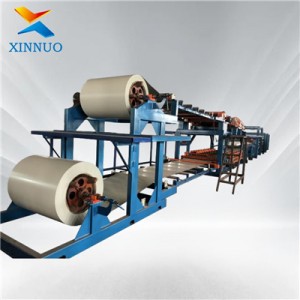
The Hebei Xinnuo Automatic Fly-Cut Sandwich Panel Roll Forming Machine is a fully integrated, heavy-duty continuous production line purpose-built for the Gulf Cooperation Council (GCC) construction and cold-chain industries. Unlike conventional stop-cut sandwich panel lines that pause for every cut — wasting 1–2 meters of material per cycle and leaving visible seam marks — our fly-cut system keeps the panel continuously moving at 2–6 meters per minute while the dual-blade cutting carriage travels in sync, delivering clean, burr-free cuts without ever stopping the line. This single design choice eliminates the single largest source of material waste and panel defects in composite panel manufacturing.
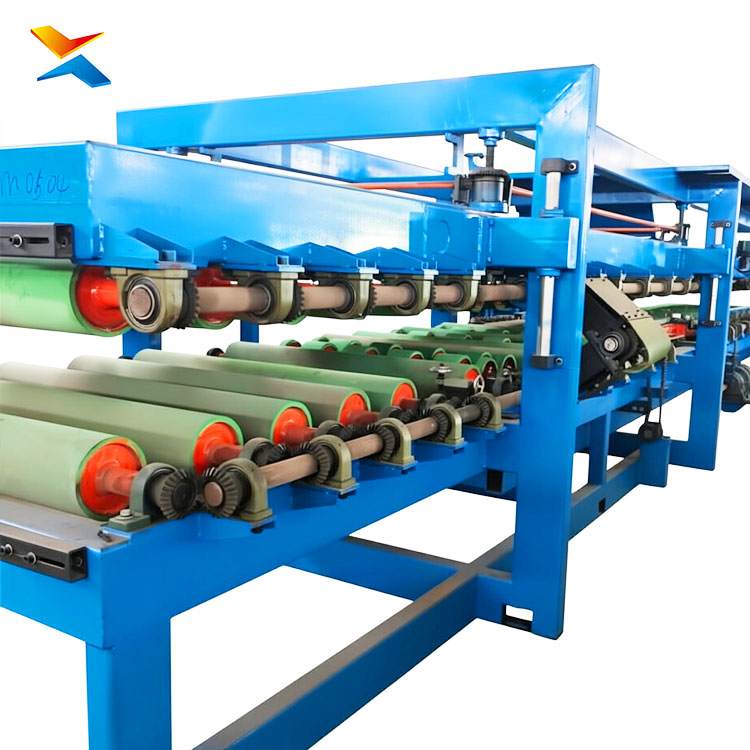
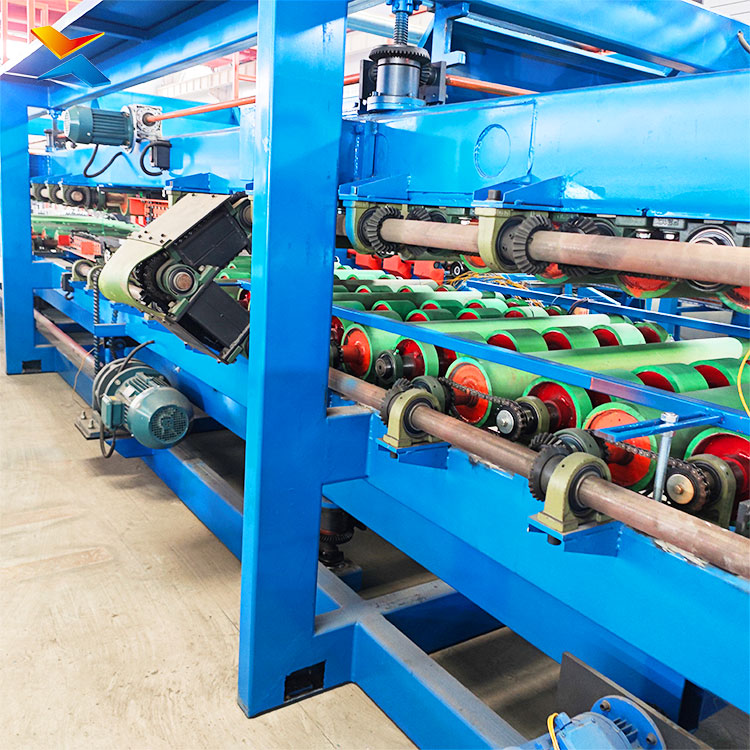
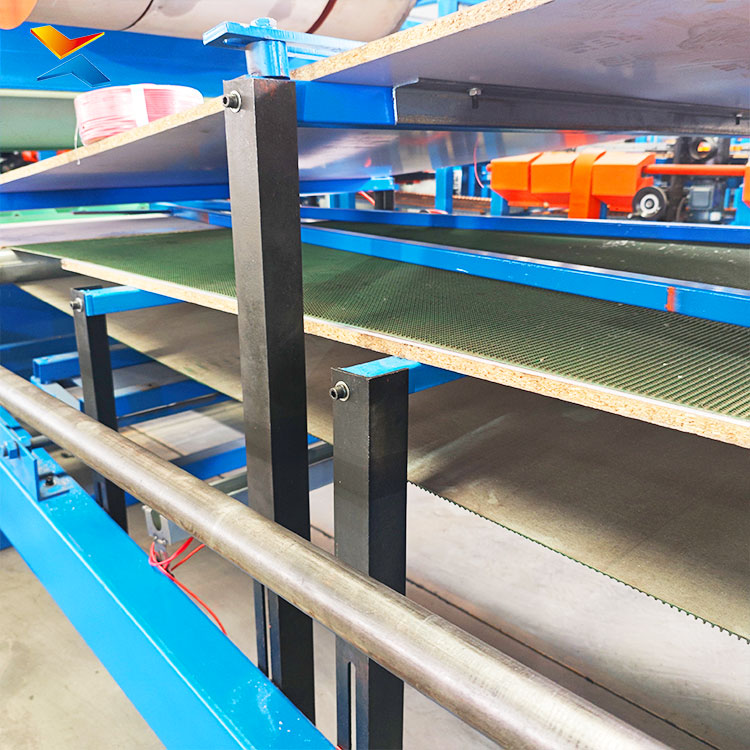
The machine simultaneously forms the upper and lower steel skins from two independently tensioned color-coated steel coils (0.3–0.8mm thickness), then laminates them with an insulation core — EPS foam, PU polyurethane, rock wool, or glass wool — inside a 9-meter-long, 54-roller glue-lamination host whose bed is CNC-machined to a 0.05mm flatness tolerance across its entire 12-meter span. The result is a perfectly flat, void-free sandwich panel with consistent thickness from edge to edge, suitable for everything from 50mm-thick interior partition panels to 200mm-thick structural cold-storage panels. The entire operation is governed by an in-house-programmed Delta PLC with a Delta inverter, giving the operator full control over line speed, glue pump metering ratios, cutting length presets, and core-material feed synchronization from a single touchscreen interface. When an electrical issue arises — and in continuous production, every machine eventually needs troubleshooting — our self-programmed PLC means the solution is one WeChat or WhatsApp video call away, with zero dependency on third-party service contractors who may be days or weeks out.
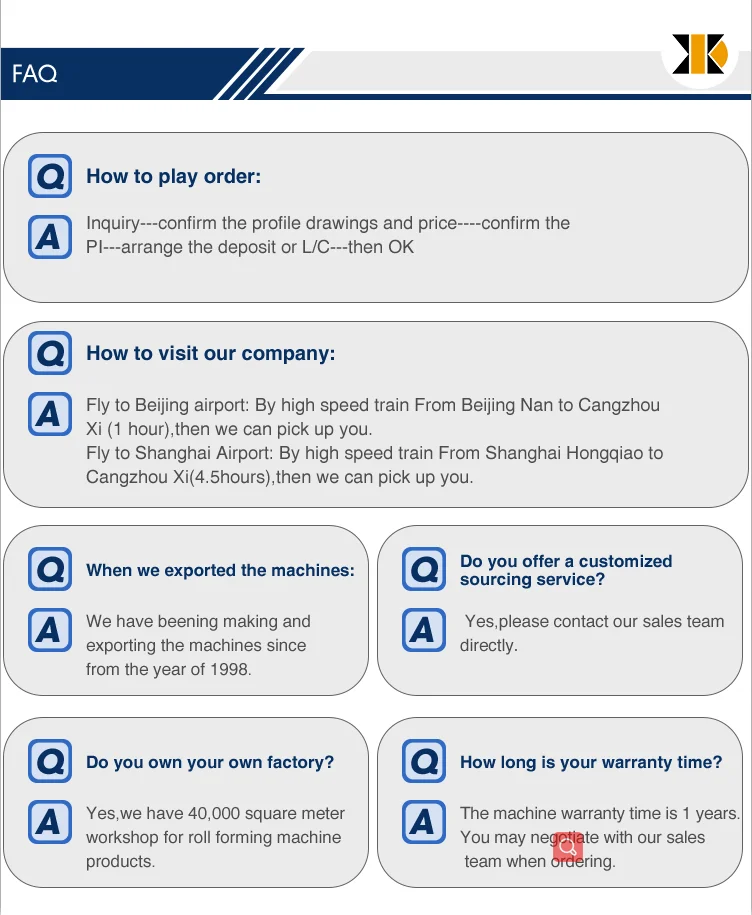
Hebei Xinnuo (also trading as Tianjin Xinnuo) brings 28 years of continuous cold roll forming engineering experience to every machine, validated by a 14-year unbroken Alibaba Gold Supplier track record with on-site factory audits by SGS and TÜV. Our current annual output of 150+ composite panel machines — shipped to over 30 countries including the UAE, Saudi Arabia, Qatar, Oman, Kuwait, Israel, Russia, Turkey, Uzbekistan, India, Vietnam, Algeria, Brazil, and Nepal — means that every mechanical and electrical design iteration we release has been field-tested by hundreds of real-world production environments, not just simulated on a computer. For the GCC buyer, this means receiving a machine that already knows how to handle 50°C ambient temperatures, fine desert dust ingress, 60Hz power grids, and the A-grade fire-rating requirements embedded in Gulf building codes — because we have already solved those problems for customers in Dubai, Riyadh, Doha, and Muscat.


♦ COMPANY PROFILE:
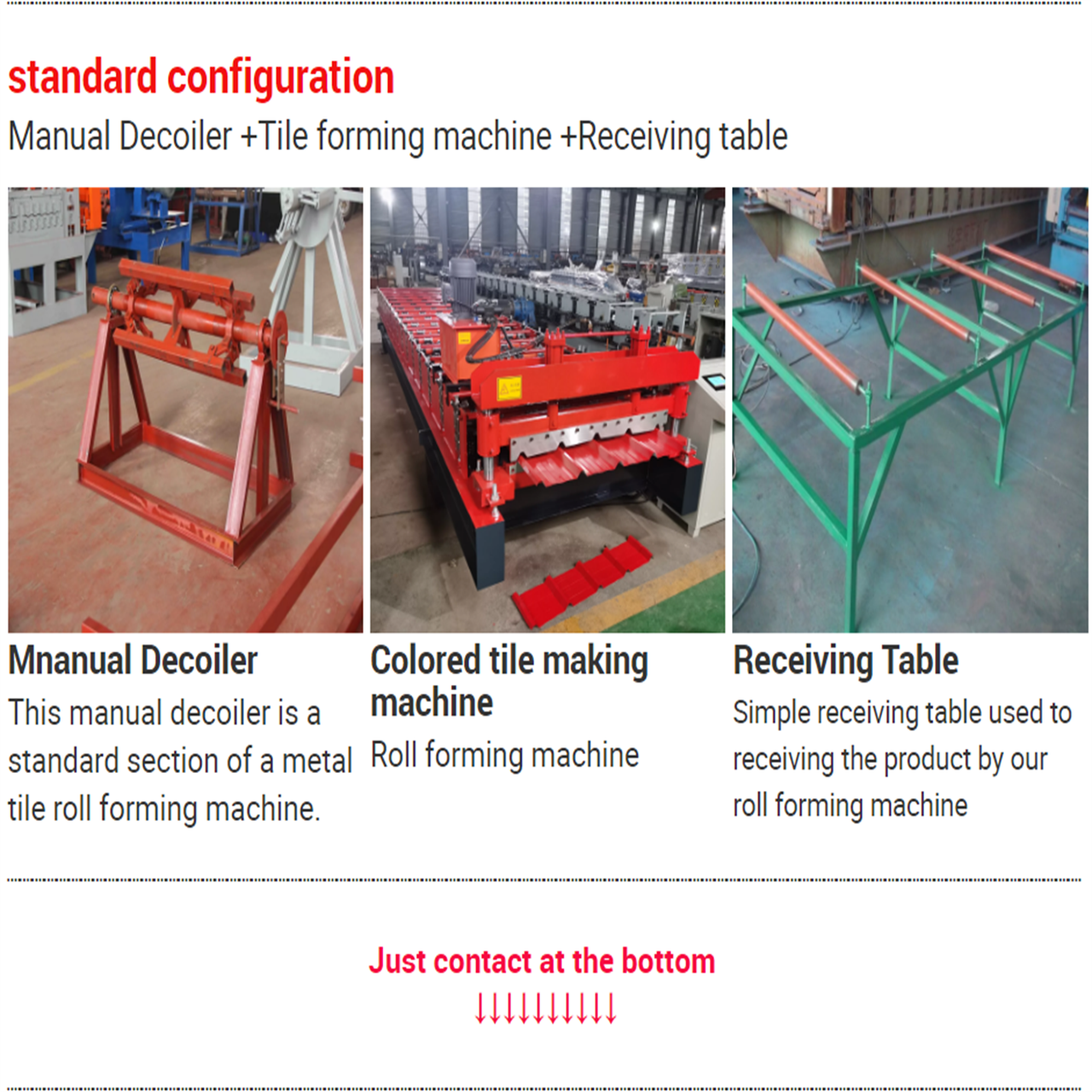
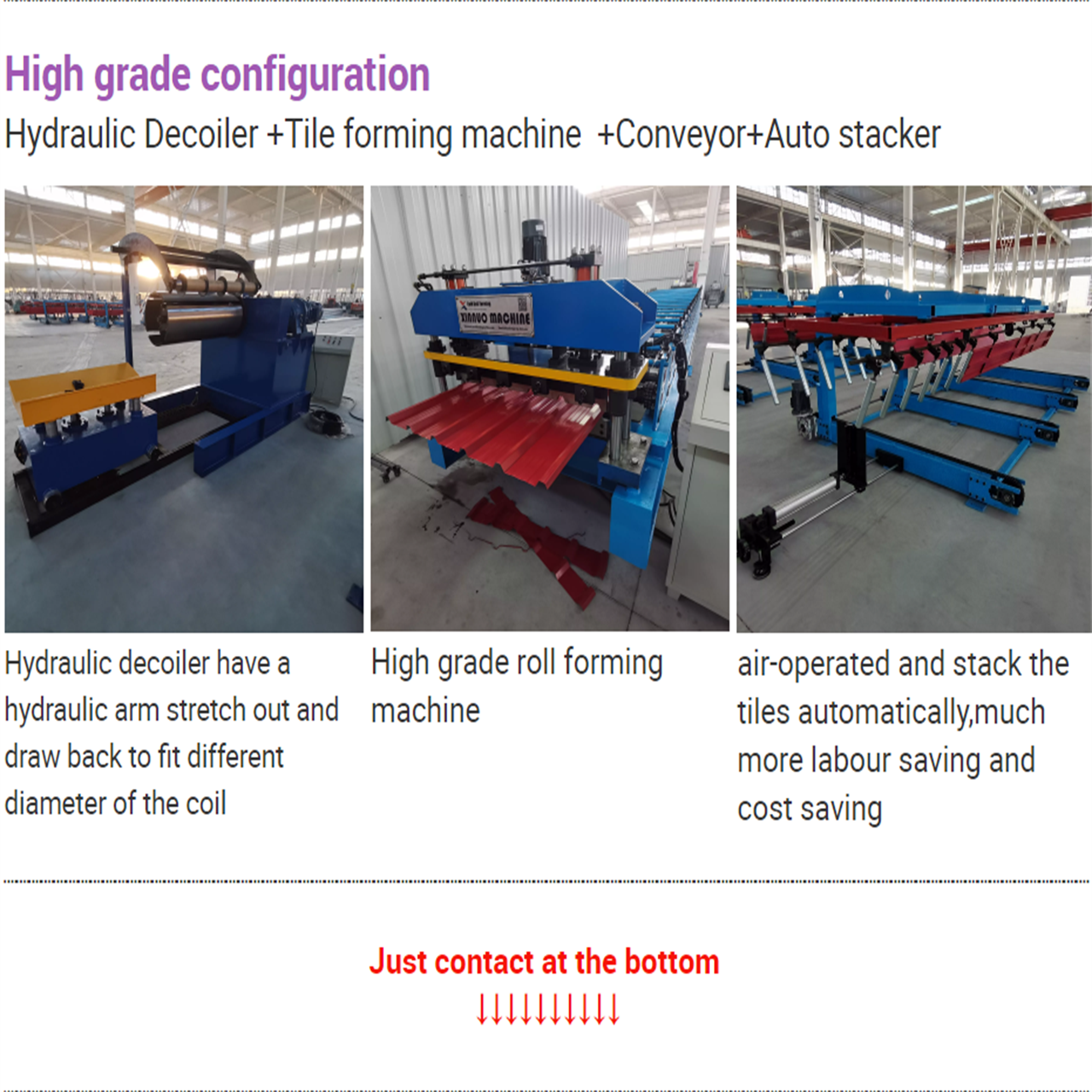
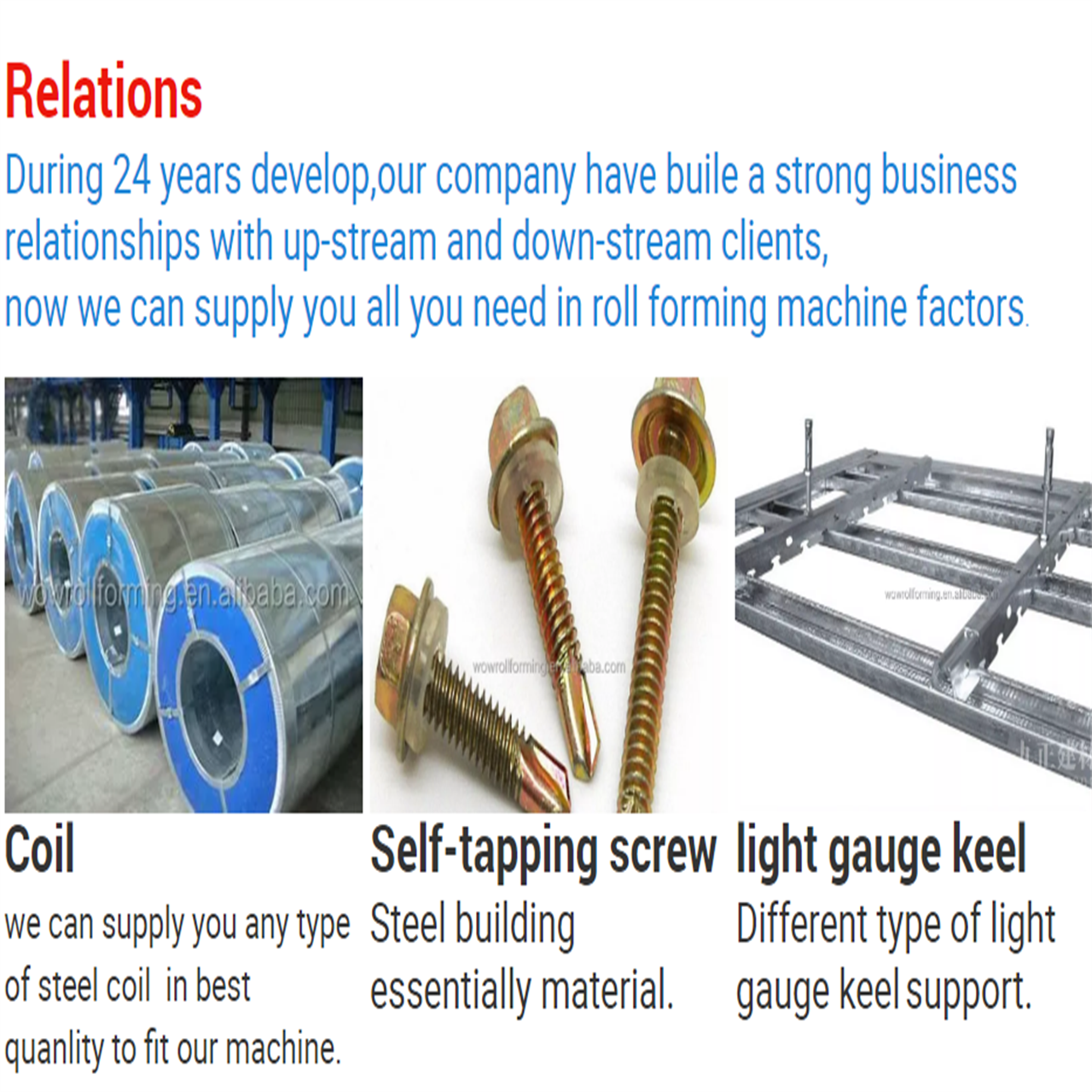
Hebei Xinnuo Roll Forming Machine Co., Ltd., not only produce different types of professional roll forming machines, but also develop intelligent automatic roll forming production lines, C&Z shape purline machines, highway guardrail roll forming machine lines, sandwich panel production lines, decking forming machines, light keel machines, shutter slat door forming machines, downpipe machines, gutter machines, etc.
Advantages of Roll Forming A Metal Part
There are several advantages of using roll forming for your projects:
- The roll forming process allows operations such as punching, notching, and welding to be performed in-line. Labor cost and time for secondary operations are reduced or eliminated, reducing part costs.
- Roll form tooling allows for a high degree of flexibility. A single set of roll form tools will make almost any length of the same cross-section. Multiple sets of tools for varying length parts are not required.
- It can provide better dimensional control than other competing metal forming processes.
- Repeatability is inherent in the process, allowing easier assembly of roll formed parts into your finished product, and minimizing problems due to “standard” tolerance build up.
- Roll forming is typically a higher speed process.
- Roll forming offers customers a superior surface finish. This makes roll forming an excellent option for decorative stainless steel parts or for parts requiring a finish such as anodizing or powder coating. Also, texture or pattern can be rolled into the surface during forming.
- Roll forming utilizes material more efficiently than other competing processes.
- Roll formed shapes can be developed with thinner walls than competing processes
Roll forming is a continuous process which converts sheet metal into an engineered shape using consecutive sets of mated rolls, each of which makes only incremental changes in the form. The sum of these small changes in form is a complex profile.
-
Automatic Composite Board Roll Forming Machine
-
Full Automatic Sandwich Panel Roll Forming Mach...
-
Military Camp Modular Composite Panel Line for ...
-
sandwich panel making machine roofing sheet mak...
-
Pharma Cleanroom Sandwich Panel Line for GCC | ...
-
Lap Joint Sandwich Panel Machine for Saudi Arab...