


Trapezoidal Sheet Roll Forming Machine & IBR Corrugated Metal Roofing Panel Roll Former – The Machine That Roofs the Middle East
Metal roofing sheet is the most widely used roofing material in the Middle East. Walk through any industrial city in Saudi Arabia, any logistics park in the UAE, any farm building in Iraq or Egypt, and you will see the same sight: rows of strong, lightweight metal roof panels — trapezoidal profiles covering warehouses and factories, IBR corrugated sheets covering farm buildings and residential extensions, all manufactured on the same type of machine: the single-layer roll forming machine.
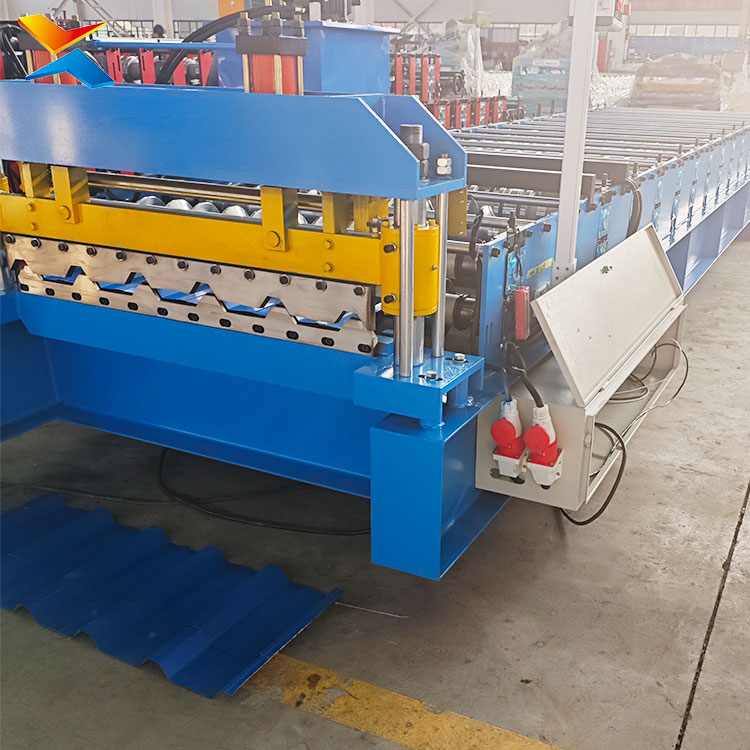
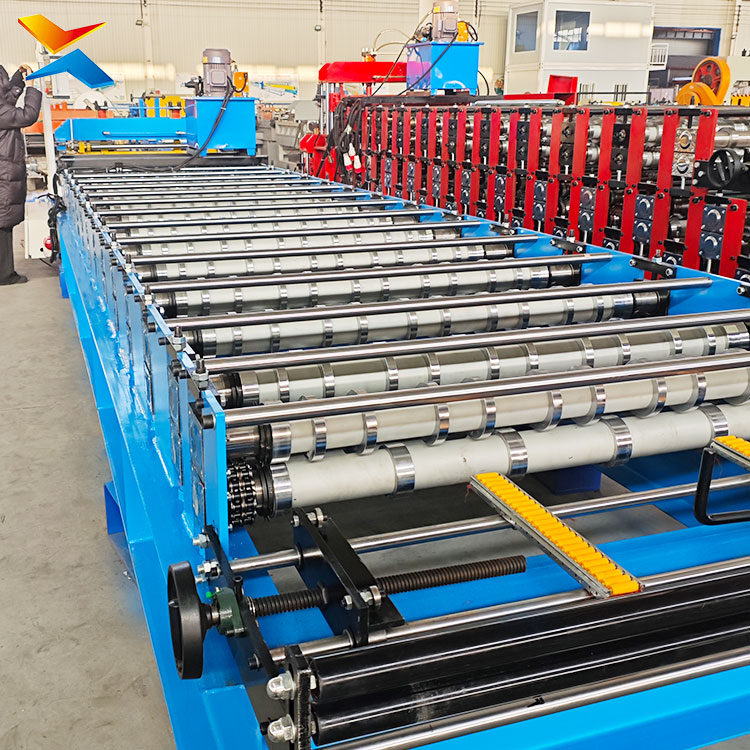
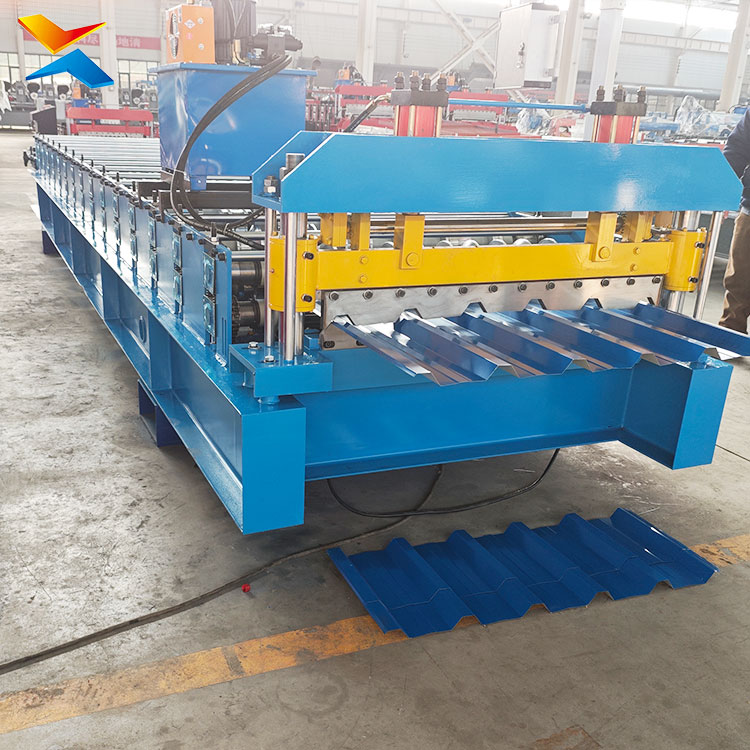
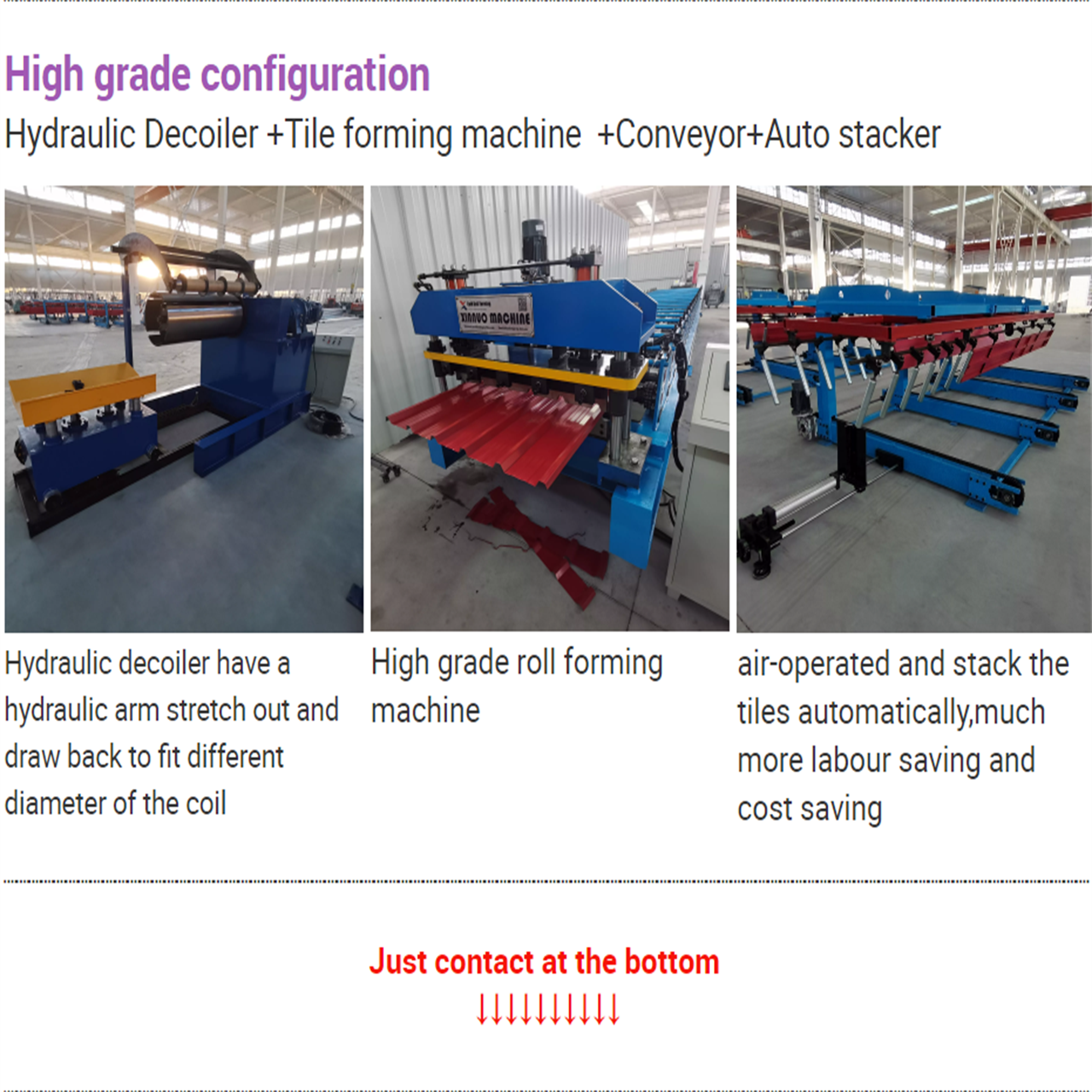
Hebei Xinnuo Roll Forming Machinery Co., Ltd. manufactures trapezoidal sheet roll forming machines and IBR corrugated metal roofing panel roll formers for building roof applications — the machine category that is our largest product line, built from 360+ production-proven profiles accumulated over 15 years of manufacturing and exported to 40+ countries. From the classic 840/900/1000/1050 trapezoidal profiles to the IBR corrugated profiles that dominate the African and Middle Eastern roofing market, Xinnuo covers the complete panel spectrum with machine tiers from economy to high-speed archway, so every roof sheet producer — from a startup workshop to a large building material company — gets a machine matched to its production volume and budget.
This page is written for building material producers, roofing contractors, and metal building investors across the Middle East and Africa. It explains the two panel families this machine produces (trapezoidal and IBR corrugated), the profile variables that define every panel, the machine tier system that matches equipment to production volume, and how the machine line is configured for the Middle East’s climate, construction culture, and market economics.
Two Panel Families, One Machine Type
1. Trapezoidal Sheets (梯形板) — The Workhorse of Industrial Roofing Trapezoidal panels have raised trapezoid-shaped ribs running along the sheet length. They are the standard choice for industrial buildings: warehouses, factories, workshops, hangars, and commercial structures across the GCC. The trapezoid rib geometry gives the panel high load-bearing capacity with low material weight — the reason steel buildings everywhere use trapezoidal cladding. Common profiles: 840, 900, 1000, 1050 (the number is the effective coverage width in mm).
2. IBR Corrugated Sheets (IBR 波纹板) — The African & Middle East Favorite IBR (Inverted Box Rib) is the corrugated sheet profile that dominates roofing in Southern Africa, East Africa, and large parts of the Middle East. Its shallow, evenly spaced ribs make it economical in material, easy to handle and install, and visually clean — the standard sheet for farm buildings, warehouses, residential roofs, and boundary structures. IBR is so established in these markets that it is simply “the roofing sheet” — the profile buyers ask for by name. Xinnuo produces IBR-family profiles including the 686 mm effective width class widely used across these markets. [Exact IBR profile dimensions to be confirmed against your sample or profile drawing at inquiry.]
Why the Middle East Is a Metal Roofing Machine Market
The Middle East builds with steel, and steel buildings need metal roofs:
- Climate: Intense solar radiation, heat, dust, and — on the coasts — salt-laden humidity make metal roofing the rational choice: reflective, durable, and resistant to the region’s punishing conditions.
- Construction speed: Gulf construction programs — from Saudi Vision 2030 giga-projects to logistics parks in the UAE and Qatar — run on tight schedules. Metal roofing panels are manufactured on site or regionally, delivered in days, and installed in hours, versus weeks for concrete or clay roofing.
- Industrial expansion: The region’s industrial cities, labor camps, warehouses, and agricultural programs consume metal roofing sheet by the tens of thousands of square meters — and every square meter starts on a roll forming machine.
- Local production economics: Importing finished roof sheet is expensive; importing a roll forming machine once, then producing sheet locally from coil, cuts material cost dramatically and builds a permanent business. This is why roof sheet production is one of the most popular metal businesses to start in the Middle East today.



♦ COMPANY PROFILE:
Hebei Xinnuo Roll Forming Machine Co., Ltd., not only produce different types of professional roll forming machines, but also develop intelligent automatic roll forming production lines, C&Z shape purline machines, highway guardrail roll forming machine lines, sandwich panel production lines, decking forming machines, light keel machines, shutter slat door forming machines, downpipe machines, gutter machines, etc.
Advantages of Roll Forming A Metal Part
There are several advantages of using roll forming for your projects:
- The roll forming process allows operations such as punching, notching, and welding to be performed in-line. Labor cost and time for secondary operations are reduced or eliminated, reducing part costs.
- Roll form tooling allows for a high degree of flexibility. A single set of roll form tools will make almost any length of the same cross-section. Multiple sets of tools for varying length parts are not required.
- It can provide better dimensional control than other competing metal forming processes.
- Repeatability is inherent in the process, allowing easier assembly of roll formed parts into your finished product, and minimizing problems due to “standard” tolerance build up.
- Roll forming is typically a higher speed process.
- Roll forming offers customers a superior surface finish. This makes roll forming an excellent option for decorative stainless steel parts or for parts requiring a finish such as anodizing or powder coating. Also, texture or pattern can be rolled into the surface during forming.
- Roll forming utilizes material more efficiently than other competing processes.
- Roll formed shapes can be developed with thinner walls than competing processes
Roll forming is a continuous process which converts sheet metal into an engineered shape using consecutive sets of mated rolls, each of which makes only incremental changes in the form. The sum of these small changes in form is a complex profile.


