


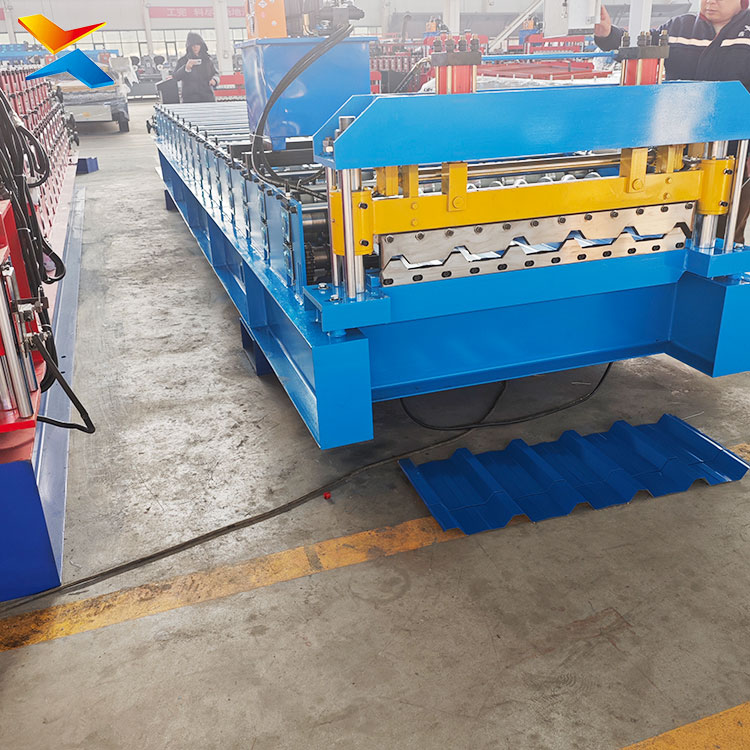
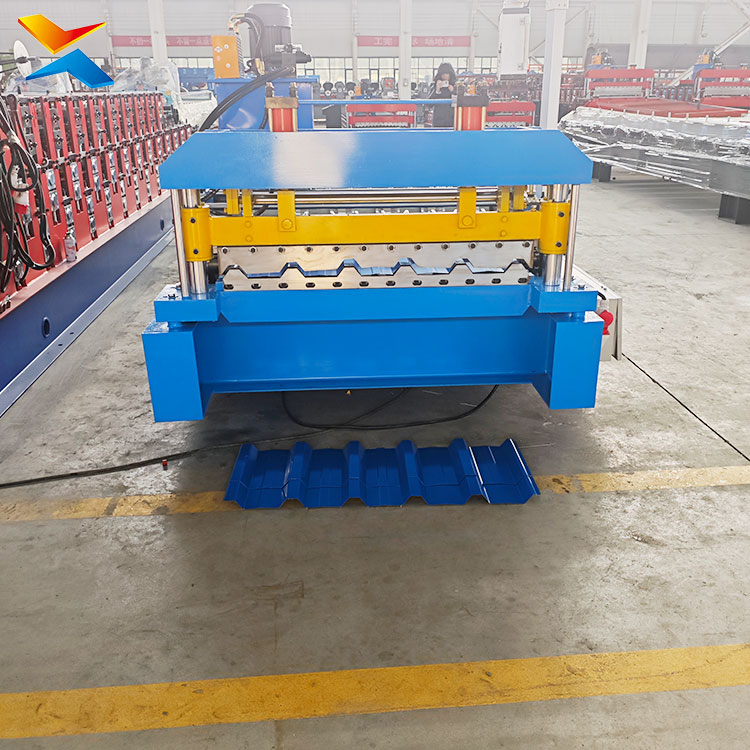
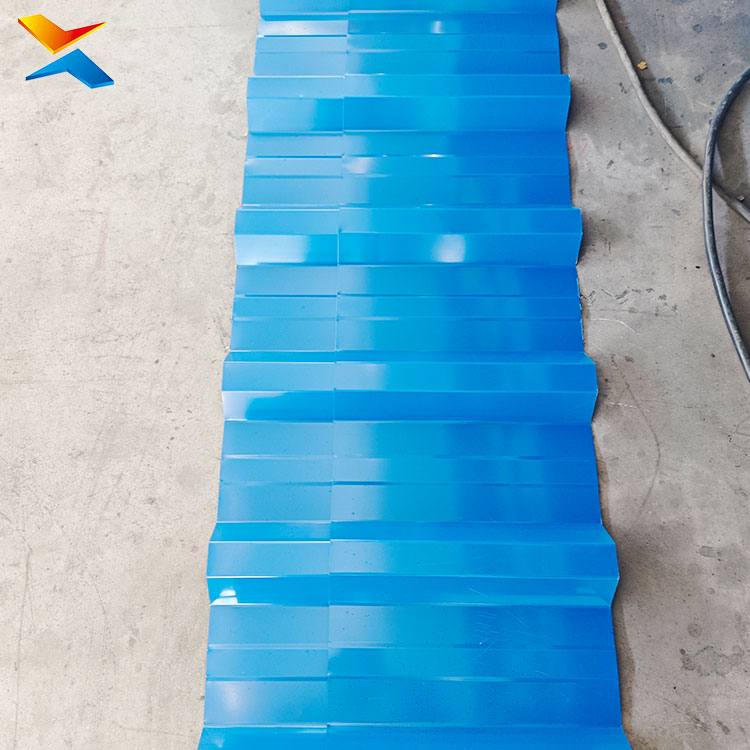
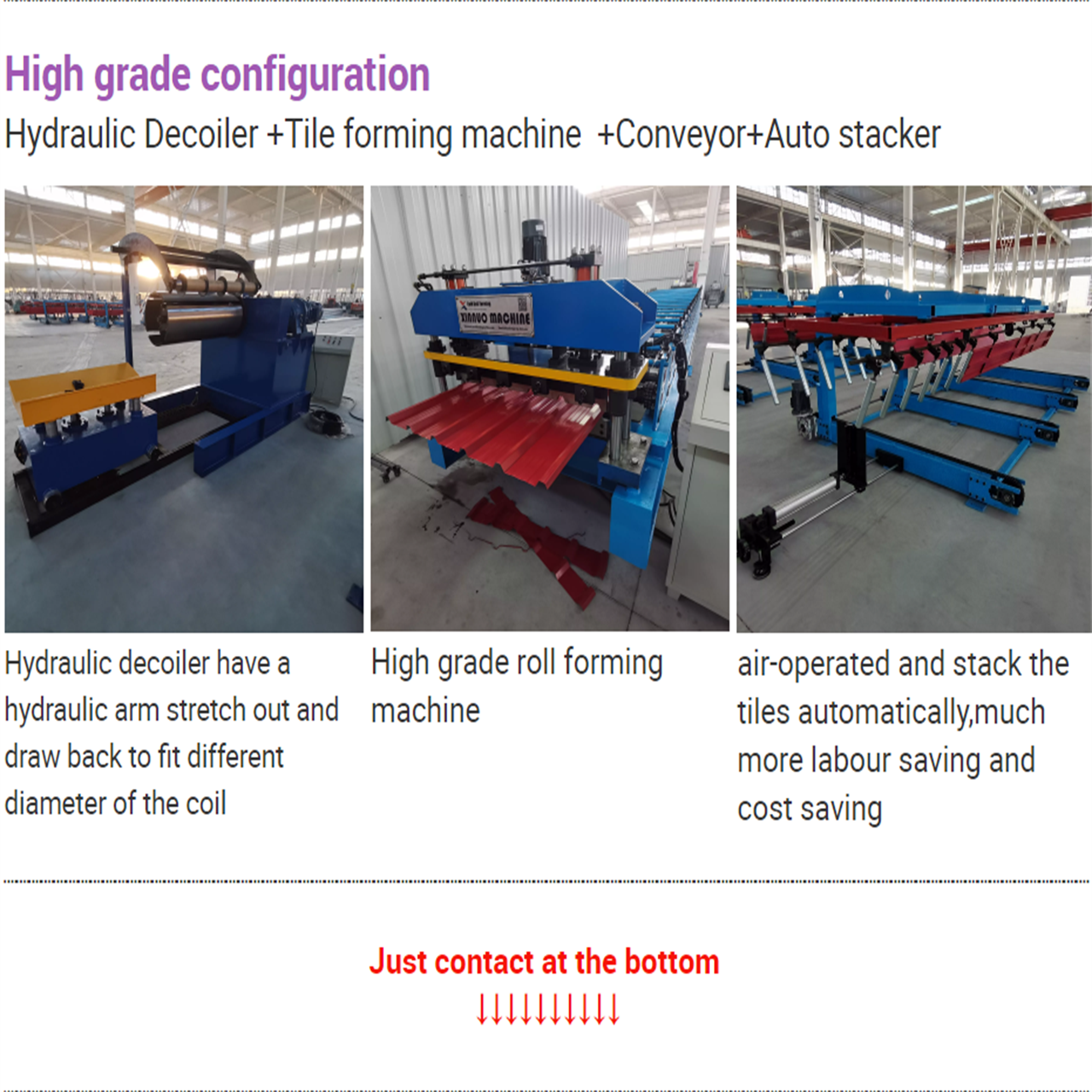
The Hebei Xinnuo Trapezoidal IBR Roll Forming Machine is a single-layer trapezoidal roof panel production line engineered for the metal roofing sheet segment of the construction industry — the machine that converts steel coil into the trapezoidal roof and wall panels that cover the majority of industrial, commercial, and agricultural steel-frame buildings across the Middle East. The “IBR” designation in the title refers to the customer’s specified roof profile — the widely used trapezoidal roofing sheet geometry whose exact dimensions (effective width, peak count, peak height) are defined by the project’s roofing specification or the customer’s market standard, and whose forming rollers are manufactured to match. Xinnuo’s single-layer panel machine platform covers 360+ production-proven profiles across effective widths of 600–1200mm, 3–12 peaks, and 9–45mm peak heights — spanning the full trapezoidal sheet spectrum — so whatever IBR variant your market specifies, the machine is built from a catalog of production-proven roller designs rather than a prototype. The product name of each configuration encodes its dimensions: the HY type code (for example HY25-210-840) directly states the rib height, pitch, and effective width, letting the buyer verify — in the model number itself — that the machine produces exactly the profile ordered.
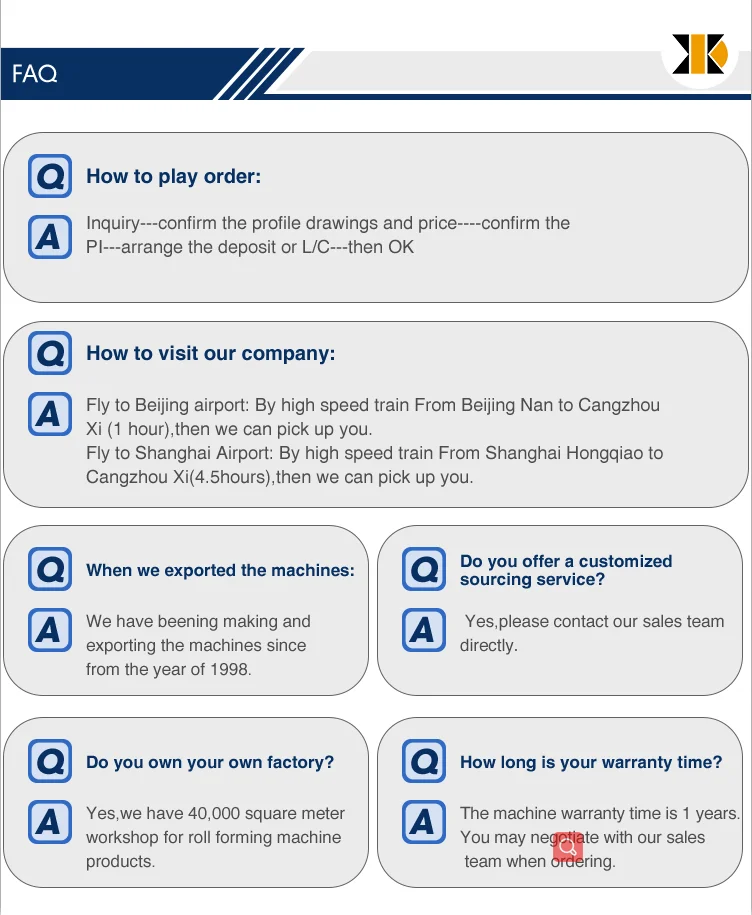
The ”Factory Price” designation is a structural fact of how Hebei Xinnuo operates, not a promotional claim. Xinnuo is the manufacturer: 28 years of continuous cold roll forming engineering from our Botou, Hebei factory — the roll forming machinery hub of China — with annual output of over 1,000 machines across the product range and a 14-year Alibaba Gold Supplier record verified by SGS/TÜV on-site audits. The machine you buy is quoted and built by the same company that designs the rollers, machines the frames, welds the structure, programs the PLC, and dispatches the commissioning engineer — there is no trading company, no intermediary margin, and no spec-substitution risk in the chain between the quotation and the delivered machine. The factory-price structure is supported by a five-tier machine system that matches machine specification to production volume and budget: Economy (9–12 rows, 250–300 channel frame, Φ65–70mm shafts, 3–4KW) for low-volume entry production; Standard (12–16 rows, 300–350H frame, Φ70–80mm shafts, 4–5.5KW, 6分双排 chain) as the baseline for typical roofing sheet volumes; Heavy (16–22 rows, 350H frame, Φ75–85mm, 5.5–7.5KW) for thick-gauge and high-volume production; High-speed (18–22 rows, 350–400H frame, Φ80–90mm, 7.5KW+ with hydraulic flying-cut option) for production runs where line speed is the bottleneck; and Archway (22–24 rows, 400–500H gantry frame, Φ85–100mm, hydraulic motor + gearbox) as the premium tier for the smoothest high-speed operation with minimal vibration. The buyer specifies the target profile and production volume; Xinnuo quotes the correct tier — the factory-price quotation is the price for the machine that matches the need, not the maximum machine that fits the budget.
The machine’s construction quality follows the standard that supports the factory-price model. The main frame is welded from structural steel with CO₂ gas-shielded welding, shot-blasted before electrostatic powder coating, and machined to the flatness and alignment tolerances that hold profile accuracy across years of production. The forming rollers are manufactured from GCr15 bearing steel through the same six-stage process — forging, rough turning, quenching, finish turning, keyway cutting, and hard chrome plating — that is used across the Xinnuo product range, delivering the dimensional accuracy and wear resistance that keep the profile consistent from the first sheet to the millionth. The standard 5-peak configuration — the most common order across the 840/900/1000/1050 profile families — is built to the baseline specification of 14–16 rows, 350H frame, Φ75–80mm shafts, 4KW power, 6分双排 chain drive, 1000–1220mm feed width, with variations up or down in rows, frame class, and power based on peak count and production volume. Optional features extend the machine’s range: the A-wheel (带A轮) edge-forming attachment that creates a turned-up lip on one panel edge for improved weather sealing — a common specification on export profiles; the inline arching mechanism (带打拱一体机) that curves panels after forming for arched roofs and agricultural tunnel buildings (reference DB155: 16-row 5-peak 760 with arching); and the reverse-press configuration (反压机) for profiles that must be formed upside down for specific installation orientations (DB128, DB152).
For the Middle East construction market, the trapezoidal IBR machine serves the region’s dominant building typology — the steel-frame warehouse, factory, logistics hall, and agricultural building — where trapezoidal roofing sheets form the primary envelope. The machine is backed by Hebei Xinnuo’s complete support framework: ISO 9001:2015 certified manufacturing, CE certification issued by an EU Notified Body under the Machinery Directive 2006/42/EC, National High-Tech Enterprise certification, on-site installation and commissioning by senior engineers, operator training, 24/7 WeChat/WhatsApp remote diagnostics, and spare parts shipped via DHL express to ports and industrial hubs across the GCC and wider Middle East. With 360+ production-proven profiles, 15 years of export history across 40+ countries, and the factory-price structure of a direct manufacturer, the Xinnuo trapezoidal IBR machine delivers the metal roofing sheet production capability the region’s construction pipeline requires, at the price structure only a manufacturer can offer.


♦ COMPANY PROFILE:
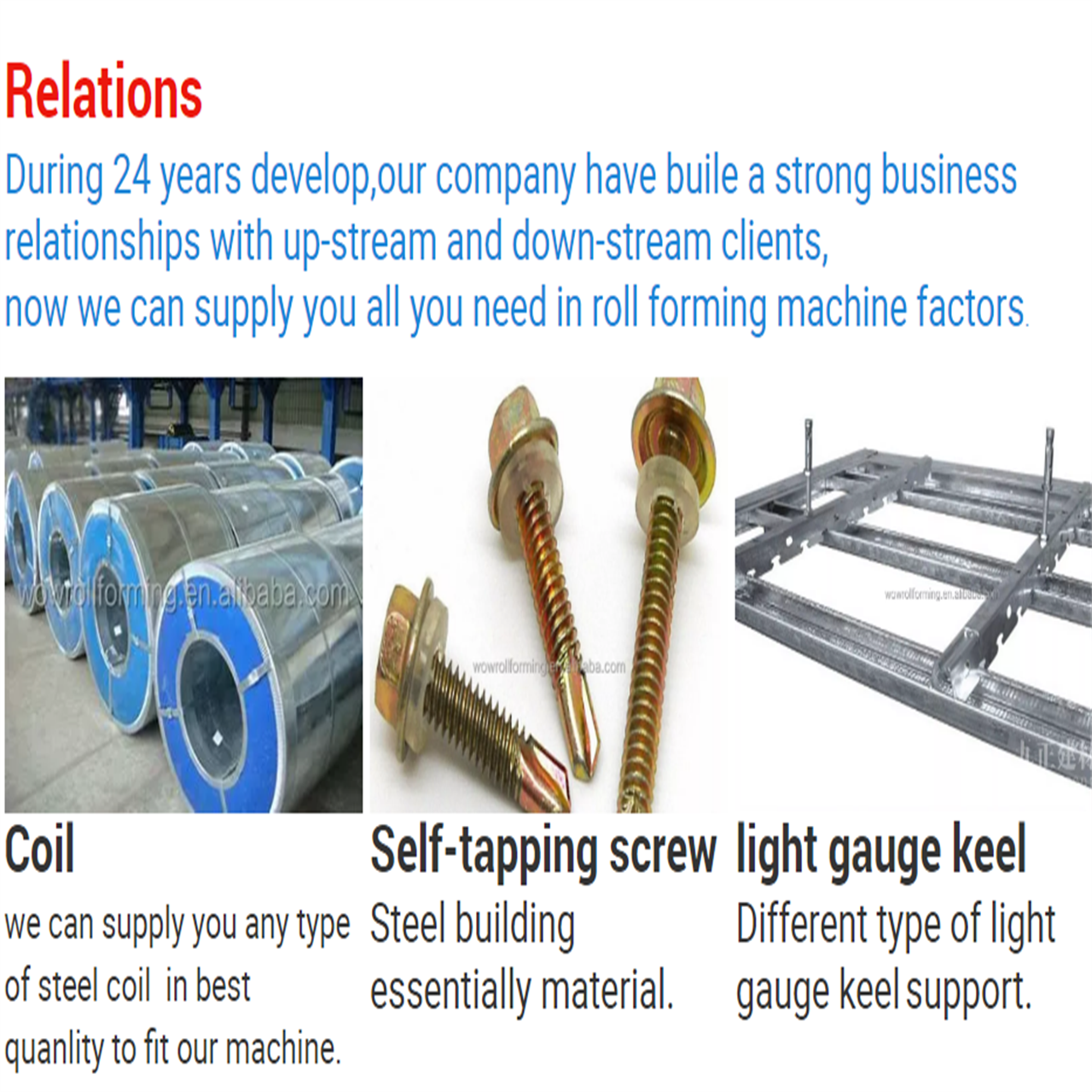
Hebei Xinnuo Roll Forming Machine Co., Ltd., not only produce different types of professional roll forming machines, but also develop intelligent automatic roll forming production lines, C&Z shape purline machines, highway guardrail roll forming machine lines, sandwich panel production lines, decking forming machines, light keel machines, shutter slat door forming machines, downpipe machines, gutter machines, etc.
Advantages of Roll Forming A Metal Part
There are several advantages of using roll forming for your projects:
- The roll forming process allows operations such as punching, notching, and welding to be performed in-line. Labor cost and time for secondary operations are reduced or eliminated, reducing part costs.
- Roll form tooling allows for a high degree of flexibility. A single set of roll form tools will make almost any length of the same cross-section. Multiple sets of tools for varying length parts are not required.
- It can provide better dimensional control than other competing metal forming processes.
- Repeatability is inherent in the process, allowing easier assembly of roll formed parts into your finished product, and minimizing problems due to “standard” tolerance build up.
- Roll forming is typically a higher speed process.
- Roll forming offers customers a superior surface finish. This makes roll forming an excellent option for decorative stainless steel parts or for parts requiring a finish such as anodizing or powder coating. Also, texture or pattern can be rolled into the surface during forming.
- Roll forming utilizes material more efficiently than other competing processes.
- Roll formed shapes can be developed with thinner walls than competing processes
Roll forming is a continuous process which converts sheet metal into an engineered shape using consecutive sets of mated rolls, each of which makes only incremental changes in the form. The sum of these small changes in form is a complex profile.


