


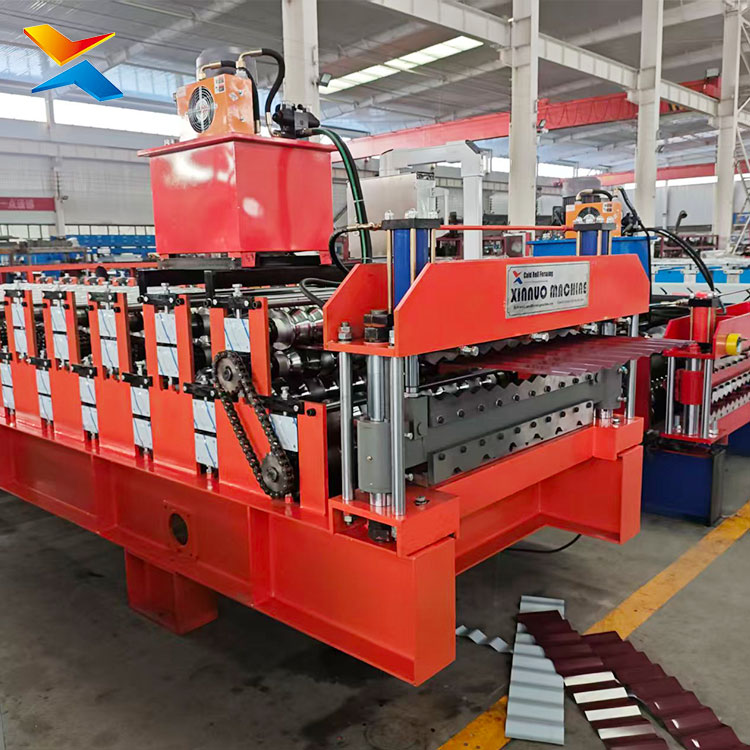
The Xinnuo Automatic Double Layer Roll Forming Machine is the automation-grade version of our two-in-one roofing sheet platform — a single machine body producing the corrugated arc profile and the trapezoidal profile for steel roof construction, with the production process controlled and monitored by an automated control system rather than by manual machine operation. The “automatic” designation is not marketing language; it refers to a specific, documented control architecture: the machine’s flagship configuration — production-proven blueprint DB150 — is specified as “电脑全自动” (computer full-automatic), integrating a Delta PLC with encoder feedback that provides fully automatic length control of the sheets produced on both decks. The operator enters the required sheet length and quantity on the control panel, and the PLC manages the forming line’s operation — length measurement, cut positioning, and batch counting — without continuous manual intervention. The same automatic architecture applies across the platform’s configurations: DB147 (automatic 14-row 860 / 12-row 900) extends the automatic line to the trapezoid+trapezoid combination, and the servo-motor variant — DB169 (14-row 900 / 14-row 8-peak 910, 400H frame, 18mm mid-plate, 7.5KW, 6分双排 chain) — provides the highest precision tier, where servo-driven material speed control enables the precise length cutting that fully automated production lines require.
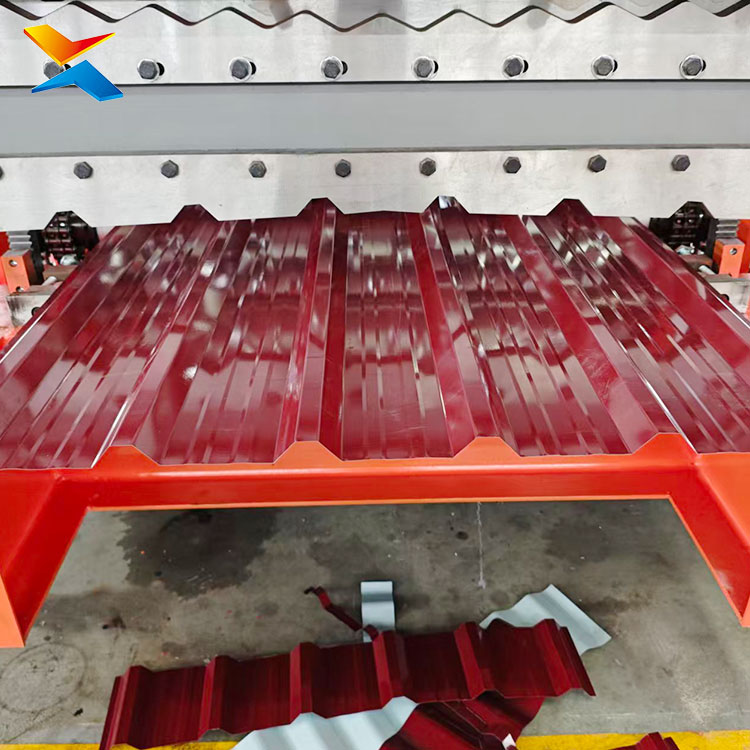
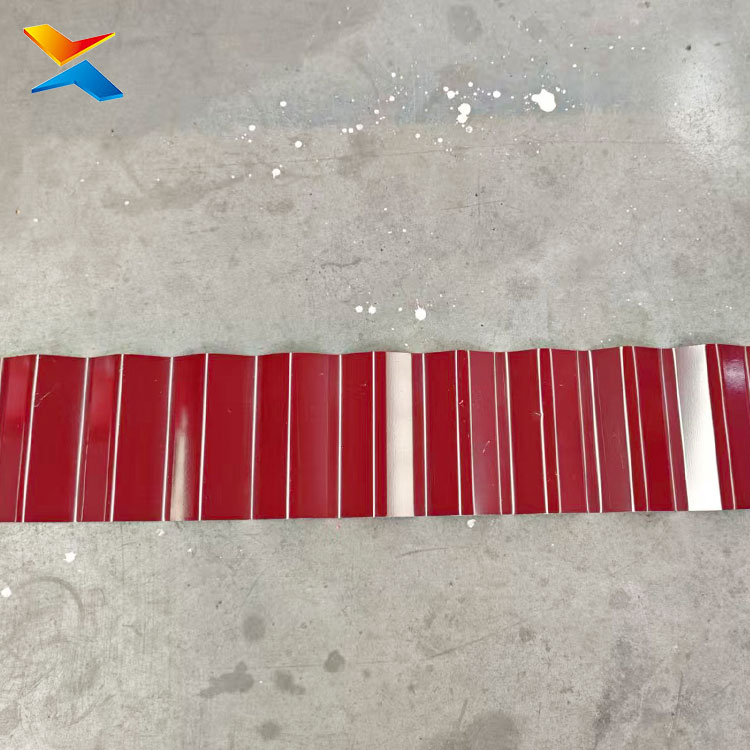
The corrugated + trapezoidal profile pair is the defining combination of this machine and the defining profile mix of Middle East steel roof construction. The corrugated arc profile — a continuous sine wave — is the standard envelope for large industrial roofs: its channel geometry drains the intense short-duration rainfall events characteristic of Gulf winters rapidly and completely, and its curved cross-section provides an excellent stiffness-to-weight ratio for spanning wide purlin spacing economically. The trapezoidal profile — flat crowns with steep sidewalls — provides approximately 1.5–2× the bending stiffness per meter of width of an equivalent corrugated wave, making it the specified profile for structural roofing, high-wind-exposure locations, and wall cladding where panels must resist wind pressure across their full span. The two profiles appear together throughout Middle East steel structure construction — a logistics warehouse with a corrugated main-hall roof and trapezoidal wall cladding is the region’s archetypal steel building — which is why the double layer machine carrying both profiles, with automatic control across both decks, is the production asset that matches the market’s profile mix.
The machine’s automation delivers three operational benefits that matter specifically at factory scale in the Middle East. First, labor efficiency: automatic length control and batch counting remove the operator from the measurement and counting loop, reducing per-shift labor involvement in the production process and allowing a single operator to manage the machine through extended production runs — significant in the region’s construction-season-concentrated demand, where a factory may run extended shifts during the October–April building window. Second, consistency: encoder-based length measurement eliminates the cumulative human measurement error that produces off-length sheets, and the automatic cut cycle positions each cut identically — batch after batch, the sheets delivered to the project site are dimensionally identical, which translates directly to faster installation and fewer field corrections on steel roof projects. Third, production planning integration: the automatic machine’s programmable batch parameters — length, quantity, speed — align with the factory’s production scheduling software, enabling the mixed-profile order flow (industrial orders alternating with structural orders) to be executed with a 5–15 minute deck changeover between orders, both profiles’ parameter sets retained in the PLC’s memory for one-touch recall.
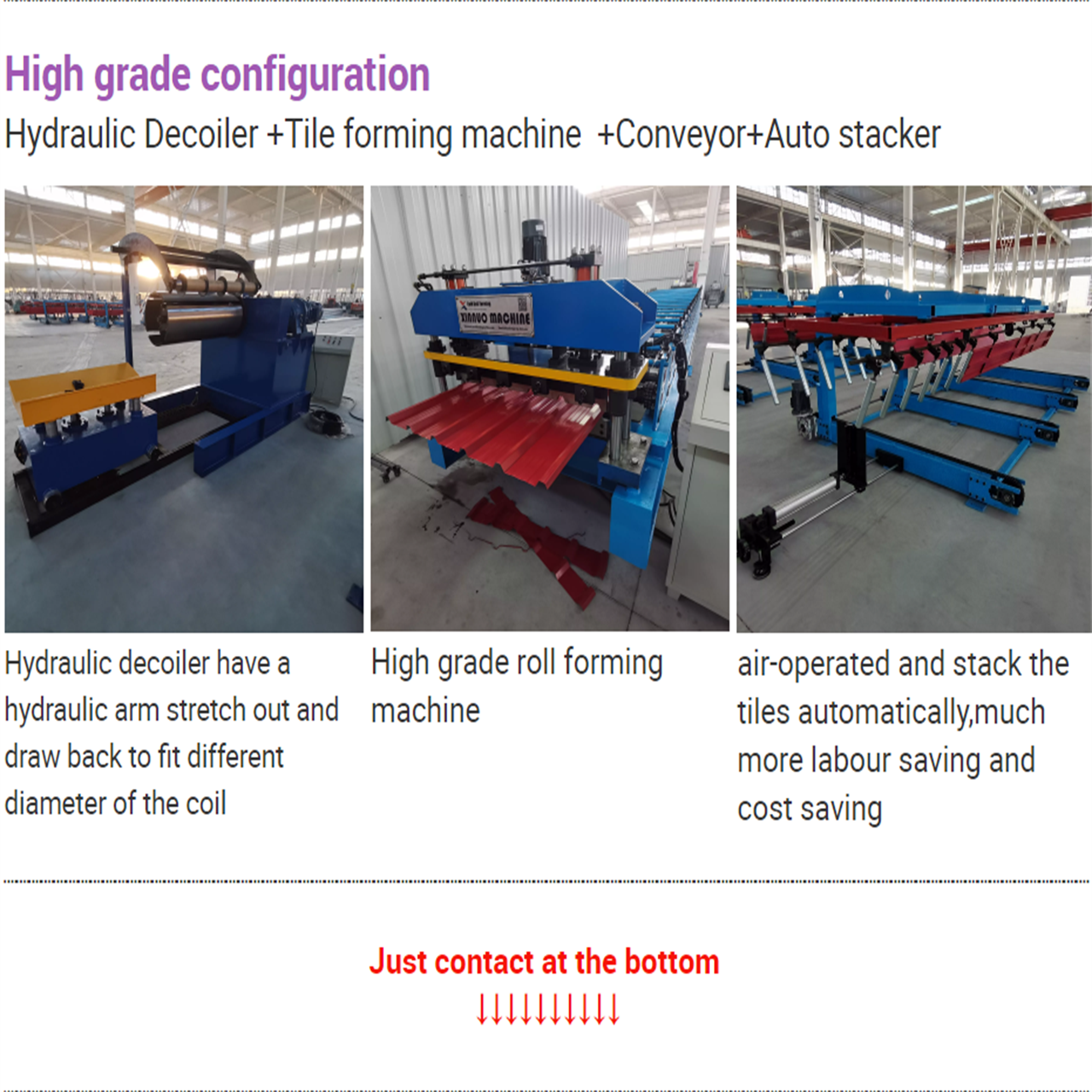
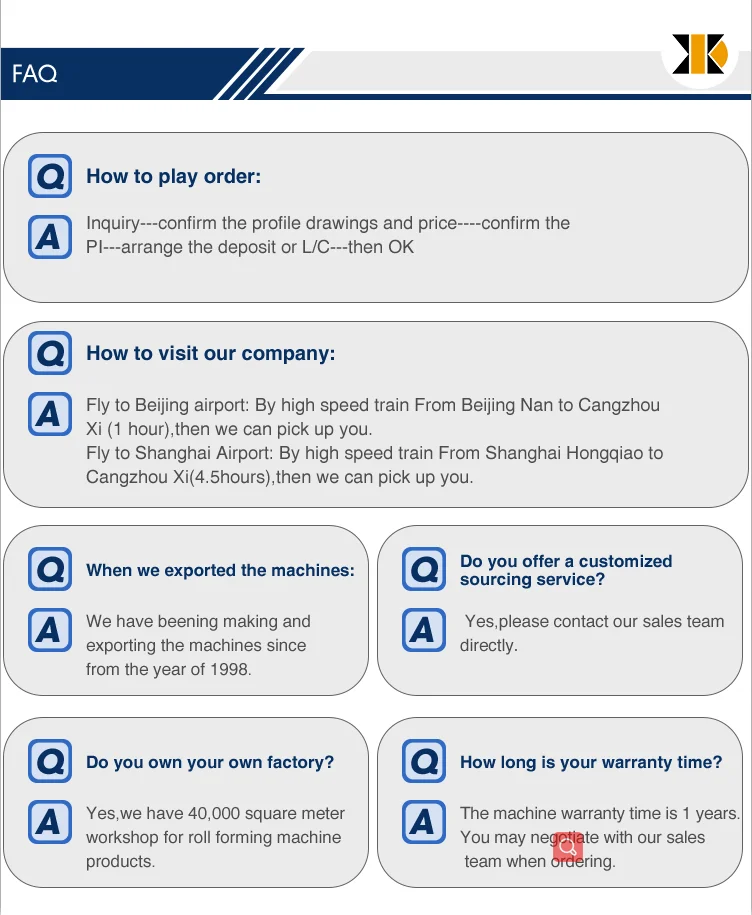
The machine’s engineering follows the proven Xinnuo double layer rules. The flagship DB150 configuration uses 14 forming rows on each deck — equal row counts across both decks being the optimal design, producing the simplest commissioning and the fastest delivery — mounted in a 350H structural steel frame with Φ80mm roller shafts, driven by 5.5KW motors with 6分双排 double-row chain. The 3-width switching capability of DB150 (feed width 1000mm producing corrugated 836 / trapezoidal 900; 1200mm producing corrugated 988; 1220mm producing trapezoidal 1080) extends the machine’s flexibility across three coil width standards, allowing the factory to purchase coils across suppliers and use each coil width for the profile it optimizes. The heavy-duty servo variant DB169 steps up to a 400H frame with 18mm mid-plate and 7.5KW servo drive for factories running fully automated lines requiring the highest length precision. The machine carries Hebei Xinnuo’s complete credentials — 28-year manufacturing history, ISO 9001:2015, CE (Notified Body audited), 14-year Alibaba Gold Supplier verification, National High-Tech Enterprise certification — with on-site commissioning by senior engineers (2–3 days standard configurations), operator training, 24/7 WeChat/WhatsApp remote support, and illustrated manuals and video guides included.


♦ COMPANY PROFILE:
Hebei Xinnuo Roll Forming Machine Co., Ltd., not only produce different types of professional roll forming machines, but also develop intelligent automatic roll forming production lines, C&Z shape purline machines, highway guardrail roll forming machine lines, sandwich panel production lines, decking forming machines, light keel machines, shutter slat door forming machines, downpipe machines, gutter machines, etc.
Advantages of Roll Forming A Metal Part
There are several advantages of using roll forming for your projects:
- The roll forming process allows operations such as punching, notching, and welding to be performed in-line. Labor cost and time for secondary operations are reduced or eliminated, reducing part costs.
- Roll form tooling allows for a high degree of flexibility. A single set of roll form tools will make almost any length of the same cross-section. Multiple sets of tools for varying length parts are not required.
- It can provide better dimensional control than other competing metal forming processes.
- Repeatability is inherent in the process, allowing easier assembly of roll formed parts into your finished product, and minimizing problems due to “standard” tolerance build up.
- Roll forming is typically a higher speed process.
- Roll forming offers customers a superior surface finish. This makes roll forming an excellent option for decorative stainless steel parts or for parts requiring a finish such as anodizing or powder coating. Also, texture or pattern can be rolled into the surface during forming.
- Roll forming utilizes material more efficiently than other competing processes.
- Roll formed shapes can be developed with thinner walls than competing processes
Roll forming is a continuous process which converts sheet metal into an engineered shape using consecutive sets of mated rolls, each of which makes only incremental changes in the form. The sum of these small changes in form is a complex profile.


