

Product Overview
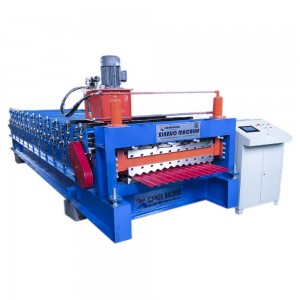
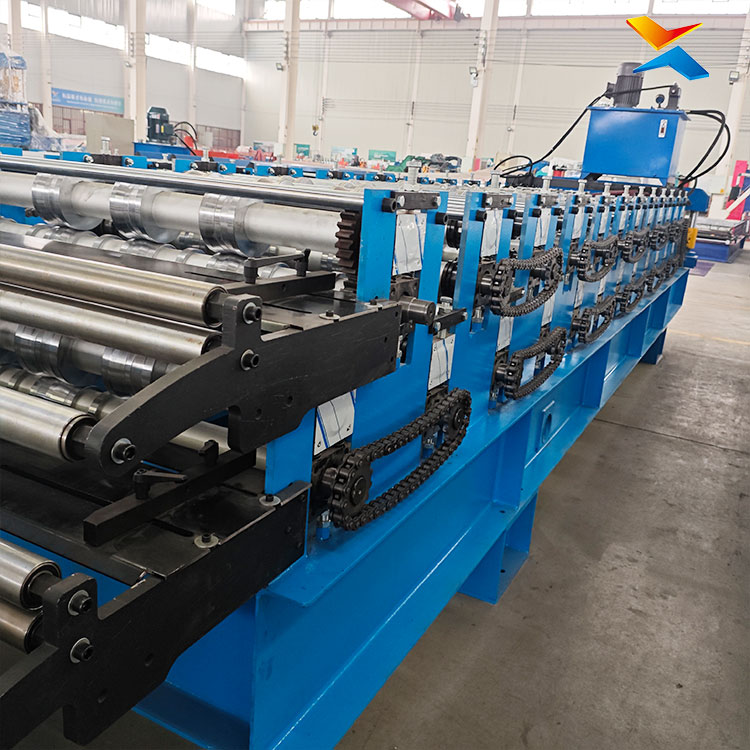
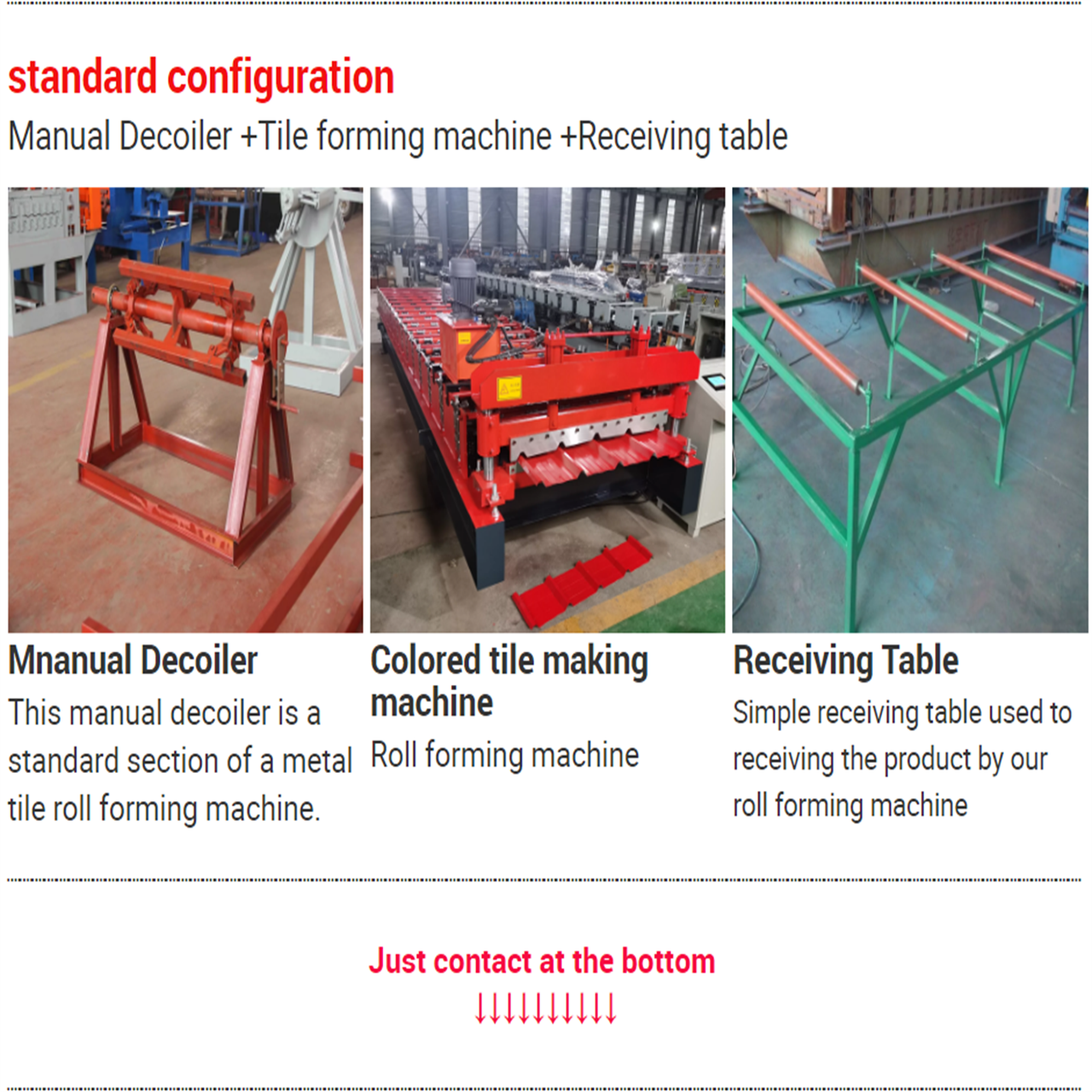
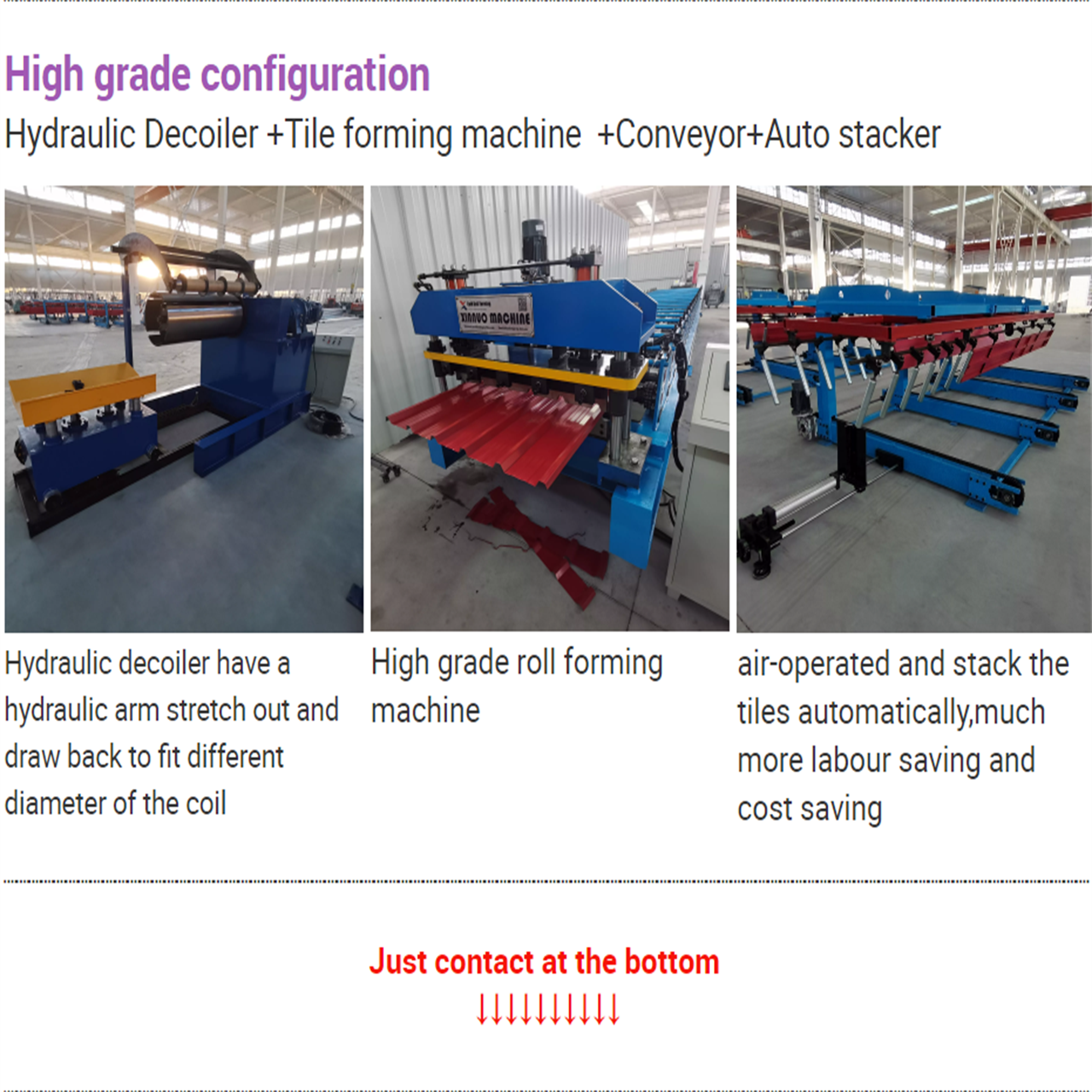
The Double Layer Trapezoidal Roll Forming Machine is a highly versatile and space-efficient manufacturing system designed to produce two distinct trapezoidal roof sheet profiles, including the globally recognized IBR (Inverted Box Rib) profile, from a single production line. Engineered to maximize factory floor space and production flexibility, this advanced equipment allows operators to seamlessly switch between upper and lower layers without the need for extensive tooling changes. Featuring a quick-change mechanism, robust mechanical architecture, and intelligent PLC automation, it enables manufacturers to respond rapidly to diverse market demands. This dual-layer roof sheet making equipment is the ultimate strategic asset for steel fabricators seeking to expand their product portfolio, optimize operational efficiency, and reduce capital expenditure on multiple single-layer machines.
- Space-Saving Dual-Layer Architecture: By integrating two independent roll forming stations into one unified frame, this machine effectively doubles production capabilities without doubling the required factory footprint. It is the perfect solution for manufacturers with limited floor space who need to produce multiple roofing profiles.
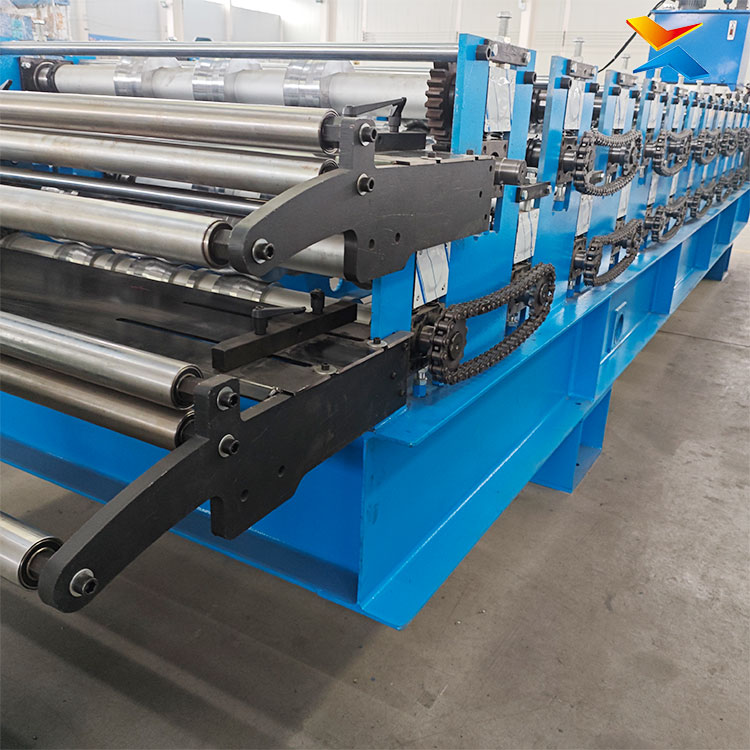
- Quick Change & Rapid Tooling Adjustment: Engineered with a user-friendly quick-change system, the machine allows for fast and efficient transitions between different trapezoidal or IBR profiles. This significantly reduces downtime between production batches, enabling agile manufacturing and just-in-time delivery for varied customer orders.
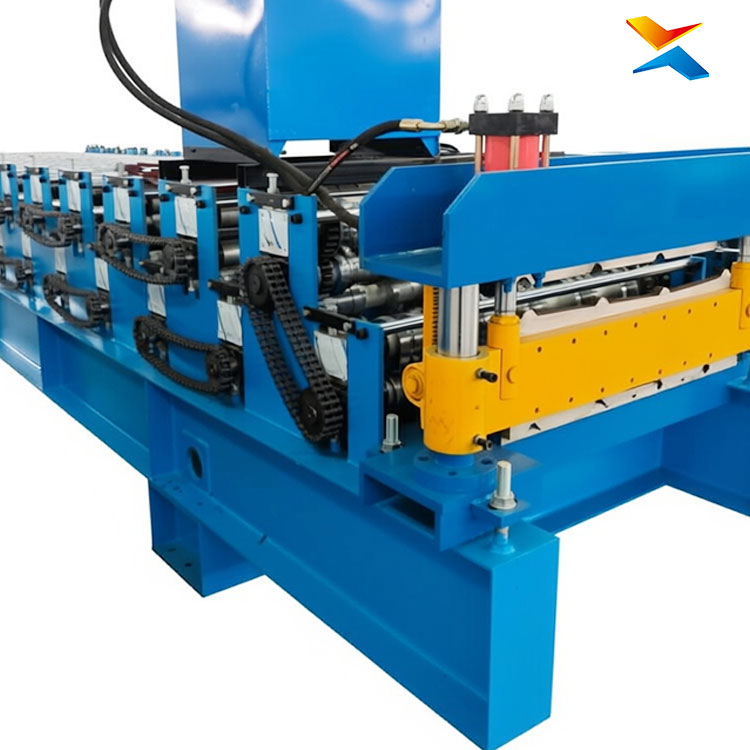
- Precision IBR & Trapezoidal Forming: Both the upper and lower layers are equipped with meticulously calibrated, heavy-duty forming rollers crafted from premium-grade tool steel. This ensures crisp, uniform ribs, exact dimensional tolerances, and superior interlocking capabilities for both profiles, guaranteeing leak-proof and structurally sound roofing panels.
- Intelligent PLC Control & Independent Operation: Governed by an advanced PLC control system and a multi-language touchscreen HMI, the machine allows operators to independently manage the production parameters (length, quantity, speed) for each layer. This intelligent automation ensures high repeatability, automated length counting, and seamless workflow management.
- Continuous High-Speed Flying Cut-Off: Each layer is equipped with its own high-performance hydraulic flying shear system. These cutting units dynamically track the moving panels to execute clean, burr-free cuts at exact lengths without stopping the line, ensuring maximum throughput for both profiles.
- Heavy-Duty & Vibration-Free Frame: The main chassis is constructed from reinforced, stress-relieved steel to absorb the intense forming forces and vibrations generated during dual-layer operation. This robust structural integrity guarantees consistent panel quality and extends the service life of all mechanical components.
The versatile trapezoidal and IBR panels produced by this double-layer machine are widely utilized across diverse construction and architectural sectors, including:
- Industrial Warehouses & Factories: Supplying high-strength, weather-resistant roofing and wall cladding for large-span manufacturing plants, logistics centers, and storage facilities.
- Commercial & Public Buildings: Producing aesthetically pleasing, structurally superior metal panels for shopping malls, exhibition halls, sports arenas, and airport terminals.
- Agricultural Infrastructure: Providing reliable, long-lasting roofing solutions for large-scale greenhouses, poultry farms, and agricultural equipment storage.
- Residential & Modular Construction: Supporting high-volume production of modern metal roofing and siding for residential housing developments and prefabricated modular buildings.


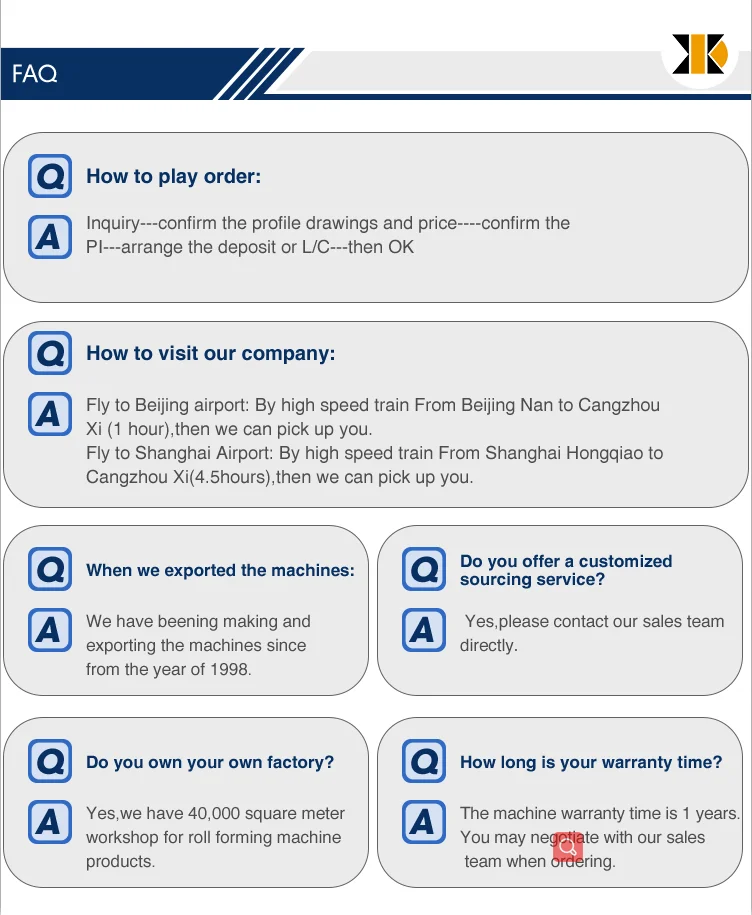
♦ COMPANY PROFILE:
Hebei Xinnuo Roll Forming Machine Co., Ltd., not only produce different types of professional roll forming machines, but also develop intelligent automatic roll forming production lines, C&Z shape purline machines, highway guardrail roll forming machine lines, sandwich panel production lines, decking forming machines, light keel machines, shutter slat door forming machines, downpipe machines, gutter machines, etc.
Advantages of Roll Forming A Metal Part
There are several advantages of using roll forming for your projects:
- The roll forming process allows operations such as punching, notching, and welding to be performed in-line. Labor cost and time for secondary operations are reduced or eliminated, reducing part costs.
- Roll form tooling allows for a high degree of flexibility. A single set of roll form tools will make almost any length of the same cross-section. Multiple sets of tools for varying length parts are not required.
- It can provide better dimensional control than other competing metal forming processes.
- Repeatability is inherent in the process, allowing easier assembly of roll formed parts into your finished product, and minimizing problems due to “standard” tolerance build up.
- Roll forming is typically a higher speed process.
- Roll forming offers customers a superior surface finish. This makes roll forming an excellent option for decorative stainless steel parts or for parts requiring a finish such as anodizing or powder coating. Also, texture or pattern can be rolled into the surface during forming.
- Roll forming utilizes material more efficiently than other competing processes.
- Roll formed shapes can be developed with thinner walls than competing processes
Roll forming is a continuous process which converts sheet metal into an engineered shape using consecutive sets of mated rolls, each of which makes only incremental changes in the form. The sum of these small changes in form is a complex profile.