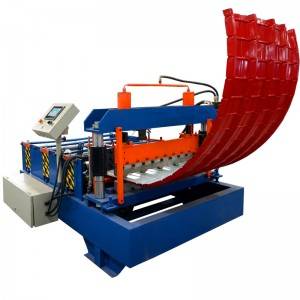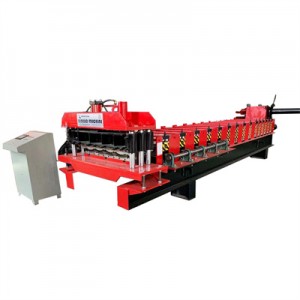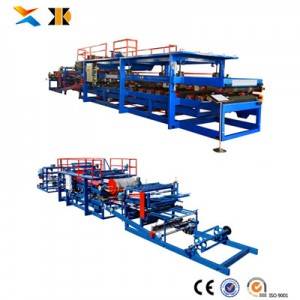

Hydraulic guillotine shears and sheet metal cutting machines, supplied factory-direct to Middle East fabrication shops — and a straight answer to the question the words “Middle East supplier” raise but never settle.
This page does not re-argue what a shear is. The two questions that decide which machine you buy — which cutting operation you actually need, and what the capacity figure really means once it is read by material — come before this page and belong to it. What this page settles is the question that comes after them, and it is the one a buyer in the Gulf cannot answer from a datasheet at all: who should I buy it from, and what does buying it from across the water actually commit me to?
That question is worth taking seriously, because a shearing machine is not a consumable purchase. It is a machine that will sit in a fabrication shop for years, be fed by operators who were trained once, be maintained by whatever engineering resource the shop has, and depend throughout its life on two things that cannot be shipped at the same time as the machine: blades, and someone who knows how to fix it. A buyer who compares only the machine price has compared the smallest part of the decision.
First, the phrase itself: “supplier in the Middle East” is not the same as “supplier to the Middle East”.
This is worth clearing up at the start, because it is a genuine and consequential ambiguity rather than a language quibble, and because the two answers lead to different purchases.
A supplier in the Middle East is a company located in the region — a trading house, an agent, a stockist, or a local assembly operation — which holds machines or sources them, and which sells to you with the advantage of proximity: shorter delivery from local stock, a local engineer who can attend quickly, and often an established local relationship and payment route. That proximity has a price, which is built into the selling price, and there is nothing improper about it: for a shop whose downtime is expensive, buying locally is often the correct commercial decision.
A supplier to the Middle East is a manufacturer elsewhere — in this case a Chinese factory — that builds the machine and ships it to the region. The price is lower because there is no local margin and no local stock to carry; but the buyer is accepting that the distance between the machine and the factory is real, and that this distance has to be engineered away by the supply terms rather than assumed away by them.
What matters for a buyer is not which model is better in the abstract but which one they are actually dealing with, because a price comparison between the two is not a like-for-like comparison, and because the risks are different. So the first question worth asking any supplier in this category is simply: where is the machine built, and who will attend my site if it stops? A supplier who answers that plainly has told you which of the two models you are buying into. A supplier whose answer is vague on either half has told you something else worth knowing.
The honest position on the machine this page describes: it is a factory-direct machine, and the distance is managed by the terms.
These machines are built and supplied directly by the factory, which is a Chinese cold roll forming and metal fabrication machinery manufacturer — meaning that for a Gulf buyer, this is the second model above: factory-direct pricing, with the engineering work of covering the distance carried in the supply relationship rather than in a local branch.
That has consequences a buyer should weigh honestly, in both directions. On the favourable side, the buyer is dealing with the party that actually builds the machine, which means questions about configuration are answered by the people who make the decisions, and changes are possible rather than relayed. On the demanding side, it means the buyer must insist on the terms that substitute for proximity — a point taken up below — rather than assuming a local presence that does not exist. A buyer who wants a factory-direct price and a local-company service response has not found a bargain; they have bought one model and expected the other.
What the region actually cuts, because it changes what you should buy.
The Gulf’s fabrication work is not generic, and the material a shop cuts has a direct bearing on the shear it should specify — most of all on the capacity question in the previous section, since capacity is rated by material.
Oil, gas, petrochemical and refinery work is the region’s heavy fabrication backbone, and it is plate work: structural plate, skids, platforms, pipe racks, tanks and vessels, and the support steel that goes with them. A shop in this sector is cutting thicker material than the Gulf’s other fabrication sectors, and cutting it in a range of grades, including the higher-tensile steels that a capacity figure must be checked against rather than assumed from.
Desalination, water treatment and process plant work introduces stainless and duplex plate in quantity — and it is the clearest example in the region of why capacity must be rated by material. A shop that buys a shear on a mild steel figure and then puts stainless on it has bought a smaller machine than it thought.
Structural steel and PEB fabrication is the region’s volume sector, and it is the pattern a shear suits best: many blanks, few sizes, repeated, cut square so that the finished member is square. This is the sector where the blank length is what matters most, and therefore where the back gauge earns its cost most reliably.
HVAC, ductwork and light sheet metal shops work at the thin end — galvanised and coated sheet, and lighter gauges than the other sectors — and they present the opposite problem to the heavy shops: thin material has little stiffness of its own, so the questions that matter here are the hold-downs and the support, and how the machine behaves on the thinnest material in range rather than the thickest.
Architectural metalwork, cladding and façade work cuts stainless and aluminium, in visible profiles where the cut edge is on show, which puts the emphasis on blade condition, on blade gap setting, and on the machine holding its setting between sharpening intervals.
Cold storage, food processing and catering equipment fabrication is a stainless sector again, and one where thin-gauge stainless has its own behaviour: it work-hardens and it distorts more readily than mild steel, so support and hold-down geometry matter more than they would on the same thickness in mild steel.
Trailer, tanker, container and truck-body work runs in many of the same shops as structural work and cuts a mixture of sheet and plate, usually to a repeating set of blank sizes — again a shear’s natural work.
And running through all of them is the maintenance and re-fabrication demand, which in a region with a large installed industrial base is not a minor activity: modification, repair and replacement work, often urgently, in materials that were specified years ago and to drawings that must be matched rather than improved on.
The single line to take from all of that is this: a Gulf buyer should specify the shear against the material mix in their own shop, and should not assume the regional average applies to them — because the difference between a stainless-and-duplex shop and a galvanised-ductwork shop is not a difference of degree in this purchase. It is a different machine.
How to evaluate a supplier in this category, whichever model you are buying into.
If you are buying factory-direct, these are the terms that have to do the work that a local branch would otherwise do, and every one of them should be settled in writing before the order rather than discovered later.
Build records, stated by capacity and material. The question worth asking is not whether the supplier makes shearing machines but which ones have been built, at what capacity, and for which material — and the answer should be specific enough to be checked. Where a requirement falls outside what has been built, an honest supplier says so, and says what would have to change; a supplier whose answer is always yes has told you that the answer is not based on records.
A single named contact for engineering after delivery. Not a general sales address, and not a promise of support in principle, but a route by which a technical question reaches someone who can answer it. Machines do not fail according to office hours, and the practical value of a support arrangement is measured by how quickly a question gets to an engineer rather than to an inbox.
Who attends your site, and on what basis. Commissioning can mean factory technicians travelling to your shop, or remote guidance, or a local partner, and these are very different propositions. Establish before the order which is included, who arranges travel and accommodation, and what happens if the machine needs attention after the commissioning visit has ended.
Blades, as a supply chain rather than a specification item. This is the question most often left unasked and most often regretted, because the blade is a consumable and it is the part of the shear that is consumed. What matters is not only the blade’s material but where the replacement comes from, whether the specification is one you can source again, and how long a blade for this machine takes to reach your shop. A blade that has to come from the original factory may still be the right choice — but you should know that at the time of purchase, and you should establish whether a replacement can be sourced locally or regionally against the drawings. A shop that has a shear and no blade supply has half a machine.
Hydraulic spares and service. The hydraulic system is the other part of the machine that will need attention during its life, and the practical questions are whether the components used are standard and available, whether the documentation identifies them properly, and whether the supplier keeps the seal and pump parts that the machine actually uses.
Documentation in a form you can use. Manuals, electrical and hydraulic drawings and spare-parts lists are how a Gulf shop maintains a machine over years, and they should be confirmed as part of the order — including the language they are supplied in, and whether the spare-parts list identifies parts well enough to order them without reference to the factory.
Consistency of the electrical configuration with your site. A machine is built for a voltage, frequency and phase, and that is something to state and confirm rather than leave to be settled at installation. This is not a small item at the far end of a shipping route.
Packing and sea freight. A shearing machine is a heavy machine, and how it is packed and braced for a sea voyage is part of what survives the journey rather than a detail of it. Ask how the machine is prepared for shipment, and treat the answer as a specification item.
The cost that decides whether the purchase was good: the cost over the machine’s life.
A buyer comparing a factory-direct offer against a local offer is comparing more than two prices, and the useful comparison is between two totals over the years, not between two invoices.
The factory-direct price is lower, and that difference is real and can be substantial. Against it, the buyer carries items the local purchase would have bundled: the sea freight and its insurance, the port and clearance costs at this end, the inland transport to the shop, the cost of the commissioning visit in time and travel, and — the item most often forgotten — the cost of the shop’s own time while the machine is being brought into service and while any early issue is being resolved. On a local purchase those costs are hidden inside the price; on a factory-direct purchase they are visible, and a buyer should budget for them rather than be surprised by them.
The counterweight is that the factory-direct machine is bought at the price of the party who built it, and that the money saved is available to spend on the things that actually protect the shop: correct specification, adequate spares held locally before they are needed, a blade supply arranged in advance, and adequate documentation. A shop that buys factory-direct and spends part of the saving on those four items has made a good decision. A shop that buys factory-direct, spends the saving elsewhere, and then discovers that a blade or a seal must be sourced from the far end of a supply chain at short notice has converted a price advantage into a production risk.
Where the shear sits in the shop, because it decides what you should ask for.
A shear is the first machine in a fabrication sequence, and what follows it determines what the shear must be able to produce. In the standard light-fabrication order the material is cut to blank on the shear, then formed on a press brake, with a plate roll where the part needs curvature rather than a fold — and where the material arrives as coil rather than as flat sheet, that coil is first leveled and cross-cut to length, which is a different machine class again.
Two practical consequences follow for a Gulf buyer. First, the shear’s cutting length has to suit the blank sizes the brake’s work requires, not merely the sheet size the shop happens to buy; a shear sized to the sheet and not to the parts is a shear that will need re-cutting or hand work. Second, the bottleneck in a light-fabrication shop is frequently not the shear — cutting is fast — but the forming stage, and a buyer equipping a shop should size the stages together rather than machine by machine, or discover after commissioning that the new shear now waits for the brake.
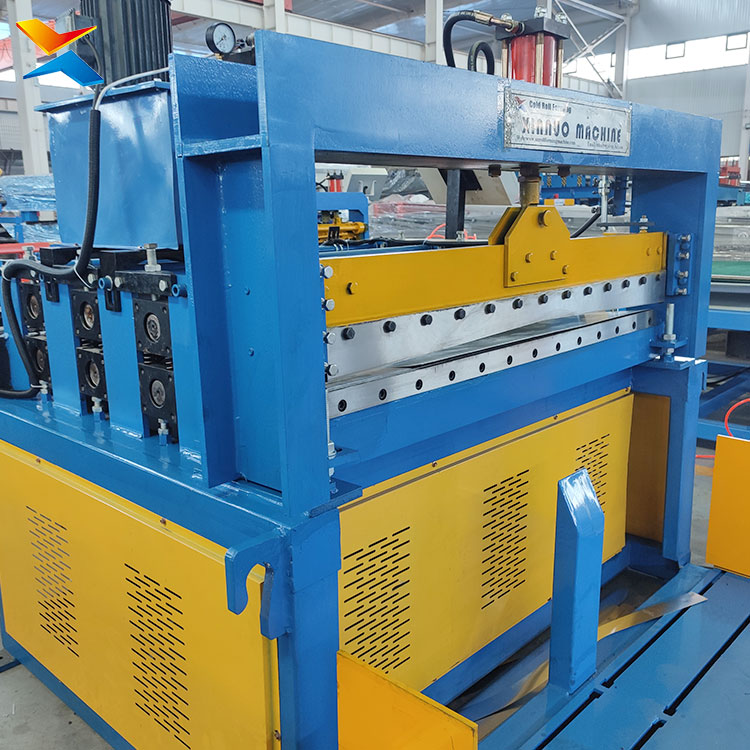
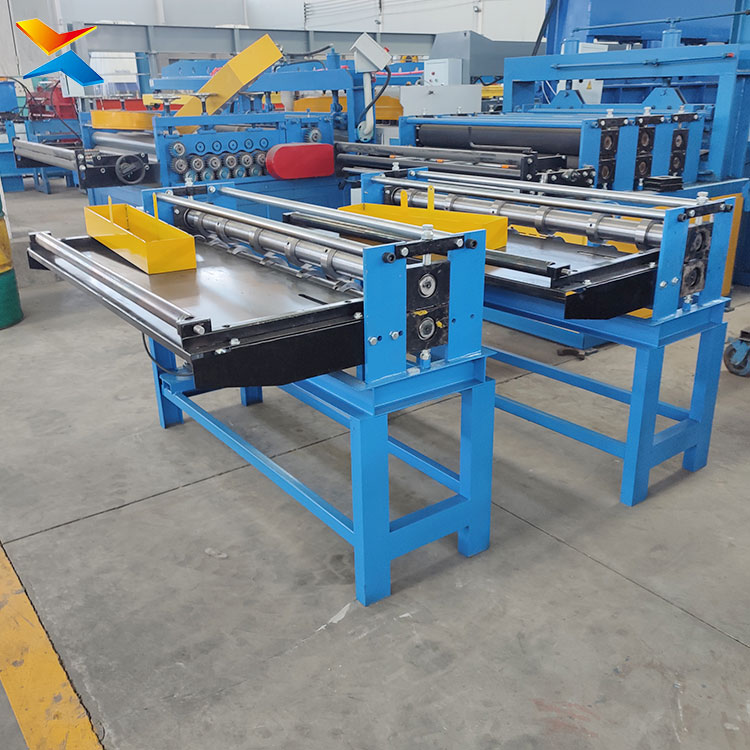
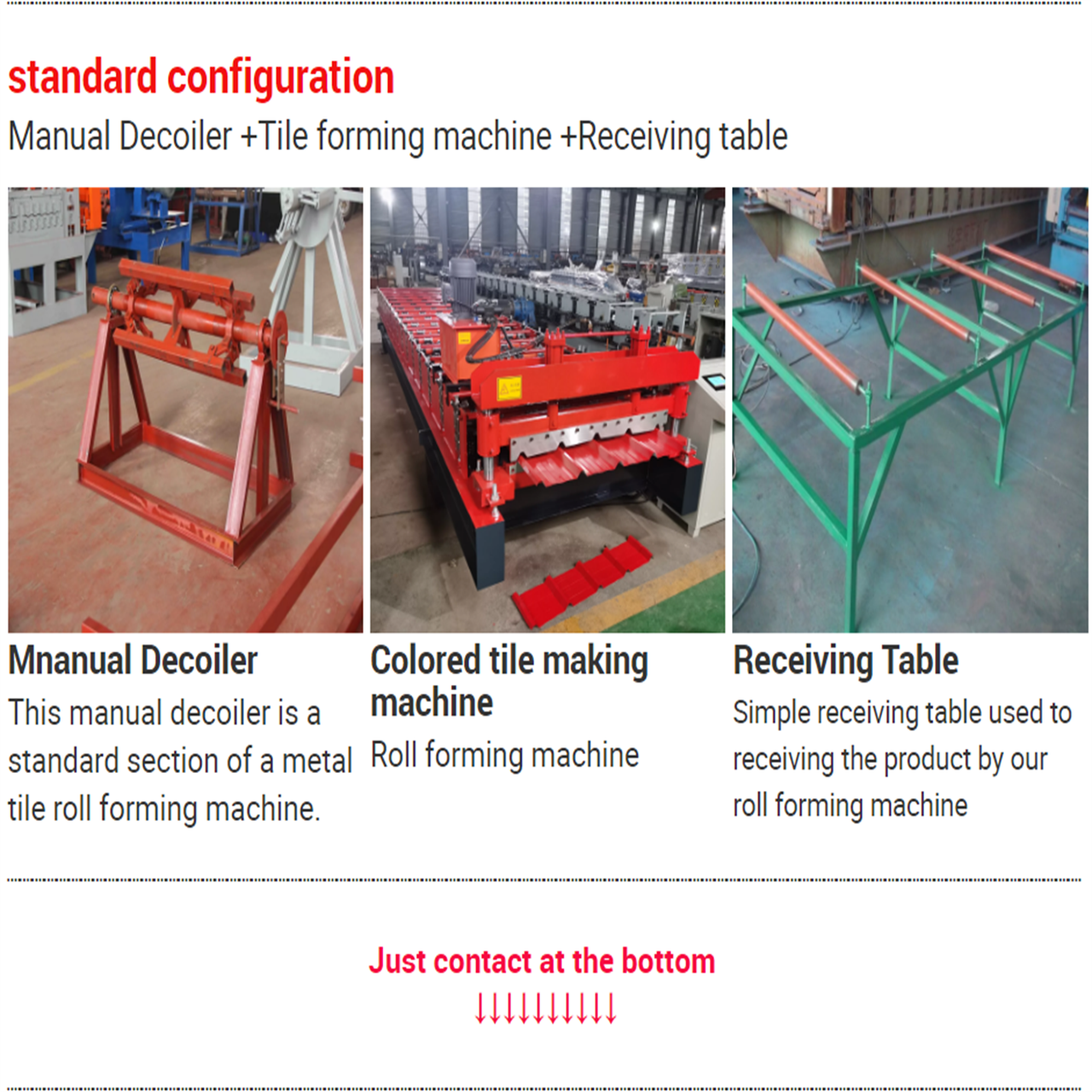
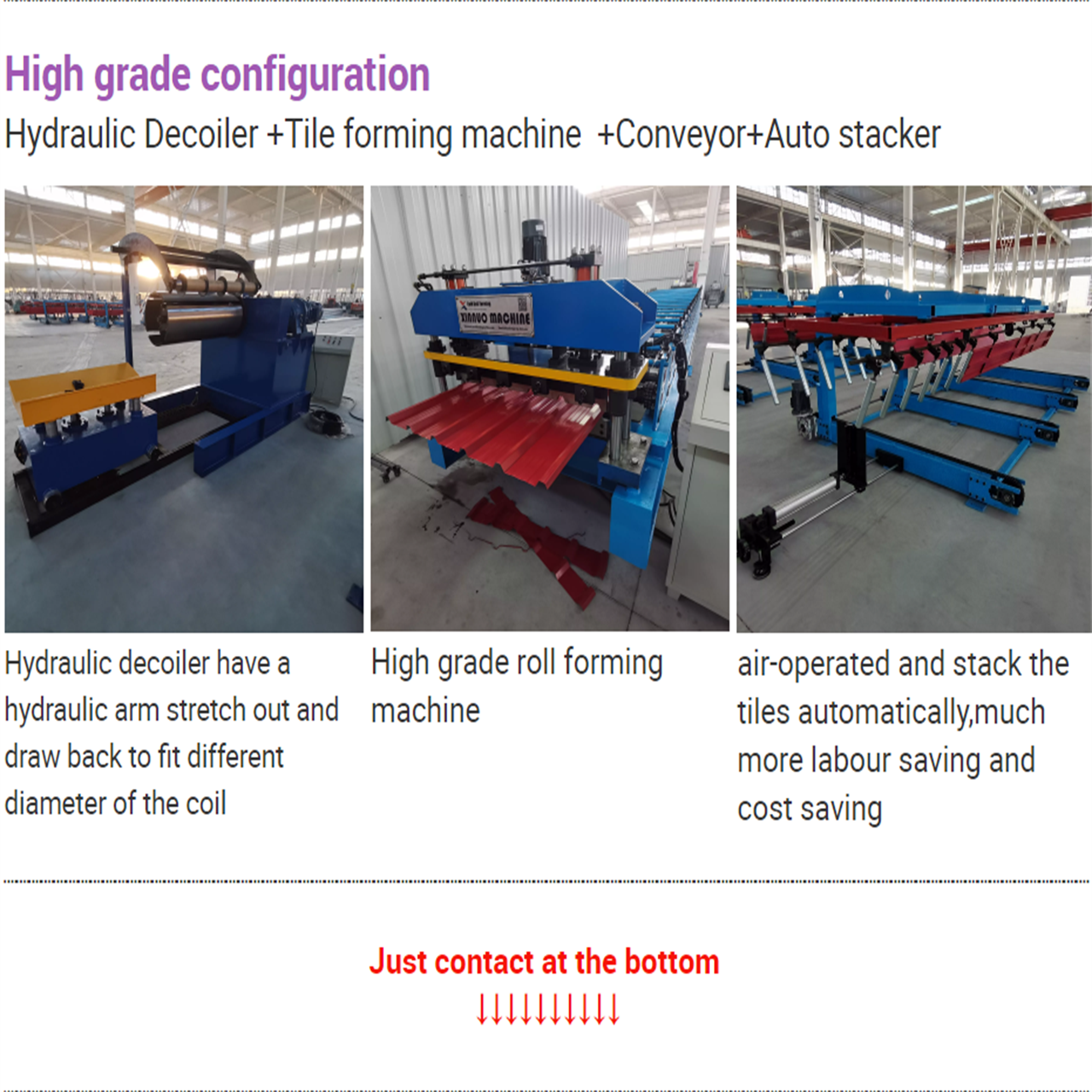
This is the practical argument for buying a fabrication shop’s machines from one supplier: not a discount, but that the machines can be considered as a sequence, with one set of documentation, one commissioning visit covering the range, one training arrangement, one spare-parts channel, and one engineering team that understands how the machines are meant to work together. Where a workshop is being equipped or re-equipped, the factory’s engineers can propose a layout covering the shear, the press brake, the plate roll and any roll forming line together, sized to the product range and to the floor space available — with the scope and configuration of any line confirmed against the product plan at the enquiry stage.
A note on what this page is not claiming.
One item of honesty belongs in a page positioning itself as a Middle East supplier, and it is the same discipline that applies to any supplier claim in any region.
This page does not state a number of shearing machines delivered to the Gulf, a regional market share, a delivery time, a warranty period or a machine lifespan, because none of those can be established from the records available to it. A buyer should treat any supplier who offers such figures without documents as having offered marketing rather than evidence, from any country. What can be established is what is set out above: which machines have been built and for which material, how the machine will be specified against your own material mix, and what the supply terms commit the supplier to — and those three are the questions worth spending the enquiry on.
That is also why the phrase “supplier Middle East” is treated on this page as a question rather than a credential. Where the machine is built, who attends your site, and where the blade comes from are three answerable questions, and they tell a Gulf buyer more about a supplier than any regional adjective can.
To obtain a quotation, send these items. Your material mix, named specifically, including whether stainless, duplex or high-tensile steel is in the range, since capacity is rated by material. The thickness range, thinnest to thickest, and the maximum length of cut needed at each. Your largest sheet or plate size, which sets the machine’s length and the support arrangements. What the blanks feed — press brake, plate roll, welding, or another operation — so the cut sizes suit the next stage. How many different dimensions you set per shift, and how many are repeats, which decides whether a powered or programmable back gauge earns its cost in your shop. How your material arrives, as flat sheet or as coil. Your production volume and number of operators. Your workshop dimensions and the route the machine takes into the building. Your site’s voltage, frequency and phase. Your shipping destination port and project schedule. And, from the discussion above: your requirement for spare blades and hydraulic spares, your requirement for commissioning and training, and the documentation and language you need. With those answers the factory can confirm the capacity your work requires, specify the machine against your material mix, state the supply terms that cover the distance, and return an itemised factory-direct quotation with the capacity table stated by material.
In one sentence, the honest summary. The words “Middle East supplier” describe where a machine is going, not where it comes from — so before comparing prices, establish which of the two you are buying into, buy factory-direct only with the terms that replace proximity, and put part of the saving into the blade supply and spares that a shear will certainly need.
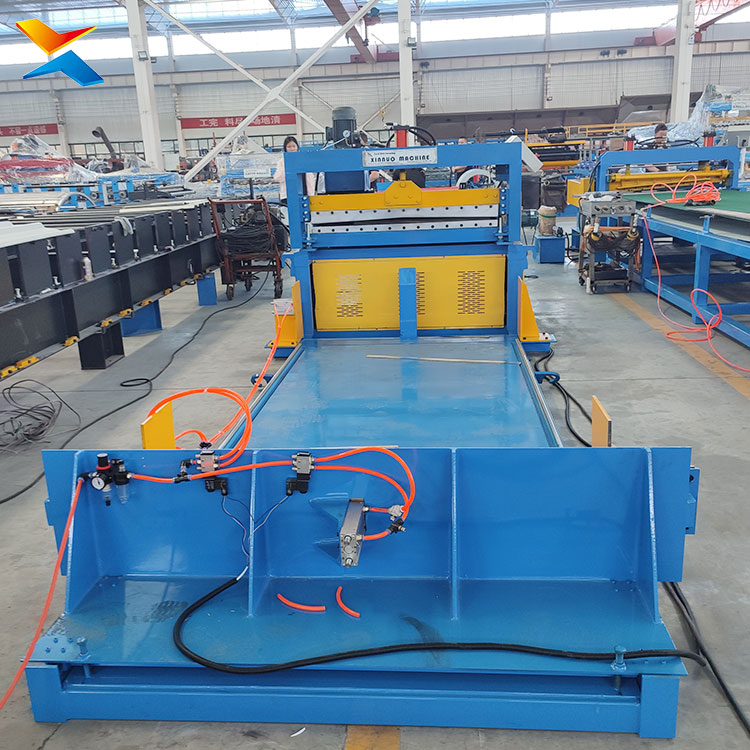

♦ COMPANY PROFILE:
Hebei Xinnuo Roll Forming Machine Co., Ltd., not only produce different types of professional roll forming machines, but also develop intelligent automatic roll forming production lines, C&Z shape purline machines, highway guardrail roll forming machine lines, sandwich panel production lines, decking forming machines, light keel machines, shutter slat door forming machines, downpipe machines, gutter machines, etc.
Advantages of Roll Forming A Metal Part
There are several advantages of using roll forming for your projects:
- The roll forming process allows operations such as punching, notching, and welding to be performed in-line. Labor cost and time for secondary operations are reduced or eliminated, reducing part costs.
- Roll form tooling allows for a high degree of flexibility. A single set of roll form tools will make almost any length of the same cross-section. Multiple sets of tools for varying length parts are not required.
- It can provide better dimensional control than other competing metal forming processes.
- Repeatability is inherent in the process, allowing easier assembly of roll formed parts into your finished product, and minimizing problems due to “standard” tolerance build up.
- Roll forming is typically a higher speed process.
- Roll forming offers customers a superior surface finish. This makes roll forming an excellent option for decorative stainless steel parts or for parts requiring a finish such as anodizing or powder coating. Also, texture or pattern can be rolled into the surface during forming.
- Roll forming utilizes material more efficiently than other competing processes.
- Roll formed shapes can be developed with thinner walls than competing processes
Roll forming is a continuous process which converts sheet metal into an engineered shape using consecutive sets of mated rolls, each of which makes only incremental changes in the form. The sum of these small changes in form is a complex profile.
-
roofing sheet roll manual sheet metal curving m...
-
Glazed Tile Roll Forming Machine Manufacturers ...
-
manual sheet metal curving machine tile manufac...
-
glazed tile roll making machine glazed and IBR ...
-
Automatic Stacking & Palletizing Solutions...
-
Z-lock sandwich panel rolling machine roof prod...