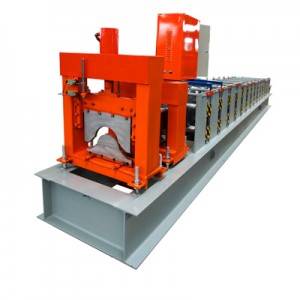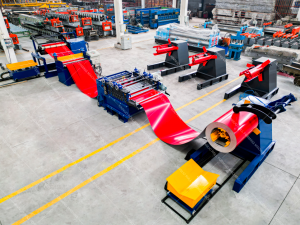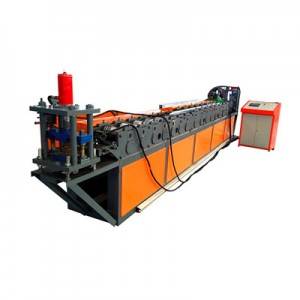

Hydraulic guillotine shearing machine for sale, supplied factory-direct to UAE and wider Gulf buyers — and the cutting-capacity question that decides whether the machine you order will actually cut your work.
This is the first machine in a fabrication shop, and it is the machine that everything downstream inherits its accuracy from. A shear does one thing: it cuts a straight line across a sheet or plate. Whether it does that one thing well determines whether the blank that reaches the press brake is square, whether it is the length the drawing calls for, and whether the fabricator spends its margin on cutting or on grinding.
It is also a machine class where the specification is unusually easy to misread, and where a buyer can be entirely satisfied with a quotation and still receive a machine that will not cut the job. So this page is organised around the two things that matter most and that are most often left vague: what kind of cutting machine you actually need, and what the nominated cutting capacity really means.
First clarification: “sheet metal cutting” is three different operations, and only one of them is a shear.
The title says “automatic sheet metal cutting machine”, and in modern fabrication that phrase covers three machine families that cut metal in three fundamentally different ways. A buyer who has not separated them may spend a budget on the wrong principle.
A guillotine shear cuts with a long, straight blade that descends across the full width of the material, and it cuts straight lines only. Within that limit it is exceptionally productive: a cut takes a moment, the cut edge is clean and square, and the cost per cut is the lowest of the three. Its limitation is geometric rather than qualitative — it cannot follow a contour, and it cannot cut a hole. In a fabrication shop, the shear exists to turn a full sheet into rectangular blanks of the right size, at speed, which is why it sits immediately before the press brake in the workflow.
Laser cutting cuts any two-dimensional contour — holes, curves, notches, profiles — with a focused beam, and it does so with a narrow kerf and high precision. It is the answer when the part is not a rectangle. Its cost structure is different: the machine itself is a substantial investment, the running cost per metre of cut is higher than a shear’s, and the productivity advantage over a shear disappears on long straight cuts through thick material, which is where a shear remains unbeatable.
Plasma cutting also cuts contours, and it does so on thicker plate than a laser will economically handle, at a lower equipment cost. The trade-off is the cut edge: plasma leaves a heat-affected zone and a rougher edge that may need cleaning before the part is welded or finished.
The useful way to think about the three is by the shape of the part rather than by the technology. If your parts are rectangles cut to length — which is the overwhelming majority of structural and light fabrication work — a shear is the right and the cheapest machine for the job. If your parts are shaped, you need a contour-cutting machine, and possibly both: many fabrication shops run a shear for the rectangles and send only the contoured parts to a laser or plasma table, because using a contour machine to cut rectangles is an expensive habit.
Second clarification: shearing, slitting and cut-to-length are three different things, and the words get used loosely.
This confusion costs buyers real money, because the three operations are performed by different machines, and a supplier’s records for one say nothing about the other.
Shearing — the subject of this page — means cutting a straight line across a sheet or plate, to produce a blank. It is a stop-start operation performed on individual pieces, one cut at a time.
Slitting means cutting a wide coil lengthwise into narrower strips, continuously, with circular knives. It is a coil-processing operation running at line speed, and it produces strips rather than blanks. Nothing about a slitting line tells you anything about a shear.
Cut-to-length means taking a coil, leveling it flat and then cross-cutting it to length in one continuous line, so that the output is flat cut sheets rather than a coil. This is the operation that sits closest to shearing — a cut-to-length line contains a shear — and it is where the two are most often blurred.
The distinction matters in practice for two reasons. First, a buyer who needs flat cut sheets to a fixed length, in volume, from coil should be looking at a cut-to-length line rather than at a standalone shear, because a shear fed by hand from cut sheets is a different and much more labour-intensive way to produce the same output. Second, this factory’s drawing archive documents its leveling-and-shearing lines and leveling-and-slitting lines as production-line configurations — that is, integrated cutting lines rather than standalone shears. So the honest position for a buyer to start from is this: the integrated coil-processing versions are documented in the archive; a standalone hydraulic guillotine shear is a different machine class, and the correct question is which one your work requires — questions of volume, of whether your material arrives as coil or as sheet, and of whether you want blanks or cut lengths.
Third clarification: what the word “guillotine” does and does not tell you.
“Guillotine” describes the cutting action, not the machine. It means a long straight blade descends through the material across its full width. That is a genuine and useful piece of information — it is what separates this machine from a circular-blade or rotary cutter — but it leaves most of the machine undetermined.
Within the guillotine family there are two structural approaches worth knowing by name, because they behave differently as they wear. In a swing-beam design the blade holder pivots and the blade travels through an arc, so the cutting edge and the material meet at a slight angle that reduces the peak force needed. In a guided or vertical-guide design the blade is constrained to travel straight. The distinction a buyer should draw from this is not which one is theoretically better — both are in wide production use — but that the two designs differ in how the blade and the guides behave over years of service, which is the reason to ask about the guide arrangement and about how the blade is held, rather than to accept “guillotine” as a complete description.
The drive is the other half of the description, and “hydraulic” tells you more than “guillotine” does. A hydraulic shear drives the blade from a hydraulic cylinder and pump, which gives it controlled force through the cut, a smoother action, and — importantly for the buyer — the ability to vary and to hold the cutting angle and force. Mechanical shears drive the blade from a flywheel and clutch, and they are simple and fast, but their cutting characteristics are fixed by their gearing. For a shop cutting mixed materials and thicknesses, hydraulics are the reason a machine can be adjusted to the work rather than the work being limited to the machine.
Beyond the drive and the structure, what remains to be specified is where the machine’s real character lives: the blade, the back gauge, the settings and the support of the material being cut. Those are dealt with below, and they are what a buyer should be comparing between offers.
The most important thing on this page: what the cutting capacity actually means.
This is where a buyer is most likely to be disappointed by a machine that is not defective in any way, and it is worth reading in full before comparing any two quotations.
A shear is described by two capacity figures — a maximum cutting thickness and a maximum cutting length — and the honest engineering truth is that you do not get both at the same time. Cutting capacity is not a single point; it is a curve. The machine will cut its full rated length in thin material, and it will cut its full rated thickness only in short lengths. The two maxima are the ends of the curve, not a rectangle of capability, and a buyer who reads them as a rectangle — assuming the machine will cut its thickest material across its full length — has misread the specification in the way it is most commonly misread.
There is a second qualification on the same figure, and for Gulf buyers it is the more consequential of the two: the nominated maximum thickness is normally stated for mild steel. Stainless steel, high-tensile steel and other higher-strength materials require substantially more force to shear and therefore reduce the thickness the same machine will cut. A fabricator whose work includes stainless — which in the Gulf means food, beverage, dairy, pharmaceutical and hospitality fabrication as well as architectural metalwork — cannot take the mild-steel figure at face value and apply it to that material.
The instruction that follows is short and it is the single most useful thing a buyer can do on this machine: require the capacity table, require the material it is rated for, and require the answer to be specific to the material you actually cut. Do not accept a single thickness figure as a complete answer to a capacity question, and be wary of a quotation that offers one. A supplier who knows the product will not be offended by the question; a supplier who cannot answer it has told you something worth knowing.
“Automatic” on a shearing machine: what the word buys, function by function.
As with every machine class, “automatic” on a shear is not one feature but a set of independent ones, and they are worth separating so that a buyer can pay for the ones that earn their cost in their own shop.
The function that matters most, and that buyers most often actually mean, is the back gauge. In its simplest form a back gauge is a mechanical stop set by hand and read from a scale. In its next form it is motorised and set from a control panel, so the operator enters the dimension rather than measuring to it. In its highest form it is a programmable axis under numerical control, so the operator calls up a stored dimension, or a stored sequence of dimensions, and the gauge moves to each in turn.
The reason this is the function to think hardest about is that it governs what the shear is actually for. A shear’s value in a shop is repetition: the same blank, cut the same length, many times. A back gauge that is set by hand and read from a scale makes every one of those cuts depend on the operator’s reading, and a scale-based setting is where the variation in blank length comes from. A powered, settable back gauge removes that variation. A programmable one goes further: it turns a multi-step cut — a part requiring several different blank lengths, which is common — into a stored program rather than a sequence of manual resets, and on that work the productivity difference is real rather than marginal.
The second function is the settings that determine cut quality, and again they can be manual or powered: the blade gap, which must suit the material thickness in front of it, and the cutting angle, which trades cutting force against how much the material distorts during the cut. On a machine where both are set by hand, the operator sets them and checks them, and the accuracy of the machine is partly the accuracy of that habit. On a machine where they are set from the control system, the setting travels with the program. For a shop cutting one thickness of one material all day, hand setting is entirely adequate. For a shop moving between thicknesses and between materials, powered setting is the difference between a machine that keeps up and one that keeps being adjusted.
The third function is material handling, and it is the one most likely to be overlooked in the specification and most felt in daily operation: whether there is powered or assisted support for long and heavy plate at the entry and exit sides, whether the back gauge retracts to let the cut piece fall clear, and how the cut blanks are removed. A shear that cuts accurately but has to be unloaded by hand from an awkward position is a shear that costs labour on every cut, and the labour is the cost that repeats.
The honest advice that follows is the same advice that applies to every machine in this class: most buyers should buy the automation that matches their order book rather than the automation that appears on the option list. A shop producing a small number of sizes in volume — which is the normal pattern in structural and light fabrication — gets most of the available benefit from a powered, programmable back gauge, and very little from a full contour-grade control system. A shop with a wide and changing product range, or one cutting multi-step parts, is in the opposite position. The way to decide is to look at how many different dimensions the shop sets per shift and how many of those are repeats — a supplier who asks that question is configuring a machine; a supplier who quotes a package called “automatic” is selling a list.
The blade, the back gauge and the support: where the machine’s real character lives.
Three items determine how a shear behaves over years of service, and all three should be specified explicitly rather than assumed from a model number.
The blade is the consumable, and in a shear the consumable is the whole cutting action. A shear blade typically has more than one usable edge and can be turned or reversed when the working edge dulls, so the practical question is how many usable edges the blade provides and what the blade is made of. A blade of good material with several usable edges is the difference between a shear that is sharpened rarely and a shear that is sharpened often — and because sharpening is a cost in both money and downtime, blade quality has a way of becoming visible over a machine’s life in a way that a specification list does not show on the day of purchase. Ask what the blade is made of, how many edges it carries, and what it is designed to cut.
The back gauge deserves a second look beyond its automation level, because the mechanism matters as much as the control. The gauge has to travel the length of the machine and stay square to the blade along that travel, and it has to repeat to the same position when it returns. A gauge that is well supported and well guided holds its accuracy; one that is inadequately guided can be accurate when new and lose that accuracy as it wears. This is where it is worth asking how the gauge is carried and guided — a question a genuine manufacturer can answer in engineering terms.
The support of the material being cut is the third item and the one most often left out of the specification entirely. Thin sheet has little stiffness of its own, and a descending blade in unsupported material will bend the sheet rather than cut it cleanly, or leave a curved edge on a workpiece that was supposed to be straight. Long and heavy plate presents the opposite problem: lacking support at the ends, it hangs, and a hanging plate is difficult to hold square against the back gauge. The arrangements that address this are the hold-downs that clamp across the material immediately beside the cut, and the support arrangements at the entry and exit sides — and their adequacy depends on the range of material the machine is bought for. A buyer cannot judge them from a datasheet; they should be stated in the specification and confirmed against the actual range of thicknesses and sheet sizes the machine will see. The supplier ordering a shear should be able to describe how it handles the thinnest material in the range, not only the thickest.
What drives the price when you compare quotations.
Prices for this machine vary, and the variation is accounted for by a finite and knowable list of items. Any quotation that does not let you see them is a quotation you cannot compare against another.
The cutting capacity is the first and largest item — both the length and the thickness the machine is built to cut, together with the material it is rated for, because the frame, the cylinders and the blade all scale with it. The drive and structural design, including the guide arrangement and how the blade is carried, comes next, and the difference between a light and a heavy build at the same nominal capacity is a real difference rather than a marketing one. Then the automation level, meaning the back gauge and the powered settings described above. Then the blade: its material and the number of usable edges. Then the support and handling arrangements, which are frequently the difference between two quotations with the same headline capacity. Then the electrical configuration matched to your site, and the scope of service — installation and commissioning, training, documentation and spares.
Two consequences follow for a buyer. First, two quotations differing substantially in price are usually not the same machine — they differ in actual capacity, in build, in automation, or in what is included around the edges of the machine. Second, the way to compare them is item by item against the list above rather than against the total. A lower total that omits the powered back gauge, or specifies a lighter frame, or leaves out commissioning, is not a cheaper offer for the same thing; and if a quotation does not state those items, the correct next step is to ask rather than to assume either way.
What a quotation for this machine should itemise.
Beyond the configuration, there are items that a complete offer states and an incomplete one leaves to be discovered later. Ask for them explicitly and in writing: the capacity table for the machine, stated by material, since this is the figure the whole purchase rests on; the frame and structural description, including how the blade is carried and guided; the blade specification, including its material and how many usable edges it provides; the back gauge arrangement, stated in terms of what it does rather than what it is called; whether the blade gap and cutting angle are set by hand or from the control system; the hold-down and support arrangements at entry and exit, and the thickness range they suit; the electrical configuration, confirmed against your site’s voltage, frequency and phase; the documentation supplied, including the manual and the electrical and hydraulic drawings; the installation and commissioning arrangement and who is responsible for what on site; the operator training included and how it is delivered; the spare parts supplied and those recommended as consumables — with the blade prominent among them; and the packing and shipping arrangement. A supplier who answers these in writing has shown you their process. A supplier who answers only the price has told you what the price is and nothing else.
For UAE buyers specifically.
Three items belong on a UAE buyer’s list.
Ask for the specific machine record, in the right form. The question worth putting to any supplier is not whether they make a shearing machine but ”which shearing machines have you actually built, at what capacity, and for which material?” — and the answer should be specific. It is worth being equally clear about what this factory’s drawing archive documents, because blurring the two would be misleading: the archive documents its leveling-and-shearing lines and leveling-and-slitting lines as integrated coil-processing configurations, which is evidence of cutting capability inside production lines rather than a list of standalone guillotine shear builds. A buyer whose requirement is a standalone shear should therefore ask for the record for that machine specifically, and should not accept an answer borrowed from a different machine class. Where a requirement falls outside what has been built before, the honest answer will say so — and that answer should arrive before the order rather than during commissioning.
Specify for the climate, because a shear has parts the climate reaches. The UAE’s coastal humidity and salt-laden air act on painted frames, on exposed machined surfaces, on the blade and on the hydraulic system, and the priorities are specific: surface protection on the frame and on exposed steel, corrosion resistance on the blade and its mountings, protection of the machined and guided surfaces against both salt air and the wind-borne dust of the interior, and attention to hydraulic oil temperature in a shop that runs hot. None of these are exotic requirements, but each of them is a specification item that a quotation either addresses or leaves to be discovered after the machine is in service.
State the commercial terms you need. A UAE buyer is often working to a project schedule and to a shipping route, and both should be in the enquiry from the start rather than negotiated after the technical agreement. Say what the machine must do and by when, and require the offer to address it.
Where this machine sits in the shop, and beside it.
A shear is rarely bought alone, and understanding what it pairs with is part of buying the right one. In the classic light-fabrication sequence the material is cut to blank on the shear, then bent to shape on a press brake, and then welded and finished — which is why the pair is the standard entry configuration for a fabrication shop, and why the two machines are normally specified together so that the shear’s capacity and the brake’s capacity suit each other rather than being bought as unrelated units. Where the part requires curvature rather than a fold, a plate roll takes the place of the brake at that stage. And where the material arrives as coil rather than as flat sheet, the coil is first leveled and cut to length — which is the cut-to-length line referred to earlier, and the point at which the shop’s requirement is no longer a shear but a coil-processing line.
The reason to name these relationships is practical: a buyer who specifies a shear without reference to what will follow it can end up with a machine that is correct in isolation and limiting in sequence — a shear that cannot cut the blank lengths the brake’s work requires, or a shop where the cutting stage is fast and the bending stage is the bottleneck. The productive question is not what shear to buy but what the shop must produce, at what rate, and in what order of operations — and a supplier who asks that question is worth more than one who quotes a machine.
As the manufacturer and supplier.
This machine is supplied factory-direct, and it belongs to the same fabrication range as the press brakes, slitting lines and decoilers this factory also supplies — which is the reason the cutting stage can be considered together with the stages either side of it rather than bought in isolation. Buying a fabricating shop’s machines from one supplier has practical advantages that are worth naming: consistent documentation across the machines, one installation and commissioning visit covering the range, one training arrangement, one spare-parts channel, and one engineering team that understands how the machines are meant to work as a sequence.
What matters most for a buyer, though, is not the width of the range but whether the specific machine quoted suits the specific work. So the answer worth extracting in writing is the one described above: which shearing machines have been built, at what capacity, and for which material — followed by whether that machine suits your material range and your blank sizes. A supplier with real build records can answer specifically; one without will answer with adjectives.
Beyond the machine, the supply relationship covers documentation, electrical configuration matched to your site, installation and commissioning with factory technicians on site, operator training, illustrated manuals, video guidance for the settings used most often, round-the-clock engineering support, and spare parts supply. Where a complete workshop is being equipped, the factory’s engineers can propose a layout covering the shear, the press brake and the roll forming equipment together, sized to your product range and to your floor space — with the scope and configuration of any line to be confirmed against your product plan at the enquiry stage.
To quote this machine, send these items. The material you cut, named specifically, including whether stainless or high-tensile material is in the range — because capacity is rated by material and this is the first question, not a detail. The thickness range, from the thinnest to the thickest, and the maximum length of cut you need at each. The largest sheet or plate size you handle, which decides the machine’s length and the support arrangements. What the blanks are for — whether they feed a press brake, a plate roll, a welding position or something else — so the cut sizes suit the next operation. How many different dimensions you set per shift, and how many of them are repeats, because this is the input that decides whether a powered or a programmable back gauge earns its cost on your shop. How your material arrives, as flat sheet or as coil, since material arriving as coil may mean a cut-to-length line rather than a shear. Your production volume and the number of operators. Your workshop’s usable dimensions and the route the machine takes into the building. Your site’s voltage, frequency and phase. And your project schedule and shipping route. With those answers the factory can confirm the capacity your work actually requires, propose the configuration that fits your production pattern rather than the longest option list, specify the scope item by item, and return an itemised factory-direct quotation with the capacity table and the machine’s specifications stated by material.
In one sentence, the honest summary. A shear cuts only straight lines — which is exactly what most fabrication needs — so buy it on the one figure that decides everything, the cutting capacity stated by material and understood as a curve rather than a rectangle, and on the automation that matches how many dimensions your shop sets in a shift, because almost everything else on the specification is a detail beside those two.
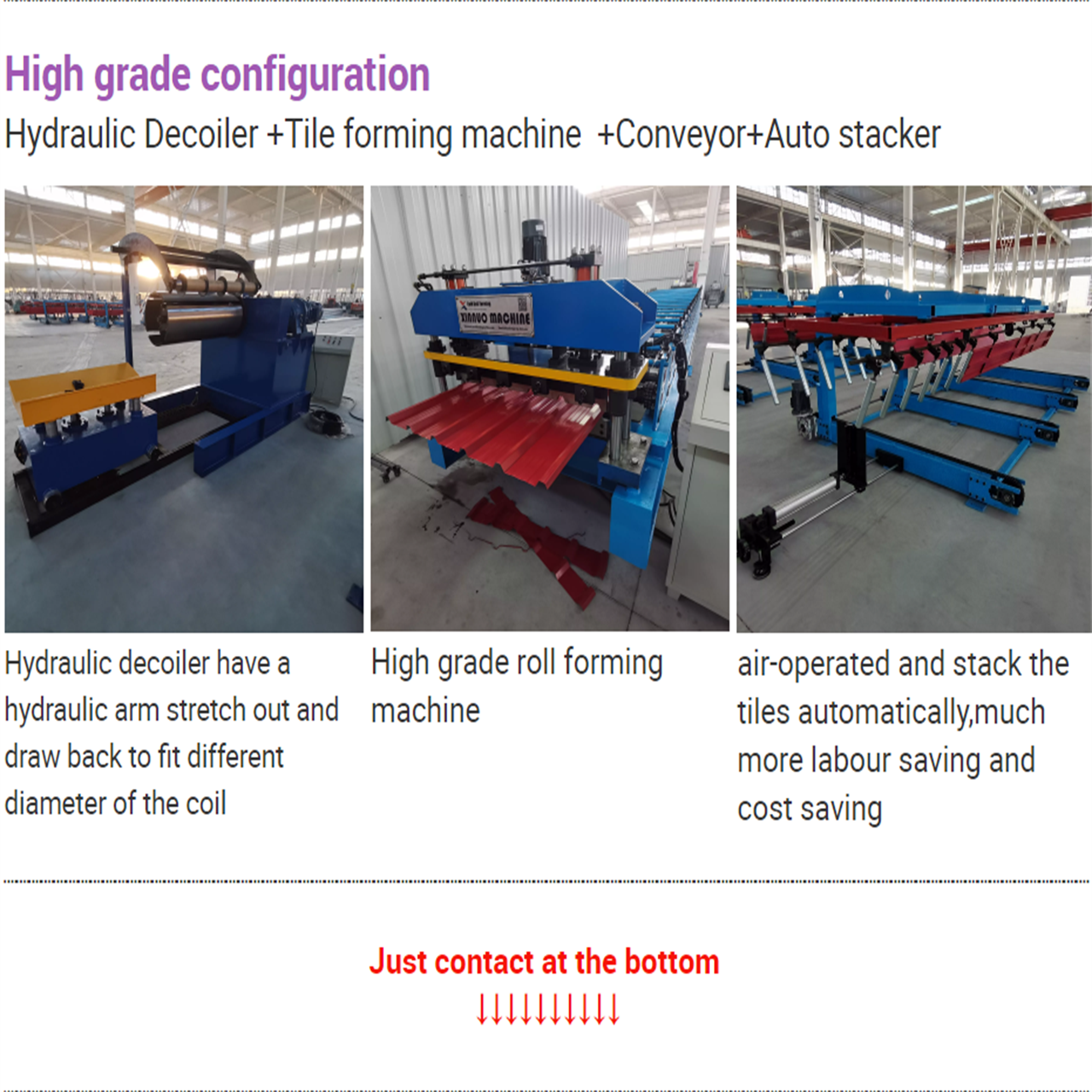
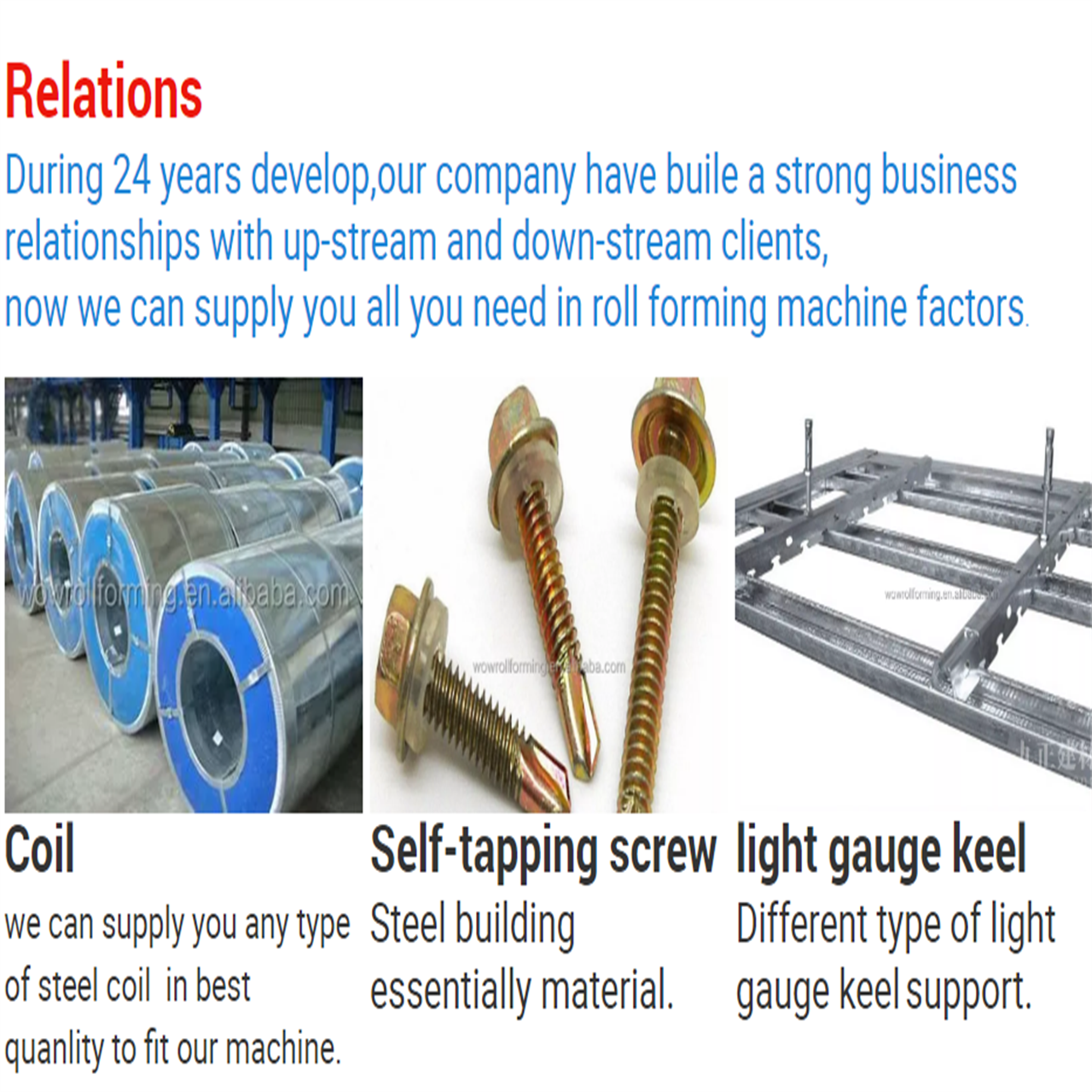

♦ COMPANY PROFILE:
Hebei Xinnuo Roll Forming Machine Co., Ltd., not only produce different types of professional roll forming machines, but also develop intelligent automatic roll forming production lines, C&Z shape purline machines, highway guardrail roll forming machine lines, sandwich panel production lines, decking forming machines, light keel machines, shutter slat door forming machines, downpipe machines, gutter machines, etc.
Advantages of Roll Forming A Metal Part
There are several advantages of using roll forming for your projects:
- The roll forming process allows operations such as punching, notching, and welding to be performed in-line. Labor cost and time for secondary operations are reduced or eliminated, reducing part costs.
- Roll form tooling allows for a high degree of flexibility. A single set of roll form tools will make almost any length of the same cross-section. Multiple sets of tools for varying length parts are not required.
- It can provide better dimensional control than other competing metal forming processes.
- Repeatability is inherent in the process, allowing easier assembly of roll formed parts into your finished product, and minimizing problems due to “standard” tolerance build up.
- Roll forming is typically a higher speed process.
- Roll forming offers customers a superior surface finish. This makes roll forming an excellent option for decorative stainless steel parts or for parts requiring a finish such as anodizing or powder coating. Also, texture or pattern can be rolled into the surface during forming.
- Roll forming utilizes material more efficiently than other competing processes.
- Roll formed shapes can be developed with thinner walls than competing processes
Roll forming is a continuous process which converts sheet metal into an engineered shape using consecutive sets of mated rolls, each of which makes only incremental changes in the form. The sum of these small changes in form is a complex profile.