

Product Description
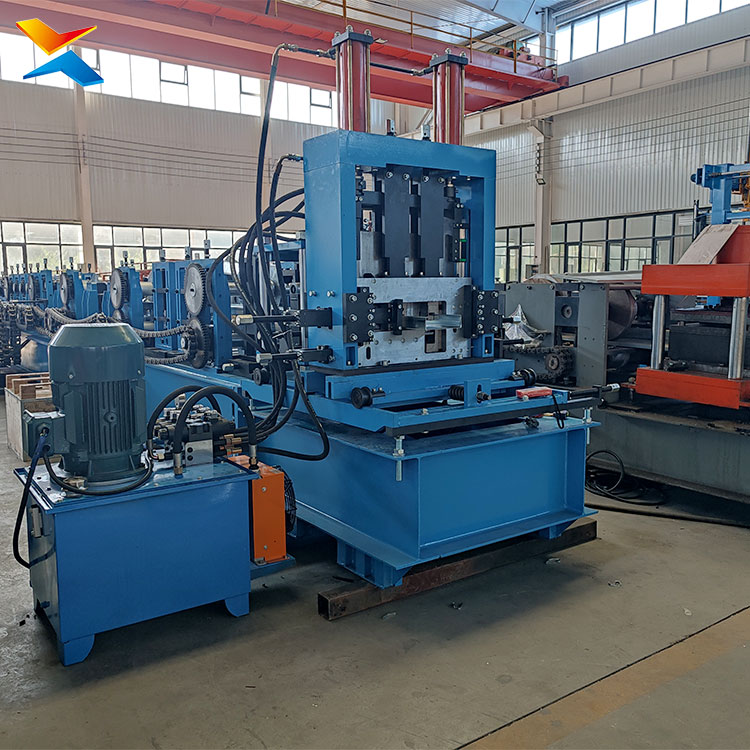
Cee purlin and Zed purlin roll forming machine, built and supplied factory-direct — the C and Z channel forming machine with inline punching, for light steel frame and steel building work.
Two things in this title need to be settled before a buyer reads a specification, because both of them decide whether the machine they receive is the machine their drawings actually describe. The first is a matter of naming: ”Cee” is simply how the C purlin is written in some markets, and “Zed” is how the Z purlin is written in the same markets. The second is a matter of application, and it is the more consequential of the two: light steel frame work usually pairs a Cee stud with a U track, not with a Zed — so a buyer whose product is light steel framing may be looking for a different machine from the one this title appears to name. This page deals with both, in that order, because getting either of them wrong is an expensive way to learn it.
First, the naming: Cee is C, Zed is Z.
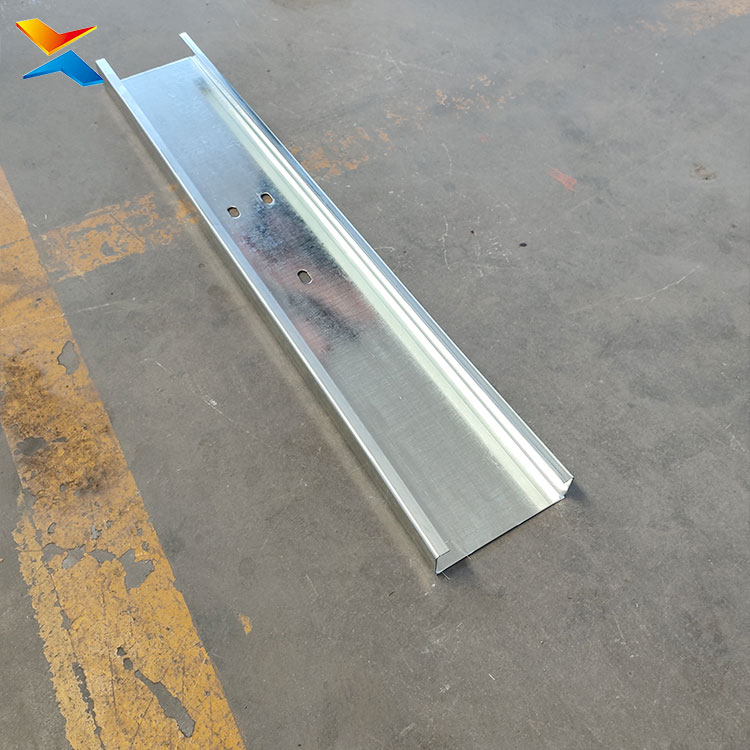
In several English-speaking markets — Australia and New Zealand most consistently, and parts of North America and South Asia — the purlin sections are written as “Cee purlin” and “Zed purlin” rather than “C purlin” and “Z purlin”. The spelling follows the pronunciation of the letters rather than the letters themselves. It is not a different product, a different profile family, a different standard, or a different machine. A Cee purlin is what most of the world calls a C purlin: a section formed from flat coil into a base, two sides, and two inward lips. A Zed purlin is a Z purlin: the same base and two sides, but with the flanges turned in opposite directions instead of both to the same side, and the lips following them.
Two practical consequences follow, and both are worth knowing when you are reading specifications and quotations from suppliers in different countries.
The first is that a quotation written in one naming convention and a drawing written in the other describe the same section, and a buyer who does not recognise this can waste a week assuming a mismatch that does not exist. If you have drawings marked “Cee” and a supplier quoting “C”, check the cross-section, not the word — the shape will settle it in seconds.
The second is on the sales side rather than the buying side, and it is worth carrying into your own listings and advertising: buyers genuinely search for both spellings, in different markets and sometimes in the same market. A page or a listing that uses only “C purlin” is invisible to the buyer who types “Cee purlin”, and vice versa. For a Middle East exporter selling into markets where either convention may be used by an international contractor, both belong in the keyword set.
Second, the application: light steel frame usually pairs a Cee stud with a U track, not a Zed.
This is the point in the title most likely to mislead a buyer, so it is worth stating plainly rather than leaving it to be discovered after the order.
Light steel frame construction — the systemised approach in which the framing of a building is assembled from thin, cold-formed sections rather than from hot-rolled structural steel — is built on a pairing that is fundamental to how the system works. The vertical member, the stud, is a Cee section with lips. It needs its lips, because the lips are what give a thin, light section the stiffness to stand as a member and to resist buckling under load. At the top and bottom of the stud, where it meets the slab and the structure above, sits the track — and the track is a U section, without lips, because the track’s job is to receive the stud and allow it to sit inside it. A lipped section cannot do that job; the lips would obstruct the seating. So the classic light steel frame pair is Cee and U, not Cee and Zed.
That distinction matters because it changes the machine. A machine that forms Cee and Zed sections is a C plus Z machine. A machine that forms a Cee stud and its U track is a C plus U machine, and this factory’s archive documents C-plus-U integrated machines that form C sections and U sections on one body — including machines that run in three modes: C shaped, equal-leg U, and unequal-leg U. The unequal-leg variant matters in this context because it is the asymmetrical configuration some framing systems use. So if your product is light steel framing, the machine you most likely need is the C plus U configuration, and the question to put to any supplier is not “can it make Cee and Zed” but “can it make my stud and my track”.
Where, then, does the Zed section belong in this world? Zed is not absent from light steel work — it is simply not the stud-and-track pair. The reason Zed sections exist at all is the lapping advantage: because the two flanges turn in opposite directions, adjacent Zed members can be overlapped at a support and bolted through the overlap, so a run of Zed members behaves as a continuous member rather than as a series of simply-supported spans. That is why Zed sections are used for roof purlin positions in structural steel buildings, and it is also why, in some light-gauge systems, Zed sections appear as floor joists or rafters where continuous runs are wanted. So a light steel frame fabricator may legitimately need Zed sections as well — just not as the members that receive the studs.
Which brings the whole question down to a single sentence a buyer can take to any supplier: tell them what you are producing and which members have to fit into which. A Cee stud that has to sit inside a U track is a different requirement from a Cee and Zed purlin set for a steel building, and a buyer who needs Cee, Zed and U is buying an integrated C/Z/U machine rather than any of the two-section configurations. The archive in this factory documents all three arrangements, and the correct one is decided by your drawings, not by the title of a web page.
About the archive’s light steel frame record, stated plainly.
Because the title names light steel frame explicitly, buyers in that field deserve to know exactly what this factory’s record shows rather than being handed a general claim.
The archive contains a specifically documented light-gauge framing profile, recorded as a light steel frame section and built as a trial machine, with its cross-section and the build recorded. What that tells a light steel frame buyer is honest and specific: this is a requirement the factory has worked on and has a documented profile for, but it is recorded as a trial build rather than as one of the high-frequency production models that make up the bulk of the purlin archive.
The practical instruction that follows is the same one that applies to every enquiry in this range, and it is worth insisting on: send your cross-section and your application, and require a written answer as to whether your requirement corresponds to a design the factory has already built, or whether it would be new tooling. A supplier with a genuine archive can answer that question; a supplier without one will answer it with adjectives. Where a light steel frame requirement falls outside the recorded profiles, the honest answer is that the tooling would be new — and that answer should arrive before the order, not during commissioning.
Punching, and why it is a specification rather than a feature.
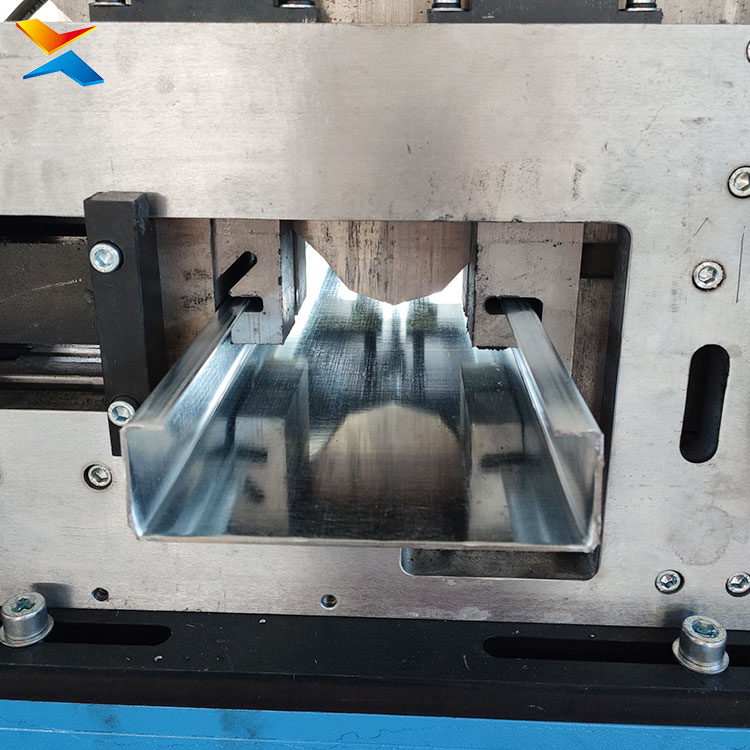
Punching appears in the title because it is one of the two things that make a purlin machine a production machine rather than a forming machine: the members must leave ready to assemble, with the connection holes already in them, rather than being taken away and drilled afterwards. But “with punching” on its own does not tell a buyer whether the machine will produce the holes their assembly needs, and that gap is worth closing before the order.
The first question is whether the punching pattern is built to your assembly, rather than being a fixed pattern the machine happens to produce. Cee and Zed purlins in a steel building are bolted through holes in the flange, and the number, spacing and position of those holes follow the connection detail of the building. The same is true at a smaller scale in light steel frame work, where the assembly is typically screw-fixed and the members may also require openings to let services pass through. A connection hole and an opening for services are different requirements, and neither is satisfied by a nominal pattern. So send the pattern, and ask for confirmation that the punching arrangement is built to it.
The second question is where the punching happens on the line, and why. In this range, the heavier lines position the punching station ahead of the forming unit, on the entry side, so that the flat strip is punched before it is formed; the lighter lines position it after forming. Both arrangements are legitimate and both are in production. The reason the position is worth asking about is that punching flat strip and punching a formed section are different operations with different demands on support and on the tooling, and the answer tells you which philosophy your machine is built on.
The third is whether the punching is linked to the counter, so that the last member of a run is punched correctly rather than being cut from stock that was never punched. On a line producing short runs and many of them, that is where waste accumulates.
The fourth is how the section is supported at the punch. This is the question that matters most in light-gauge work, because thin material has little resistance to being pushed out of shape. A punch that is adequately supported produces a clean hole in a member that is still straight; a punch that is not will mark the section or distort the face around the hole, and a deformed hole face becomes an assembly problem on site rather than a cosmetic one in the shop. Buyers working in light gauge should ask specifically how the section is supported at the punch station, and should not accept a general assurance.
The geometry that decides everything: lips.
Underneath every naming convention and every application sits one geometric fact, and it is worth restating because it governs what each section can do.
A section with lips — the Cee, and the Zed — has its open face closed by two short inward folds. That is what gives it stiffness for its weight, and it is why lipped sections are the load-carrying members: purlins and girts in a steel building, studs in a light steel frame. A section without lips — the U — is an open channel, less stiff for the same material, and used where the job is to receive, guide, line or support rather than to carry a span: tracks in a light steel frame, liner and edge members, cable management, racking sections, guide rails, and mounting rails. A buyer choosing between a lipped and an unlipped section is not choosing between a good machine and a cheap machine; they are choosing between two sections that do different jobs, and the drawing should decide it.
What decides the machine, in the buyer’s own terms.
Whatever the sections are called, a Cee, Zed or U profile is defined by the same four values, and a buyer can specify any of them completely by stating those four as ranges rather than as single figures.
The bottom width is the width of the flat base of the section. The side height is how far the two sides stand up from that base — the dimension that sets whether the member is a shallow liner-like section or a deep structural one. The lip is the length of the inward fold on a lipped section, and its presence or absence is what separates a Cee from a U. And the material thickness is the gauge of the strip.
Of the four, thickness and width do most of the work in machine selection, because the forming load rises steeply as material gets thicker, and because the frame and shafts have to grow with the widest section the machine must cover. Height and lip affect the tooling rather than the overall size of the machine.
The instruction that follows from this is the single most useful thing a buyer can act on before requesting a quotation: state the narrowest and widest bottom width the machine must cover, the range of side heights, the lip requirement, and the full range of thicknesses. A buyer who quotes one nominal section, or a width alone, frequently receives a quotation for a machine that cannot cover their actual range — and that mismatch surfaces at the worst moment, which is after the machine has arrived.
There is a specific caution for light-gauge work worth adding here. Because thin material forms easily, the risk is not that the machine cannot form it but that the machine is specified for the wrong end of its range. A machine sized around the thickest section a fabricator might one day produce will not necessarily give its best results on the thin sections that make up most of the order book, and a machine sized around thin sections will not simply be able to accept heavy material later. So the thickness range should be stated honestly, including both ends, and the supplier should be held to an answer about which end the machine is optimised for.
About the production line, briefly.
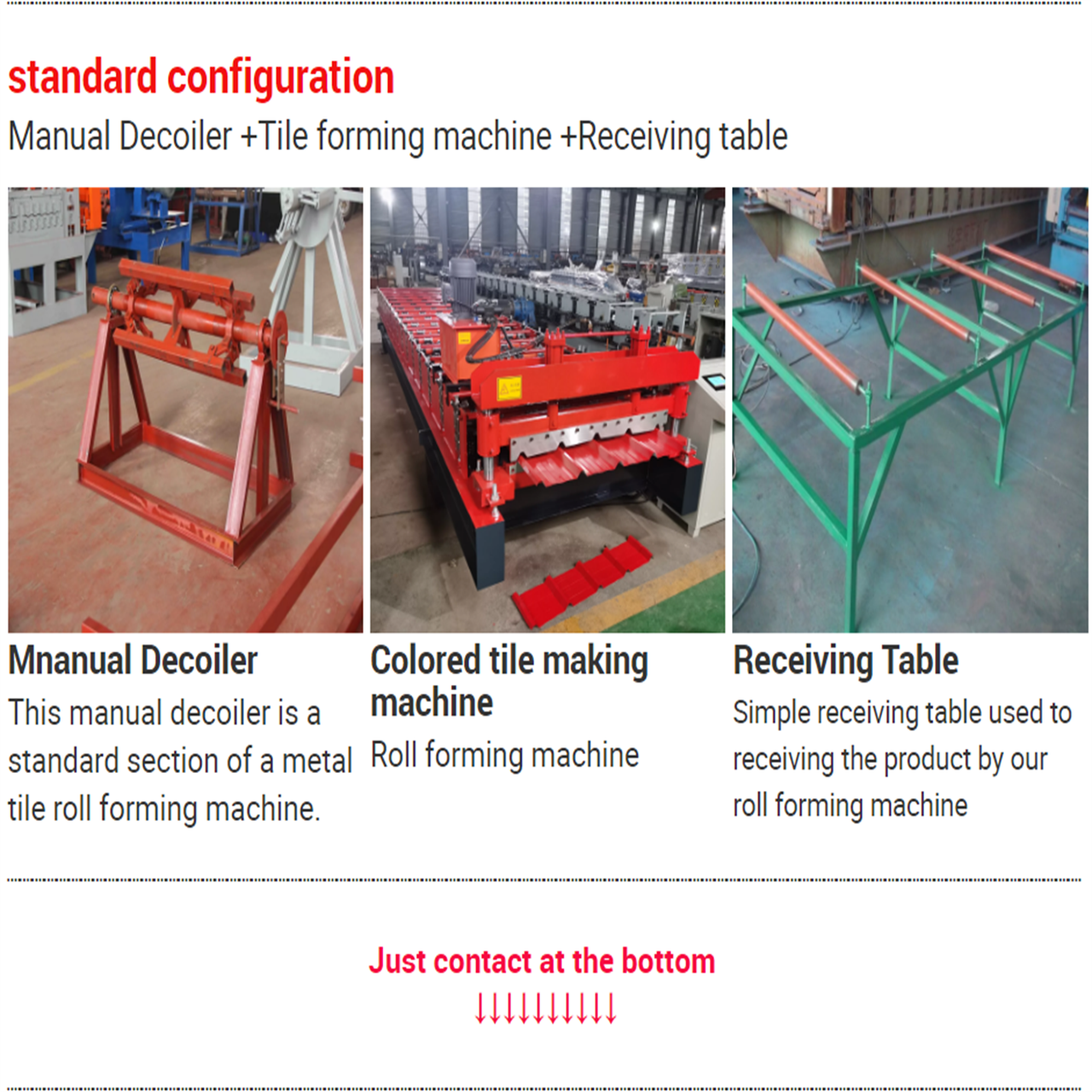
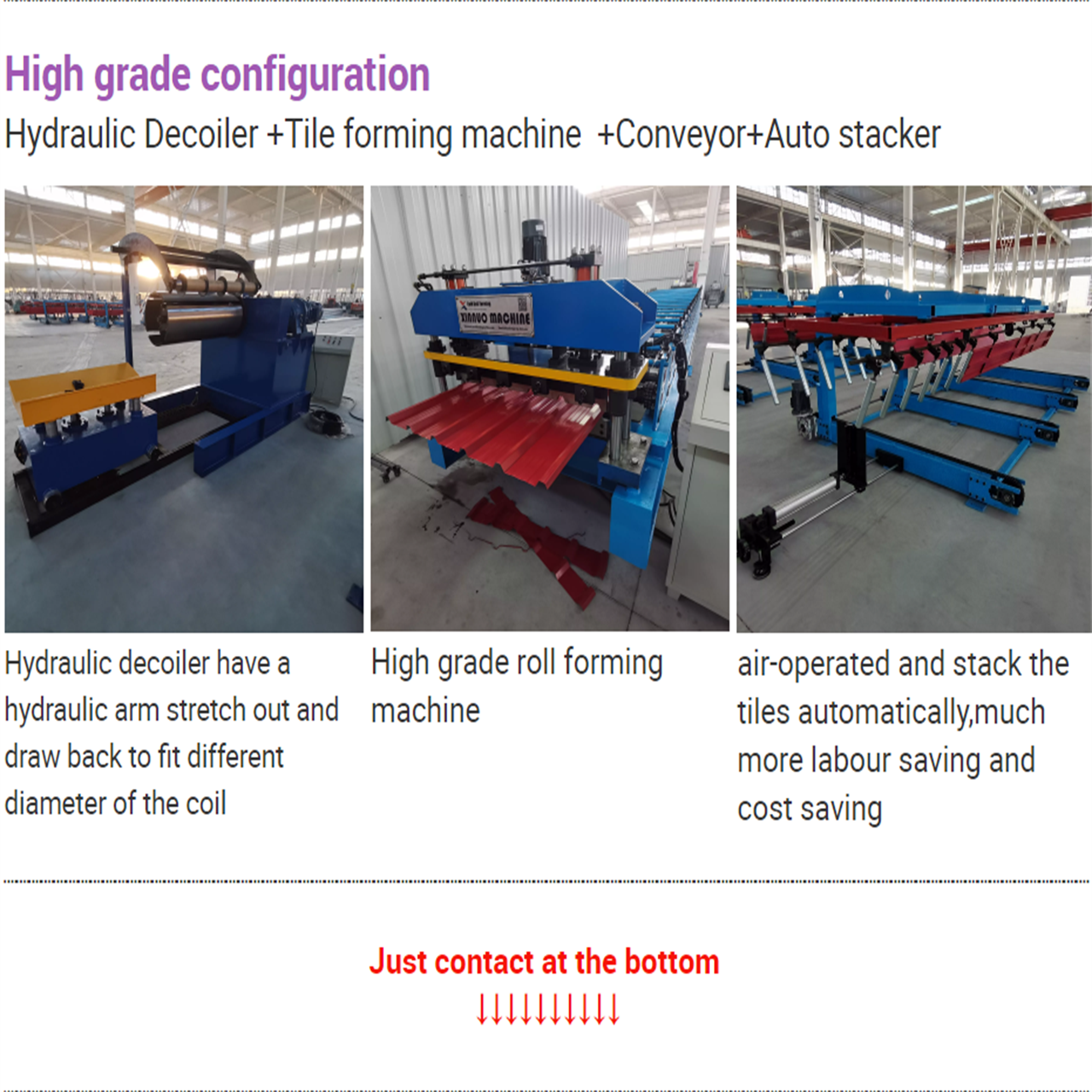
A buyer ordering this machine is usually ordering a line, not a single unit, and the scope deserves the same care that the section specification does. The line runs from the coil entry end to the finished output end through a standard sequence — decoiler, leveling, forming, punching, cutting, output handling, and the control and hydraulic power units — and each of those elements is a specification item that can be included or left out of a quotation.
The reason to insist on the component list rather than the total is that two quotations that look alike can differ in whether leveling is included, whether the decoiler is powered or manual, whether punching is inline or expected to be done afterwards, and how much output handling is supplied at the far end. Ask for the item-by-item list and for the layout drawing that shows the arrangement being offered, and compare that against your own shop before comparing prices. A supplier who will not issue the layout drawing before the order has asked the buyer to guess at the length, the footprint and the clearances the line will need.
Why the Gulf market suits these sections.
Cee, Zed and U sections serve Gulf construction in ways that are worth naming specifically, because the region’s demand is not generic.
The structural steel building market — industrial buildings, warehouses, logistics facilities, factories, workshops, cold storage and the general run of steel-framed commercial construction — consumes Cee and Zed purlins and girts in volume, ordered repeatedly in standard sizes, which is exactly the operating pattern a purlin line is built for.
The light steel frame market runs alongside it rather than replacing it. Thin-gauge framing is used where a building or a part of one is assembled from light sections rather than hot-rolled steel: internal partitions and ceilings and the furring that supports them, mezzanine and floor over-structures where the loading suits it, cold room and insulated enclosure framing, modular and relocatable building units, extensions and roof over-structures added to existing buildings, and shop and office fit-out work. Several of these are recurring requirements in Gulf commercial and industrial projects, and they are served by Cee studs and U tracks rather than by purlins. This is precisely why the application question at the start of this page matters more in the Gulf than the naming question: a fabricator in this region may well need both a purlin machine and a framing machine, and they are not the same purchase.
On the material side, the Gulf climate puts the emphasis where it belongs, which is the coil rather than the machine. Coastal humidity and salt-laden air, and the heat cycling and dust of the interior, are conditions the steel itself has to survive; the machine forms the geometry and nothing more. For light-gauge framing installed inside a building and protected from weather, that concern is smaller than for externally exposed purlins, and buyers should specify their coil and coating to the exposure each member will actually see rather than applying one specification across the whole order book.
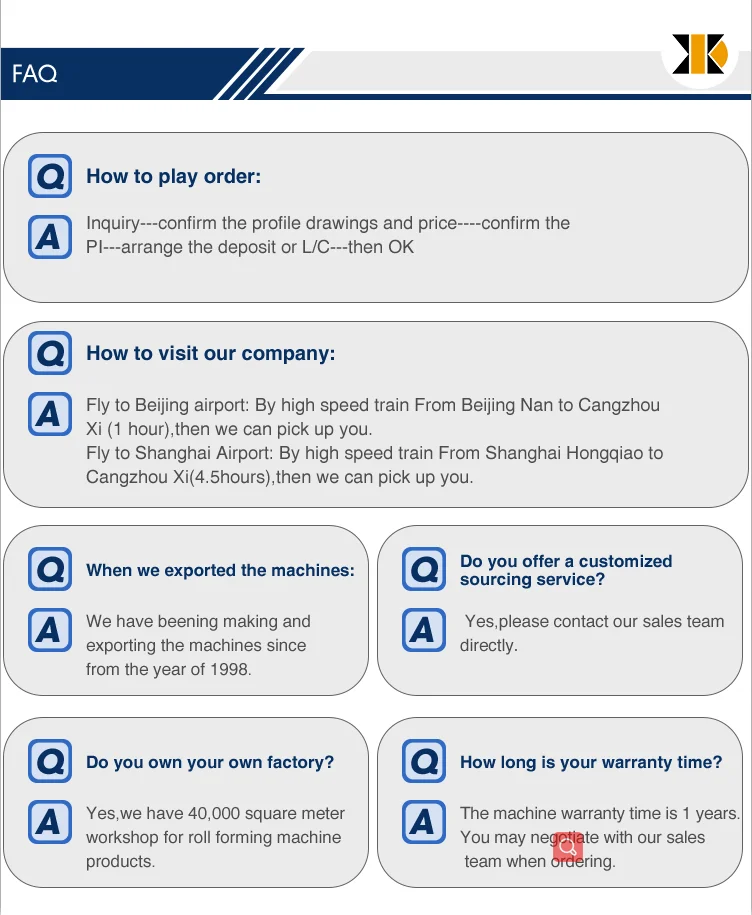
One item of the record should be stated plainly rather than blurred. This factory’s documented purlin deliveries in the region include the United Arab Emirates — Dubai specifically — along with Saudi Arabia, Oman and Yemen, with further deliveries to Israel and Turkey. That record is documented for the purlin machine range, and separately, as set out above, the light steel frame profile in the archive is recorded as a trial build rather than a production model. A buyer with a light steel frame requirement should therefore ask for the specific record relevant to their own profile and machine configuration rather than accept a regional claim, and a supplier with a real archive will be able to answer.
As the manufacturer and supplier.
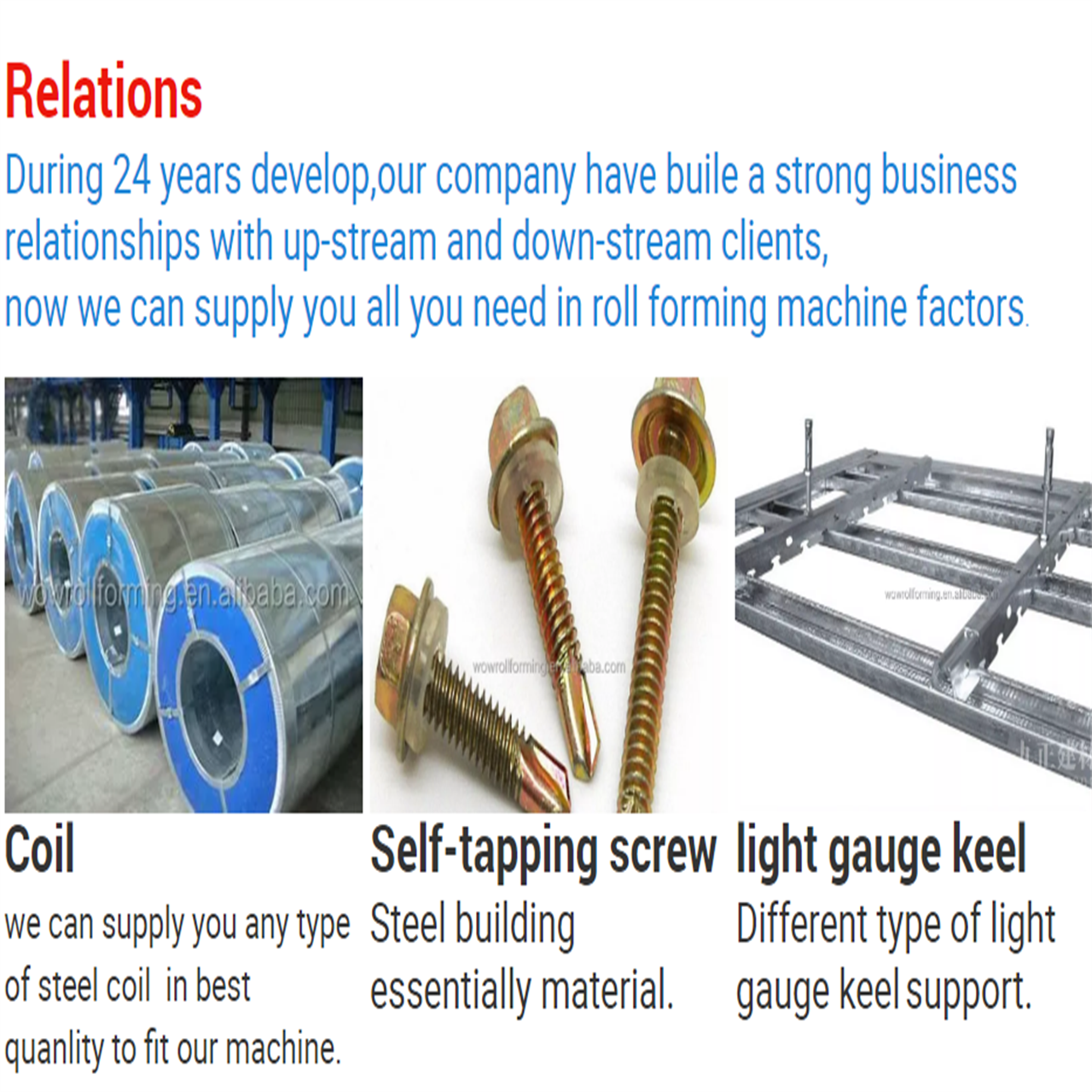
These machines are built and supplied directly by the factory rather than resold, and they are configured against a drawing archive rather than designed from scratch for each order. The archive holds a large body of production-proven section designs across the C, Z and U families, together with the integrated configurations — C plus Z, C plus U, and the three-section arrangement — which are documented as machines that have been built.
That archive is the practical reason to buy from the manufacturer in this category, and it matters most for the buyer whose section is not a standard one. When you send your cross-section and your four values as ranges, the factory can match them against proven designs and tell you whether your requirement corresponds to one that has already been built. Ask for that answer in writing before you compare prices; it is the one piece of information no reseller can supply.
Beyond the machine, the supply relationship covers documentation, electrical configuration matched to your site, installation and commissioning with factory technicians on site, operator training, illustrated manuals, video guidance for the settings used most often, round-the-clock engineering support, and spare parts supply. The company’s credentials in this product line — quality management certification, European conformity marking, recognised high-technology enterprise status and a body of patents — are available and should be requested as documents rather than accepted as adjectives. The specific scope of supply, service and training belongs in the order rather than in an assumption.
To quote this machine, send these items. The cross-section drawing of every section you intend to produce, marked with the naming convention you use, so that Cee, Zed and U are confirmed rather than assumed. For each section, the four defining values as ranges: bottom width, side height, lip, and material thickness, with the narrowest and widest of each the machine must cover. Which members have to fit into which — that is, whether you are producing Cee studs that seat into U tracks, a Cee and Zed purlin set for a steel building, or all three — because this decides whether the machine is a C plus U, a C plus Z, or a three-section configuration. Your punching requirement, including the connection pattern per section and any openings your assembly needs for services. The steel grade and surface you will run. The coil weights, widths and bore you can buy locally, which set the decoiler specification. The cut lengths you work to, including the longest member. Your production pattern: how many sections, how many sizes, and how often the machine changes size. Your workshop’s usable dimensions, roof height, crane provision, door openings and the route the line will take into the building. And your site’s voltage and frequency. With those answers the factory can propose the correct configuration, confirm whether your sections correspond to proven tooling or need new tooling, specify the line item by item, and return an itemised factory-direct quotation together with the layout drawing for the arrangement being offered.
In one sentence, the honest summary. Cee and Zed are simply C and Z purlin written another way, so the naming will not cost you anything as long as you check the cross-section — but the application will, if you buy a C plus Z machine for light steel frame work whose real requirement is a Cee stud and its U track, which is why the first thing worth sending any supplier is not a title but a drawing of the members that have to fit together.
♦ COMPANY PROFILE:
Hebei Xinnuo Roll Forming Machine Co., Ltd., not only produce different types of professional roll forming machines, but also develop intelligent automatic roll forming production lines, C&Z shape purline machines, highway guardrail roll forming machine lines, sandwich panel production lines, decking forming machines, light keel machines, shutter slat door forming machines, downpipe machines, gutter machines, etc.
Advantages of Roll Forming A Metal Part
There are several advantages of using roll forming for your projects:
- The roll forming process allows operations such as punching, notching, and welding to be performed in-line. Labor cost and time for secondary operations are reduced or eliminated, reducing part costs.
- Roll form tooling allows for a high degree of flexibility. A single set of roll form tools will make almost any length of the same cross-section. Multiple sets of tools for varying length parts are not required.
- It can provide better dimensional control than other competing metal forming processes.
- Repeatability is inherent in the process, allowing easier assembly of roll formed parts into your finished product, and minimizing problems due to “standard” tolerance build up.
- Roll forming is typically a higher speed process.
- Roll forming offers customers a superior surface finish. This makes roll forming an excellent option for decorative stainless steel parts or for parts requiring a finish such as anodizing or powder coating. Also, texture or pattern can be rolled into the surface during forming.
- Roll forming utilizes material more efficiently than other competing processes.
- Roll formed shapes can be developed with thinner walls than competing processes
Roll forming is a continuous process which converts sheet metal into an engineered shape using consecutive sets of mated rolls, each of which makes only incremental changes in the form. The sum of these small changes in form is a complex profile.


