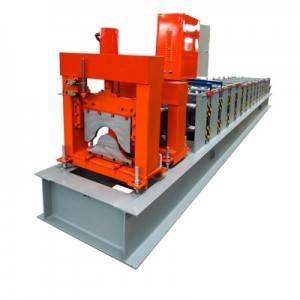


Roof ridge cap roll forming machine for sale, supplied factory-direct to UAE and wider Gulf buyers — and a straight answer on what the word “automatic” should, and should not, cost you.
This page is the buying page. If you already know what a ridge cap is and why it has to be matched to the roof panel it caps, the technical case was made elsewhere; what a buyer standing at the point of purchase actually needs is a way to decide which configuration to pay for, and that is what this page is for. Because the single most common way to overspend on a machine in this category is not to be cheated on the price of a machine — it is to buy a specification you will never use. So the spine of this page is the word in its own title: automatic.
One naming point should be cleared up first, though, because it causes more wrong enquiries on this machine than any other single word.
The word “tile” means three different things, and only one of them is this machine.
The title says “ridge tile making machine”, and in the roofing trade that phrase can point at three quite different products. A buyer who is not clear about which one they want can spend a week in email with the wrong supplier, and can order equipment that does not serve their roof at all.
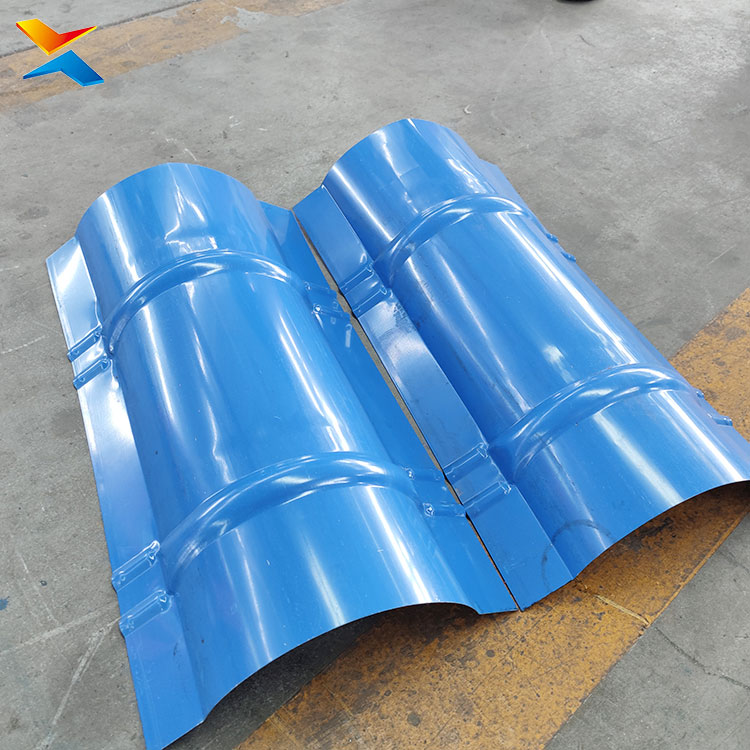
The first is the formed metal ridge cap — the narrow metal section, roll formed from coated steel coil, that caps the ridge of a profiled metal sheet roof. This is the product this machine makes and the product this page is about.
The second is the glazed or antique ridge tile — the shaped ridge piece that belongs to an antique-style tile roof, the curved roof system that mimics traditional clay tiling. That ridge piece exists as part of a tile roofing system, and a metal version of it is produced on a different machine family from this one: an arc-forming machine working with a pitch-stamping arrangement, in which the ridge element is formed with the profile and pattern of the surrounding tile rather than as a plain cap. If your roof is an antique-profile tile roof, that is the direction your enquiry should take, not this one.
The third is the clay, concrete or ceramic ridge tile itself — the heavy, fired or cast ridge piece laid in mortar on a tiled roof. That is not a roll formed product at all and is outside the scope of this machine entirely. It is worth stating because a buyer searching for “ridge tile making machine” may genuinely be looking for tile production machinery rather than sheet metal forming equipment.
The practical test is a single question: what is the roof you need to cap made of? If the answer is profiled metal sheet — trapezoidal or corrugated steel roofing — then this machine is the right family. If the answer is tiles, the enquiry belongs elsewhere.
Now the main question: what does “automatic” actually mean on a ridge cap machine?
“Automatic” is the most elastic word in machinery listings, and on this type of machine it is worth decomposing into its separate functions, because each of them can be manual, motorised, or driven by the control system — and because you should be paying for the ones you need and not for the ones you do not.
There are four functions on a ridge cap line where the word is normally used, and they are quite independent of each other.
The first is cut-to-length. The machine measures the formed cap and separates it at the length you have set, rather than the operator watching a tape and stopping the machine by hand. This is the function that buyers most often actually mean when they say “automatic”, and on this machine it is the one most worth having: it is the difference between one operator producing consistent parts and one operator producing parts that vary.
The second is the counter linkage — the arrangement by which the machine counts the finished pieces, and by which the cutting and any piercing or notching operate in step with the count. On a machine making short parts in short runs, this is what stops the last piece of a batch being cut from stock that was never prepared for it, and it is where a well-specified machine quietly saves material that an under-specified one wastes.
The third is size changeover — how the machine is moved from one section to another when the section changes. This is the function that separates the configuration tiers most sharply. In the simplest configuration the adjustments are made by hand with tools and the setting is found by trial. In the mid configurations the adjustment bases are motorised and the settings are made from the control panel. In the highest configuration the settings are stored in the control system and the machine goes to them, which is the arrangement that matters to a shop that changes section often and does not matter at all to a shop that does not.
The fourth is coil handling — whether the decoiler is powered or manual, and whether the coil is loaded mechanically or by hand. This one is easy to overlook in the specification and impossible to overlook in daily operation, because it is the function the operator contends with at the start of every coil rather than once an order.
The honest position on all four is this: they are genuinely useful functions, and they are not all worth the same money to every buyer. The point of decomposing them is so that you can look at your own order book and answer the question for yourself.
The advice most suppliers will not give you: on this machine, most buyers should not buy the automation they will never use.
A ridge cap machine is a short-part, short-run machine. The parts it forms are measured in a fraction of the length of a roof panel; the runs are measured in the number of caps a roof needs rather than in tonnes of coil; and the machine’s whole purpose in a fabricator’s shop is to close a gap on every roof, which means it runs often but does not run long. That duty profile has a direct consequence for the automation decision.
Size changeover automation is the function most often oversold on this machine, and the one most often unnecessary. The case for stored settings, motorised adjustment bases and the control system that drives them is strongest where a machine changes section many times a shift, because the time saved per change is multiplied by the number of changes. On a shop producing large volumes of a small number of sections — which is the normal pattern for roof frame work — the same automation sits unused, and what the buyer has paid for is a machine that needs more maintenance to deliver a benefit it does not collect.
By contrast, cut-to-length automation is the function most often worth having on this machine, for the reason given above: it is what makes the output consistent, and consistency in a cap that has to sit down onto a panel and seal along it is not a convenience. A machine that produces caps of varying length is not a cheaper machine; it is a machine that will cost its owner time on every roof.
The sensible sequence for a buyer is therefore to specify the automation functions that match the actual order book, and to say so plainly at the enquiry stage rather than to accept a list headed “automatic” as a single item. A supplier who cannot break “automatic” into its parts, and discuss what each is for on your production pattern, is not in a position to configure a machine against your shop, whoever they are.
Where servo genuinely belongs on this machine, and where it does not.
Servo drive is the most expensive word in the specification of this class of machine, and it is worth being precise about what it buys, because the answer is narrower than the marketing suggests.
The archive in this factory includes a precision configuration of the arc ridge cap section, built with a heavier frame plate and a servo drive, as the highest tier of the range. Servo drive belongs on that machine for a specific and defensible reason: it gives closer control of the drive and therefore closer consistency of the formed section, which matters where the appearance of the ridge line is a deliberate part of the building rather than a functional closure. That is a real requirement on architecturally considered work and a real waste on a shop producing utility caps for industrial roofs.
Servo does not earn its premium merely by being “automatic”. A standard drive with a properly specified control arrangement will cut to length, count, and hold its settings; it simply does not hold them to the same tolerance. So the question to put to a supplier is not “is it servo” but ”what does servo buy me on the section I am making, and can you show me why I need it” — and a supplier who genuinely knows the product will be willing to explain the case rather than assert it.
What drives the price when you do compare quotations.
Prices for this machine vary, and the variation is accounted for by a finite and knowable list of items. Any quotation that does not let you see them is a quotation you cannot compare against another.
The number of coil widths the machine accepts, and how the switch between them is made, is the largest single variable, because a machine that must cover several roof panel families is a different machine from one dedicated to a single profile. The number of forming stages comes next: more stages means more forming and a better-finished section, and it also means a longer machine with more rolls, more shafting and more drive. The frame and shaft sizing follows the width and thickness the machine must handle. The drive arrangement is the next step up the ladder, with the heavier frame, shaft and drive combination being the configuration the factory’s own records describe as its export mainstay for this range — that is, the configuration most often bought for markets like yours. On top of those sit the cutting arrangement, the decoiler specification, the automation functions described above, the electrical configuration matched to your site, and the scope of service — installation and commissioning, training, documentation, and spares.
Two consequences follow for a buyer. First, two quotations differing substantially in price are usually not the same machine: they differ in width coverage, in stage count, in frame size, in automation, or in what is included at the edges of the line. Second, the way to compare them is item by item, against the list above, rather than against the total. A lower total that omits the decoiler, or specifies fewer stages, or leaves out commissioning, is not a cheaper offer for the same thing — and if a supplier’s quotation does not state those items, the correct next step is to ask for them rather than to assume them either way.
What a quotation for this machine should itemise.
Beyond the configuration, there are items that a complete offer states and an incomplete one leaves to be discovered later. Ask for them explicitly and in writing: the section drawing for the ridge cap being offered, so the shape you are buying is fixed rather than described; the layout drawing of the line as offered, so its length, footprint and clearances can be checked against your building before the order rather than after arrival; the itemised scope of supply, so it is clear what is and is not included; the drive and control arrangement, stated in terms of what the machine does rather than what it is called; the voltage, frequency and phase the machine is built for, confirmed against your site; the documentation supplied, including the manual and the electrical drawings; the installation and commissioning arrangement, and who is responsible for what on site; the operator training included and how it is delivered; the spare parts supplied with the machine and the parts recommended as consumables; and the packing and shipping arrangement. A supplier who answers these in writing has shown you their process. A supplier who answers only the price has told you what the price is and nothing else.
For UAE buyers specifically.
Three items belong on a UAE buyer’s list, and the first is a matter of honesty rather than specification.
Ask for the section record for your roof panel, and ask it specifically. This factory’s ridge cap archive is a substantial one, but as it stands its documented export build is for a West African market, and the archive does not carry a Middle East delivery record for this product line — which is not the case for every product line this factory builds, and it would be wrong to blur the two. So a UAE buyer should put the question in the form it deserves: ”which ridge cap section, for which roof panel, have you actually produced before?” and should expect a specific answer. Where the panel falls outside the standard families, the honest answer is that the section would be designed to suit that panel, and that answer should arrive before the order.
Treat the ridge cap as the most exposed steel on the building. The UAE’s coastal humidity and salt-laden air are the decisive conditions, and the ridge is where they do their work first: the cap sits at the highest point of the roof, on a change of direction, and around the fixings, which is the position corrosion reaches before the roof field. A UAE buyer should therefore specify coil and coating for that exposure rather than for the roof field, and should not accept a quotation that leaves the material specification to be settled later. Inland, the priority shifts slightly, with the heat cycling, intense sun and wind-borne dust putting the emphasis on coating integrity and on the cap sitting down onto the panel so that dust cannot work in along the ridge.
State the commercial terms you need. A UAE buyer is often working to a project schedule and to a shipping route, and both should be in the enquiry from the start rather than negotiated after the technical agreement. Say what the machine must do and by when, and require the offer to address it.
As the manufacturer and supplier.
These machines are built and supplied directly by the factory rather than resold, and they are configured against a drawing archive rather than designed from scratch for each order. That archive holds a substantial body of proven ridge cap profiles for the standard roof panel families, and includes the arc and triangular sections, the narrow steep-slope section, the widest-coverage cap, and the multi-width machine — so a standard enquiry most often resolves to a section the factory has already built.
That is the answer worth extracting from any supplier in writing: does my ridge cap correspond to a section you have built before, and if so, which one? A supplier with a real archive can answer; one without will answer with adjectives, and the difference matters most for the buyer whose section is not standard.
Beyond the machine, the supply relationship covers documentation, electrical configuration matched to your site, installation and commissioning with factory technicians on site, operator training, illustrated manuals, video guidance for the settings used most often, round-the-clock engineering support, and spare parts supply. The company’s credentials can be requested as documents rather than accepted as adjectives, and the specific scope of supply, service and training belongs in the order.
One point of accuracy belongs here, and it is a reason to require written confirmation rather than to quote from a table. The factory’s own profile documentation notes that some earlier profile entries carry estimated parameters and that the actual drawings govern. In an archive built up over many years that is a normal and honest state of affairs, but it means a buyer should treat any ridge cap specification as confirmed in writing against the drawing for the section being offered, not as fixed by a listing.
To quote this machine, send these items. Your roof panel cross-section and its effective width, so the ridge cap can be matched to the panel it caps, together with the coverage width, ridge height and roof pitch you need. Whether you need ridge caps only or hip closures as well. Your material thickness range, and the coil widths and coil weights you can buy locally. How many roof panel types the machine must cover, since serving several is the case for the multi-width version. The lengths you cut to and your expected output, which together decide how much automation is worth paying for. Your production pattern — how many sections, how many sizes, and how often the machine changes size — because this is the single input that decides whether the size-changeover automation earns its cost on your shop. Your workshop’s usable dimensions and the route the machine takes into the building. Your site’s voltage, frequency and phase. And your project schedule and shipping route. With those answers the factory can confirm whether your requirement matches a proven section or needs new tooling, propose the configuration that fits your actual production pattern rather than the longest option list, specify the scope item by item, and return an itemised factory-direct quotation with the section drawing and the layout drawing.
In one sentence, the honest summary. Buy this machine on the configuration that matches the work in your order book rather than on the length of its feature list — and before any of that, be sure the word “tile” in what you are searching for means a formed metal cap for a profiled steel roof, because if your roof is a tiled roof the equipment you need is a different machine.
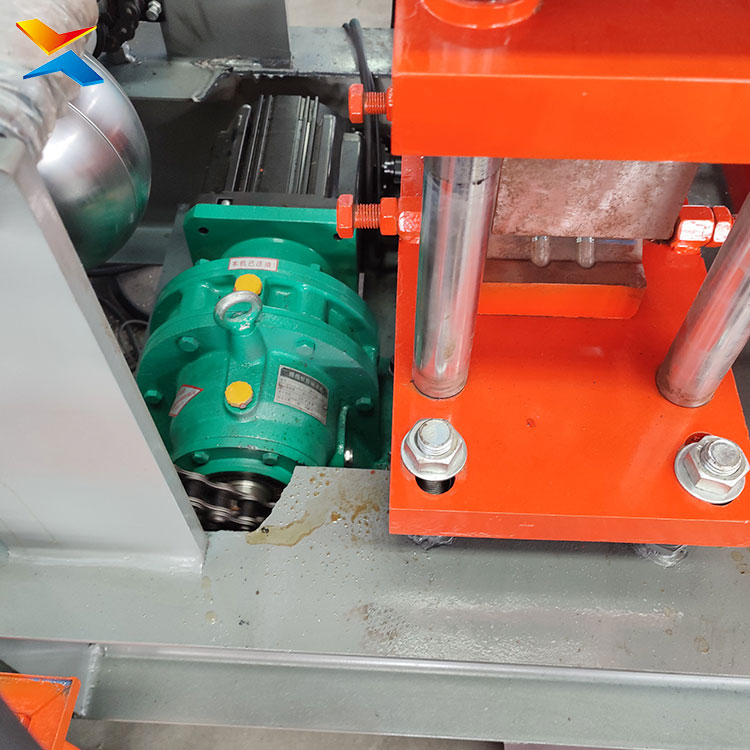
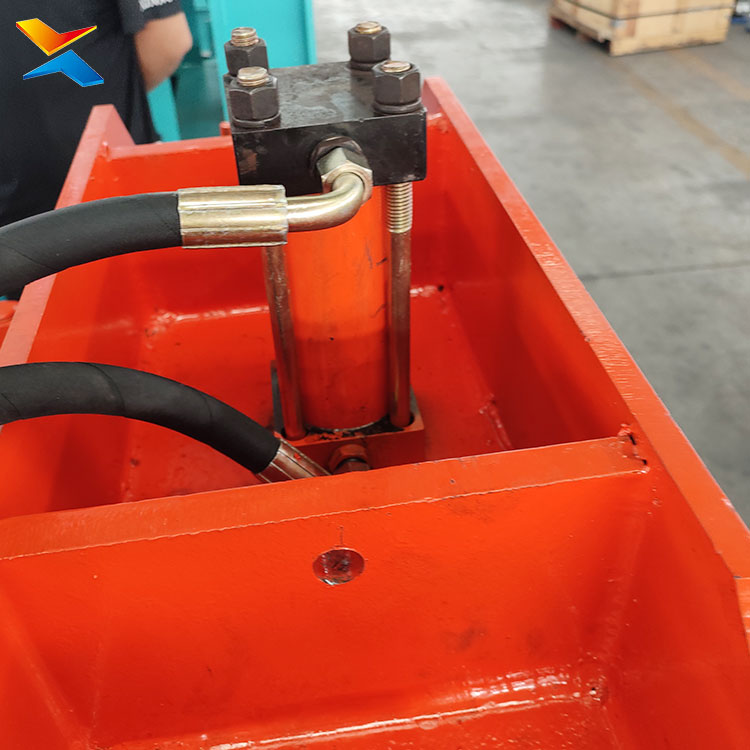



♦ COMPANY PROFILE:
Hebei Xinnuo Roll Forming Machine Co., Ltd., not only produce different types of professional roll forming machines, but also develop intelligent automatic roll forming production lines, C&Z shape purline machines, highway guardrail roll forming machine lines, sandwich panel production lines, decking forming machines, light keel machines, shutter slat door forming machines, downpipe machines, gutter machines, etc.
Advantages of Roll Forming A Metal Part
There are several advantages of using roll forming for your projects:
- The roll forming process allows operations such as punching, notching, and welding to be performed in-line. Labor cost and time for secondary operations are reduced or eliminated, reducing part costs.
- Roll form tooling allows for a high degree of flexibility. A single set of roll form tools will make almost any length of the same cross-section. Multiple sets of tools for varying length parts are not required.
- It can provide better dimensional control than other competing metal forming processes.
- Repeatability is inherent in the process, allowing easier assembly of roll formed parts into your finished product, and minimizing problems due to “standard” tolerance build up.
- Roll forming is typically a higher speed process.
- Roll forming offers customers a superior surface finish. This makes roll forming an excellent option for decorative stainless steel parts or for parts requiring a finish such as anodizing or powder coating. Also, texture or pattern can be rolled into the surface during forming.
- Roll forming utilizes material more efficiently than other competing processes.
- Roll formed shapes can be developed with thinner walls than competing processes
Roll forming is a continuous process which converts sheet metal into an engineered shape using consecutive sets of mated rolls, each of which makes only incremental changes in the form. The sum of these small changes in form is a complex profile.