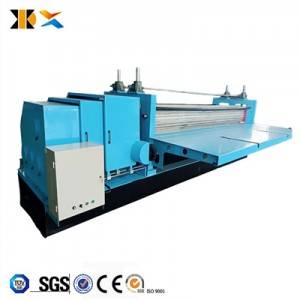


Steel Structure Roof Trapezoidal Sheet Processing Machine
The Steel Structure Roof Trapezoidal Sheet Processing Machine is a professional, fully automatic industrial-grade equipment specifically developed for the continuous production of high-quality trapezoidal metal sheets, dedicated to steel structure roof projects. Widely applied in steel structure construction projects such as industrial factories, warehouses, steel structure workshops, and large-scale commercial buildings, this processing machine integrates mature cold roll forming technology, intelligent automatic control, and heavy-duty structural design. It is dedicated to solving the efficiency and quality problems of traditional trapezoidal sheet processing for steel structure roofs, realizing a one-stop automated workflow from raw material feeding to finished product output, and becoming an indispensable core equipment for manufacturers engaged in steel structure roof material production.
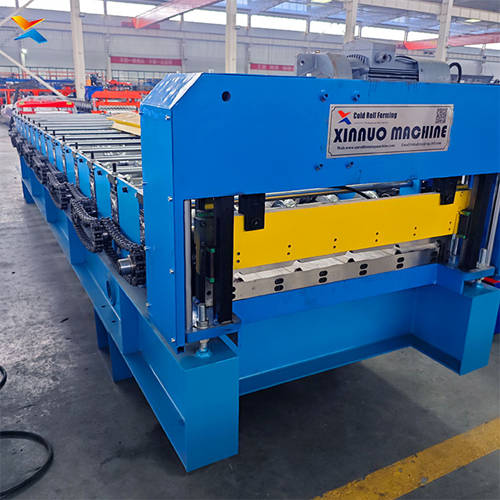
Tailored for the characteristics of trapezoidal sheets for steel structure roofs—requiring high structural strength, excellent load-bearing capacity, good water tightness, and adaptability to harsh outdoor environments—this processing machine adopts a heavy-duty welded steel frame structure. Undergoing precision machining, heat treatment, and stress relief processes, the frame maximizes structural rigidity and stability, ensuring stable operation even under long-term high-load production conditions. The integral frame design effectively avoids vibration, deformation, and displacement during continuous operation, adapting to the complex working environment of industrial workshops and extending the equipment’s service life to meet the large-scale production needs of steel structure roof projects.
The machine’s base is equipped with shock-absorbing pads, which further reduces vibration impact, protects the workshop ground, and improves the overall operation stability—critical for ensuring the precision of trapezoidal sheets used in steel structure roofs. The core forming system of the processing machine is equipped with multi-station precision forming rollers, made of high-quality alloy steel through chrome plating, polishing, and other advanced surface treatment processes. This not only enhances the rollers’ wear resistance and corrosion resistance but also ensures their smooth surface, so that during the forming process, the metal coil is evenly stressed and gently shaped, without scratching or damaging the material surface.
Focusing on steel structure roof applications, the finished trapezoidal sheets have neat lines, uniform rib height, flat surface, and strong three-dimensional sense, perfectly meeting the high-standard requirements of steel structure roofs in terms of structural performance, water tightness, and installation fit. The trapezoidal structure of the finished sheets is scientifically designed to enhance water flow guidance, effectively preventing rainwater accumulation and leakage, and adapting to various roof slopes and outdoor environments—key for ensuring the durability and safety of steel structure roofs.
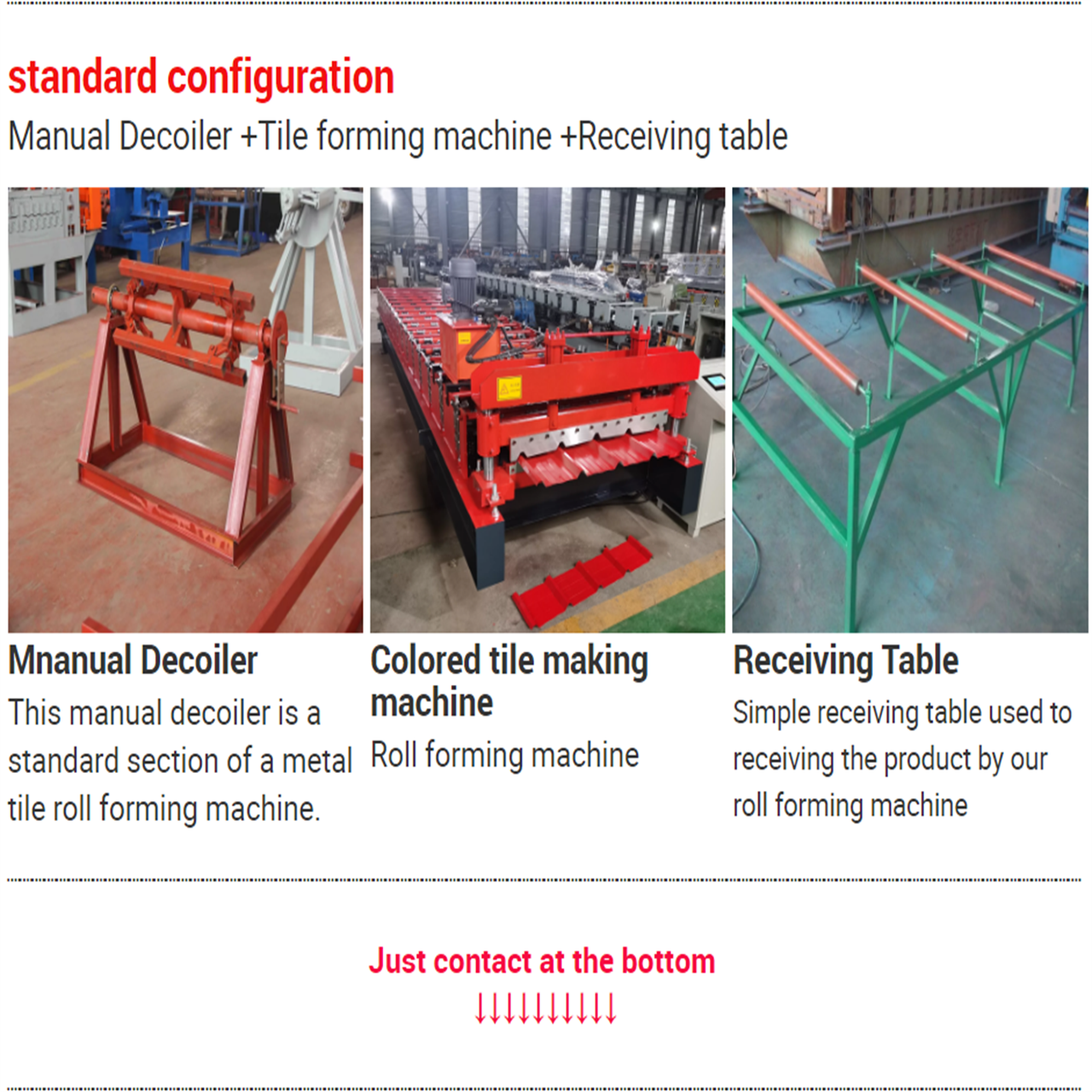
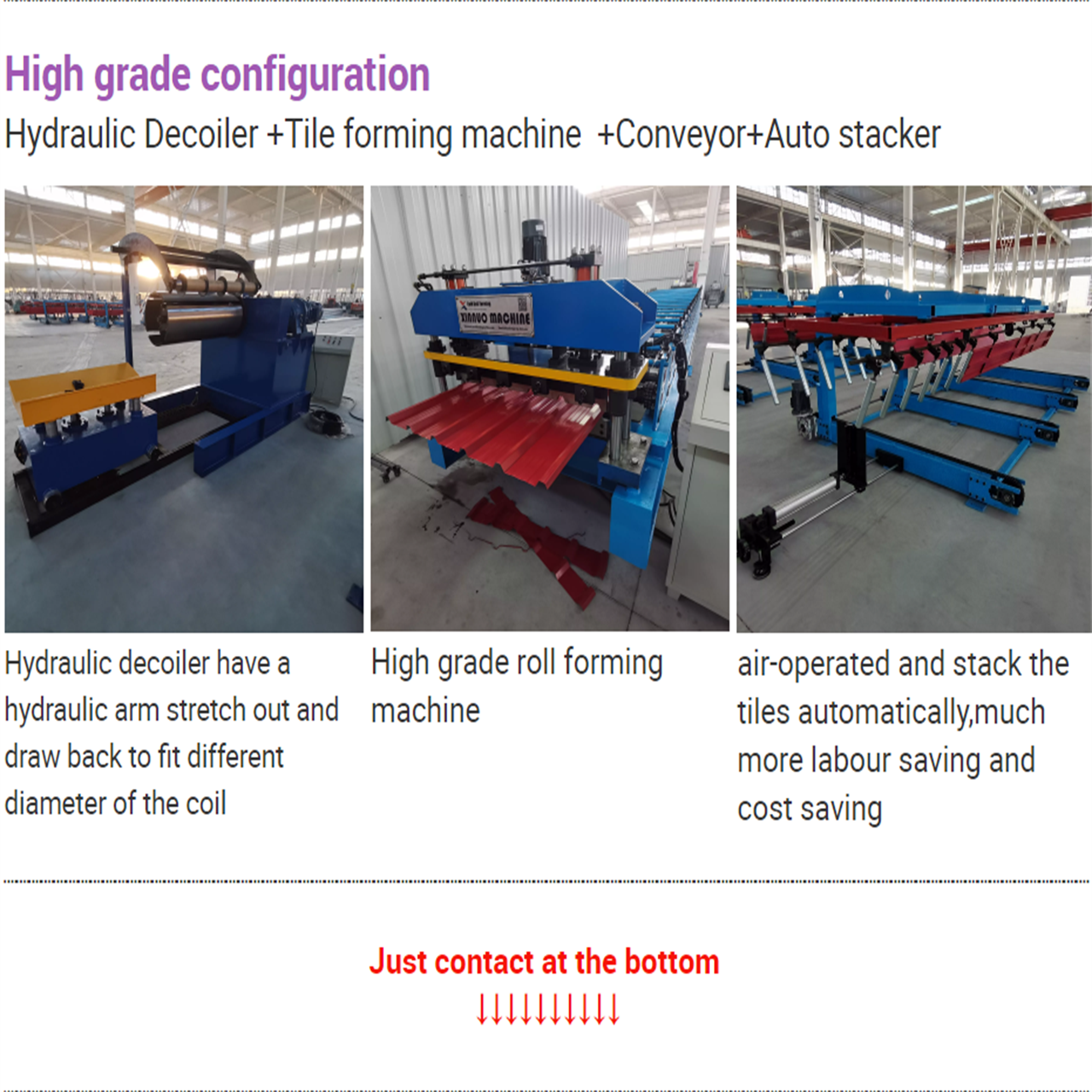
The Steel Structure Roof Trapezoidal Sheet Processing Machine is equipped with an intelligent fully automatic control system, featuring a high-performance PLC controller and a user-friendly touch-screen operation interface, which simplifies the operation process and reduces the threshold for operator training. Operators only need to set key parameters such as the length, width, and forming speed of the trapezoidal sheets on the touch screen, and the machine can automatically complete the entire production process—including coil uncoiling, material leveling, continuous roll forming, fixed-length positioning, hydraulic cutting, and finished product stacking—without manual intervention.
The control system supports parameter storage and recall functions, which is convenient for batch production of different specifications of trapezoidal sheets for steel structure roofs, greatly improving production flexibility and adaptability. In addition, the system is equipped with a complete fault alarm and self-diagnosis function, which can promptly detect and display faults such as material jamming, insufficient hydraulic pressure, abnormal roller operation, and power failure, facilitating operators to quickly locate and solve problems, reducing downtime, and ensuring continuous and stable production of steel structure roof materials.
In terms of cutting performance, the processing machine adopts a high-efficiency hydraulic cutting system, equipped with high-hardness mold steel blades that have undergone special heat treatment. This ensures clean, smooth, and burr-free cutting of the trapezoidal sheets, avoiding material waste and ensuring the installation fit of the finished products—critical for the seamless assembly of steel structure roofs. The cutting speed is perfectly synchronized with the forming speed, realizing non-stop continuous cutting, which maximizes production efficiency and meets the large-scale production needs of steel structure roof projects.
The cutting length can be freely adjusted within a certain range, meeting the diverse size requirements of different steel structure roof projects, such as large-scale industrial plants, warehouses, logistics centers, gymnasiums, and commercial steel structure buildings. The cutting part is equipped with a protective device to prevent metal scraps from splashing, ensuring the safety of operators and the cleanliness of the production environment.
With strong material compatibility, the Steel Structure Roof Trapezoidal Sheet Processing Machine is suitable for processing various common metal coils (including galvanized steel, color-coated steel, and plain steel) with different thicknesses, which can meet the diverse needs of different steel structure roof projects for material performance. The finished trapezoidal sheets produced by the machine have excellent comprehensive performance: high structural strength, good compression resistance, wind resistance, and weather resistance, able to withstand harsh outdoor environments such as strong wind, heavy rain, high temperature, and low temperature.
The surface of the sheets is smooth and flat, not easy to fade, peel, or rust, ensuring long-term durability and structural stability of the steel structure roof; at the same time, the sheets are light in weight, easy to transport and install, which can greatly improve the construction efficiency of steel structure roof projects and reduce construction costs.
The processing machine also pays attention to humanized design and energy conservation and environmental protection, adapting to the needs of modern industrial production. The whole machine adopts a closed protective cover, which not only prevents dust, debris, and other impurities from entering the internal components, protecting the equipment and extending its service life, but also effectively reduces noise pollution during operation, creating a comfortable and safe working environment for operators. The motor and hydraulic system of the machine adopt energy-saving designs, which can effectively reduce energy consumption while ensuring production efficiency, helping enterprises reduce operating costs and achieve green and energy-saving production.
Widely used in steel structure construction, prefabricated steel structure buildings, industrial and commercial steel structure roof projects, the Steel Structure Roof Trapezoidal Sheet Processing Machine is a reliable, efficient, and cost-effective processing solution for trapezoidal sheet production for steel structure roofs. It not only solves the problems of low efficiency, poor product consistency, high labor intensity, and high material waste of traditional manual and semi-automatic processing but also focuses on meeting the special requirements of steel structure roofs, ensuring the quality and safety of finished products. It meets the large-scale, standardized production needs of steel structure roof materials, helping enterprises improve product quality, enhance market competitiveness, and realize automated production of trapezoidal sheets for steel structure roofs.



♦ COMPANY PROFILE:
Hebei Xinnuo Roll Forming Machine Co., Ltd., not only produce different types of professional roll forming machines, but also develop intelligent automatic roll forming production lines, C&Z shape purline machines, highway guardrail roll forming machine lines, sandwich panel production lines, decking forming machines, light keel machines, shutter slat door forming machines, downpipe machines, gutter machines, etc.
Advantages of Roll Forming A Metal Part
There are several advantages of using roll forming for your projects:
- The roll forming process allows operations such as punching, notching, and welding to be performed in-line. Labor cost and time for secondary operations are reduced or eliminated, reducing part costs.
- Roll form tooling allows for a high degree of flexibility. A single set of roll form tools will make almost any length of the same cross-section. Multiple sets of tools for varying length parts are not required.
- It can provide better dimensional control than other competing metal forming processes.
- Repeatability is inherent in the process, allowing easier assembly of roll formed parts into your finished product, and minimizing problems due to “standard” tolerance build up.
- Roll forming is typically a higher speed process.
- Roll forming offers customers a superior surface finish. This makes roll forming an excellent option for decorative stainless steel parts or for parts requiring a finish such as anodizing or powder coating. Also, texture or pattern can be rolled into the surface during forming.
- Roll forming utilizes material more efficiently than other competing processes.
- Roll formed shapes can be developed with thinner walls than competing processes
Roll forming is a continuous process which converts sheet metal into an engineered shape using consecutive sets of mated rolls, each of which makes only incremental changes in the form. The sum of these small changes in form is a complex profile.