

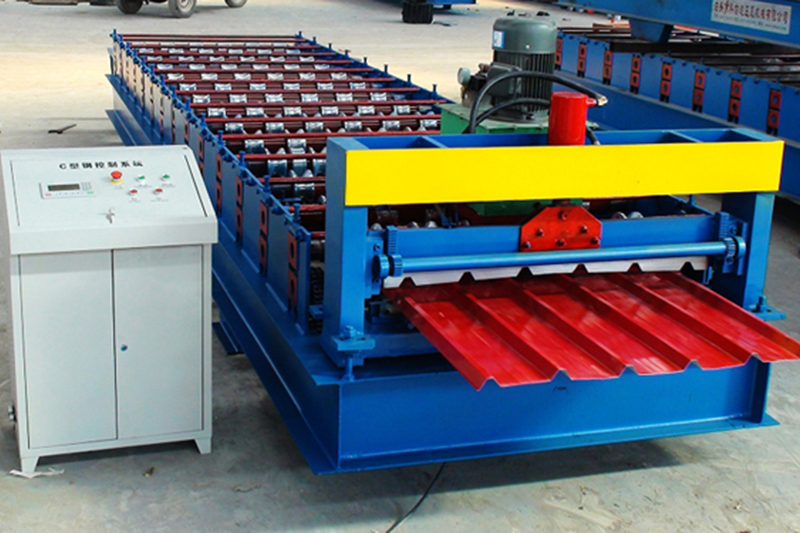
china Roof Tile Making Machine pricelist - roof panel roll forming machine – Xinnuo Detail:
*Detail
Roofing sheet roll forming system is comprised of material feeding, roll forming, and shearing sections. Equipped with PLC computer control system and hydraulic pumping system, the forming machine is of high automation and is easy to be operated.
Xinnuo is able to customize panel roll forming machines used for producing roof panels with different shapes and dimensions according to the standards of different regions. We have 840. 850, and 860 series machines for im-wide panels. For roof panels used in Southeast Asia whose required width is 914mm, we have 760 and 762 series prepared. 1000 series roof panel forming machine is designed for the Middle East where the roof panels are generally 1200mm or 1220mm wide. Customization service is offered by our design team, which is comprised of over 10 professional designers.
This roof panel forming machine is mainly applied in producing roofing panels of plant, warehouse, garage, hangar stadium, exhibition hall, and theaters, etc.
*Features
a. The roof panel roll former is equipped with PLC touch screen control system (multi-language selection system is available upon request)
b. The double-line chain allows for uniform and large transmission force
c. The cutting blades of the roofing sheet roll forming machine is made from Cr12 molybdenum-vanadium steel, featuring high hardness and high wear resistance. The roofing sheet produced by the roll forming machine is distinguished for flat surface
d. Shaft made from 45# steel is designed with a diameter of 80mm
e. 24V constant pressure hydraulic system
f. Shear beam made of 20mm-thick plates
*1000type roll forming machine
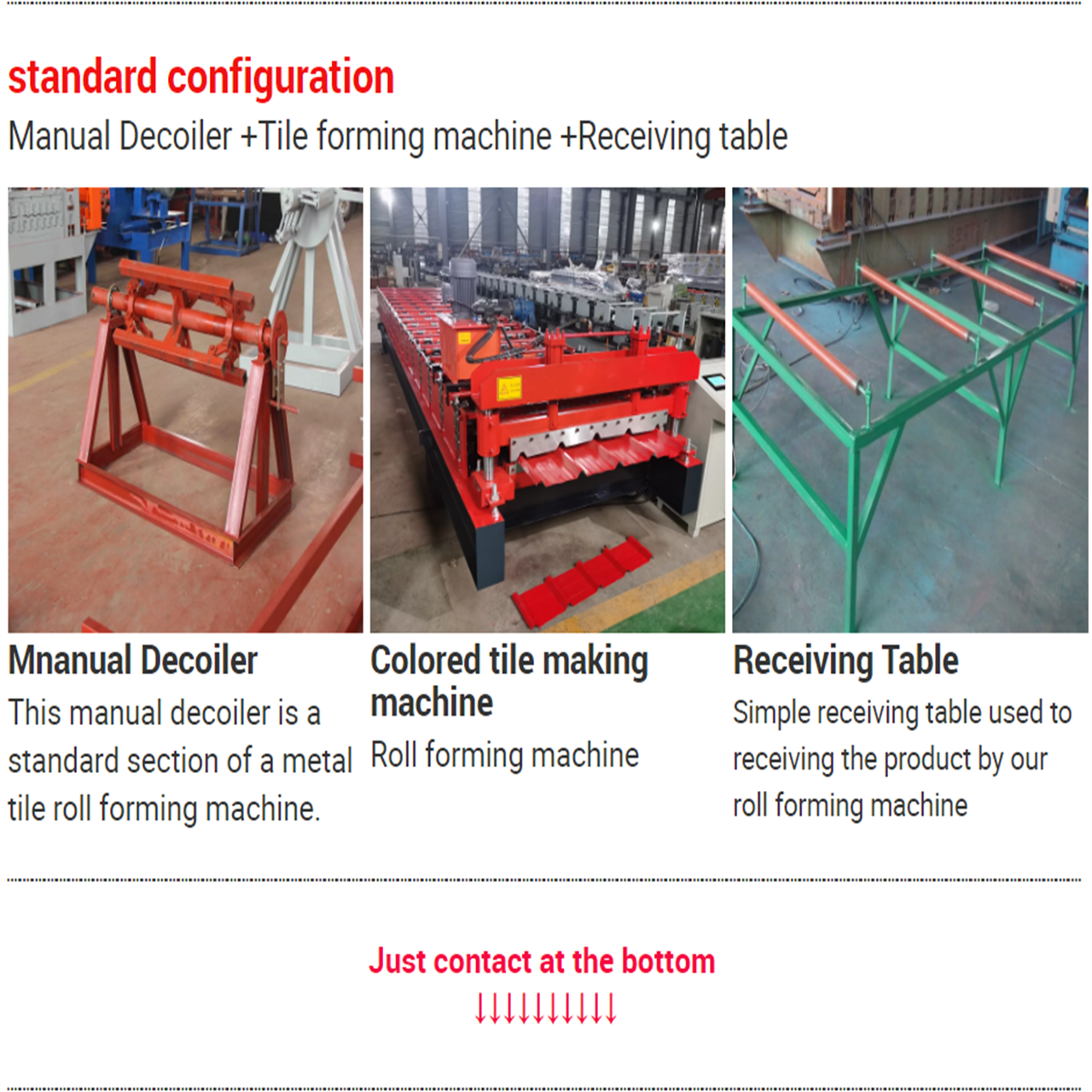
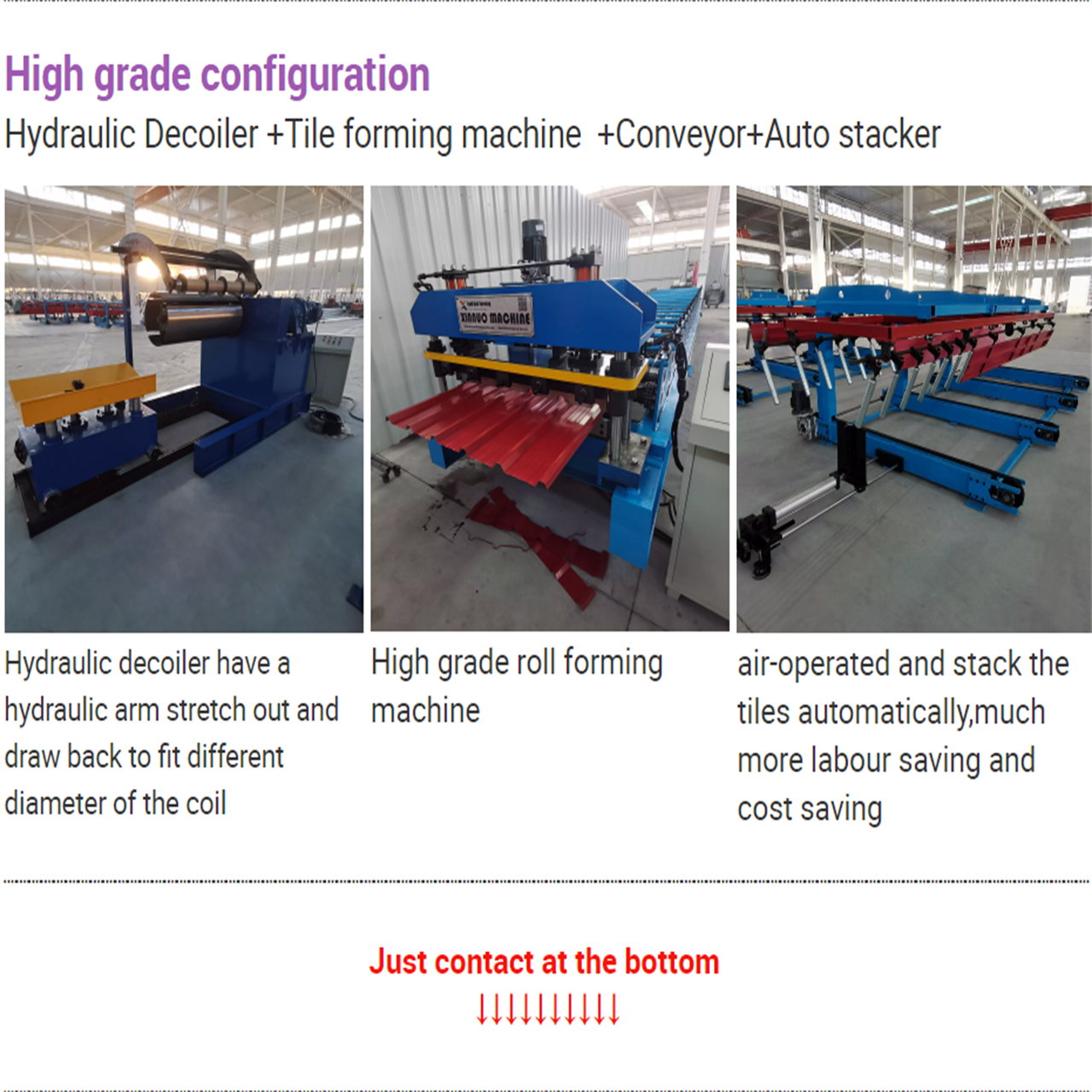
| Configurations | Manual Uncoiler ,Guiding Platform ,Coil Strip Leveler ,Main Machine Of Roll Forming ,Electro-Motor,Cutting Device ,Hydraulic Station ,PLC Control, Supporter Table. |
| Control System | PLC Delta Inverter |
| Main Frame | 300mm H-Beam |
| Main Power | 4 kw |
| Pump Power | 3 kw |
| Power Supply | 380V, 3-Phase,50Hz |
| Forming Speed | 15-20m/min |
| Cutting speed | 8-12m/min |
| Roll Station | 14 stands |
| Roller Diameter | 80mm |
| Hydraulic Pressure | 10-12MPa |
| Forming Size | 1000mm |
| Feeding Thickness | 0.3-0.8mm |
| Feeding Width | 1220mm |
| Backboard Thickness | 14mm |
| Chain Size | 20mm |
| Cutter Standard | Cr12 |
| Roller Standard | 45# |
| Cr-Plating Size | 0.05mm |
| Overall Size | 7500×1450×1600mm |
| Total Weight | 4.5T |
All parameters can be customized, we have a high, medium and low version of each machine configuration
*Application
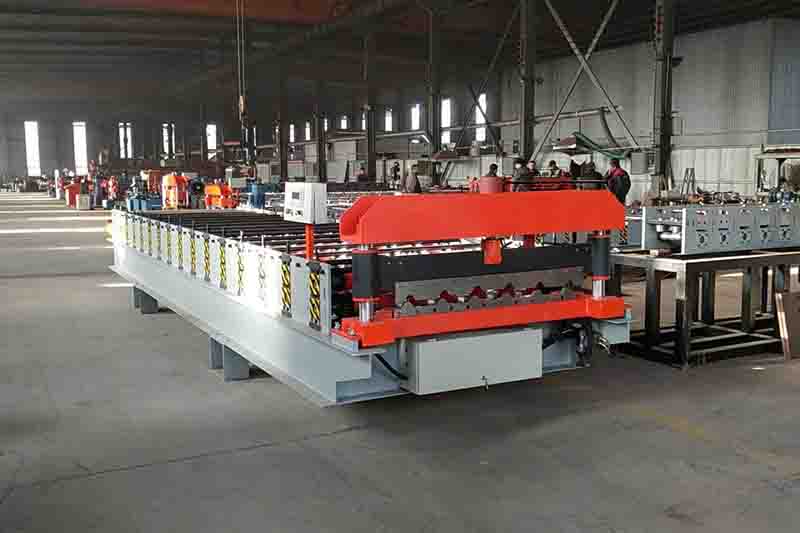
Product detail pictures:


Related Product Guide:
With advanced technologies and facilities, strict good quality manage, reasonable rate, superior assistance and close co-operation with shoppers, we have been devoted to supplying the very best price for our consumers for china Roof Tile Making Machine pricelist - roof panel roll forming machine – Xinnuo, The product will supply to all over the world, such as: Guatemala, South Korea, Sweden, We strongly believe that technology and service is our base today and quality will create our reliable walls of future. Only we've got better and better quality , could we achieve our customers and ourselves, too. Welcome customers all over the word to contact us for getting further business and reliable relationships. We have been always here working for your demands whenever you require.
♦ COMPANY PROFILE:
Hebei Xinnuo Roll Forming Machine Co., Ltd., not only produce different types of professional roll forming machines, but also develop intelligent automatic roll forming production lines, C&Z shape purline machines, highway guardrail roll forming machine lines, sandwich panel production lines, decking forming machines, light keel machines, shutter slat door forming machines, downpipe machines, gutter machines, etc.
There are several advantages of using roll forming for your projects:
- The roll forming process allows operations such as punching, notching, and welding to be performed in-line. Labor cost and time for secondary operations are reduced or eliminated, reducing part costs.
- Roll form tooling allows for a high degree of flexibility. A single set of roll form tools will make almost any length of the same cross-section. Multiple sets of tools for varying length parts are not required.
- It can provide better dimensional control than other competing metal forming processes.
- Repeatability is inherent in the process, allowing easier assembly of roll formed parts into your finished product, and minimizing problems due to “standard” tolerance build up.
- Roll forming is typically a higher speed process.
- Roll forming offers customers a superior surface finish. This makes roll forming an excellent option for decorative stainless steel parts or for parts requiring a finish such as anodizing or powder coating. Also, texture or pattern can be rolled into the surface during forming.
- Roll forming utilizes material more efficiently than other competing processes.
- Roll formed shapes can be developed with thinner walls than competing processes
In modern construction and manufacturing, the roll forming machine (commonly known as a roof tile or sheet metal roll former) has revolutionized profile fabrication. By replacing labor-intensive traditional press brake methods, advanced roll forming technology offers unmatched efficiency, quality, and cost savings for metal roofing and wall panel production.
Here are the key advantages of implementing a modern roll forming machine in your operations:
1. Unmatched High Efficiency and Output Speed
High-speed roll forming lines operate continuously, producing custom metal panels at speeds up to 20–40 meters per minute. This automated process significantly shortens lead times and accelerates project delivery cycles.
2. High Precision and Consistent Quality
Engineered with heavy-duty steel frames, high-precision roller dies, and PLC automated control systems, roll formers deliver pinpoint dimensional accuracy. Every panel exhibits uniform thickness, sharp profiles, and precise hole punching, ensuring seamless job-site installation.
3. Material Efficiency and Reduced Waste
Continuous roll forming minimizes scrap metal generation compared to conventional stamping. Precise coil feeding and automated hydraulic flying shears ensure optimal material utilization and reduced raw material costs.
4. Low Maintenance and Extended Durability
Constructed with heat-treated chrome-plated rollers and robust drive systems, industrial roll forming machines require minimal downtime while delivering a long service life under heavy daily operation.
Conclusion
Investing in a reliable roll forming machine boosts productivity, lowers labor costs, and guarantees consistent product quality—delivering maximum long-term return on investment (ROI) for metal fabrication businesses.
Metal roll forming is a continuous, automated metal fabrication process used to shape long strips of sheet metal (usually coiled steel or aluminum) into specific, uniform cross-sectional profiles.
Unlike traditional metal bending techniques like press braking—which shapes sheets batch by batch—roll forming operates as a continuous production line, making it one of the most efficient manufacturing methods for structural profiles, roofing panels, and automotive components.
How the Metal Roll Forming Process Works
The process passes coil stock through a series of consecutive roller dies to incrementally shape the metal into a finished cross-section:
-
Uncoiling: A heavy coil of sheet metal (often pre-painted, galvanized, or stainless steel) is mounted onto a decoiler and fed continuously into the line.
-
Progressive Forming: The strip passes through a sequence of mating roller stations (known as flower patterns). Each set of rollers gradually bends the metal by a few degrees. By making incremental bends, the process avoids overstressing the material or cracking protective coatings.
-
In-Line Processing (Optional): Pre-punching, post-punching, slitting, or embossing can be integrated directly into the automated line before or after forming.
-
Cutting to Length: Once the final profile is shaped, an automated flying shear or hydraulic cutter cuts the continuous panel into precise custom lengths without interrupting the line speed.
Key Advantages of Metal Roll Forming
-
Continuous High Output: Roll forming lines operate at high speeds (typically 20–50 meters per minute), significantly outperforming press brakes for mass production.
-
Tight Dimensional Tolerances: Advanced PLC automation and precision-machined rollers ensure strict dimensional consistency across every piece produced.
-
Material & Cost Efficiency: Minimizes scrap metal waste and eliminates extra handling steps by integrating punching, bending, and cutting into a single automated line.
-
Design Flexibility & Surface Protection: Capable of producing complex, multi-bend profiles while preserving surface finishes, galvanization, and paint coats.
Common Applications
Metal roll forming is widely used across multiple heavy-duty industries:
| Industry | Common Roll-Formed Products |
| Building & Construction | Trapezoidal roof tiles, standing seam panels, C/Z purlins, drywall studs, rain gutters |
| **Automotive &# What is Metal Roll Forming? |
Metal roll forming is a continuous, high-volume manufacturing process that bends long strips of sheet metal—usually coiled steel or aluminum—into custom cross-sectional profiles.
Unlike traditional press braking or stamping, which processes metal in single discrete batches, roll forming shapes metal incrementally at room temperature (cold forming) through a series of consecutive roller dies.
How Metal Roll Forming Works
The roll forming process relies on a line of paired roller stations that gradually shape the metal in steps:
-
Coil Unloading & Uncoiling: A heavy coil of flat metal strip is loaded onto an uncoiler and fed continuously into the machine.
-
In-Line Pre-Punching: Automatic presses notch, punch holes, or create slots in the flat strip prior to shaping.
-
Progressive Roll Shaping: The strip passes through multiple sets of upper and lower rollers (called roll stations). Each station bends the metal slightly more than the previous one, preventing stress fractures and material strain.
-
Cutting & Shearing: A flying hydraulic shear cuts the finished profile to exact target lengths without stopping the continuous line.
Key Benefits of Roll Forming
-
High Speed & Efficiency: Lines operate at speeds up to 20–50 meters per minute with minimal manual labor required.
-
Consistent Quality & Precision: Heavy-duty tool steel rollers controlled by PLC automation ensure exact tolerances across thousands of identical panels.
-
Material Waste Reduction: Continuous coil processing generates virtually zero scrap compared to conventional sheet stamping or trimming.
-
Complex Profiles: Produces intricate shapes—such as standing seam panels, hat channels, C/Z purlins, and tubular sections—in a single continuous pass.
Common Applications
-
Building & Construction: Roof tiles, wall cladding panels, gutters, structural purlins, and steel framing studs.
-
Automotive: Bumper beams, door impact bars, and chassis structural rails.
-
Solar & Energy: Solar panel mounting racks and support structures.
-
Storage & Industrial: Warehouse racking systems, shelving, and heavy-duty tracks.
 By Princess from Malta - 2018.02.21 12:14
The company has rich resources, advanced machinery, experienced workers and excellent services, hope you keep improving and perfecting your products and service, wish you better!
By April from Amsterdam - 2017.09.26 12:12
-
Renewable Design for Elbow Forming Machine - l...
-
oem C Purlin Roll Forming Machine pricelist - ...
-
Wholesale Hydraulic Forming Machine Manufacture...
-
New Fashion Design for Automatic Roll Forming M...
-
China Roll Forming Equipment Pricelist - c pur...
-
oem Roll Forming Machine Cost quotes - light g...