

Trapezoidal Plate Roll Forming Machine Product Description
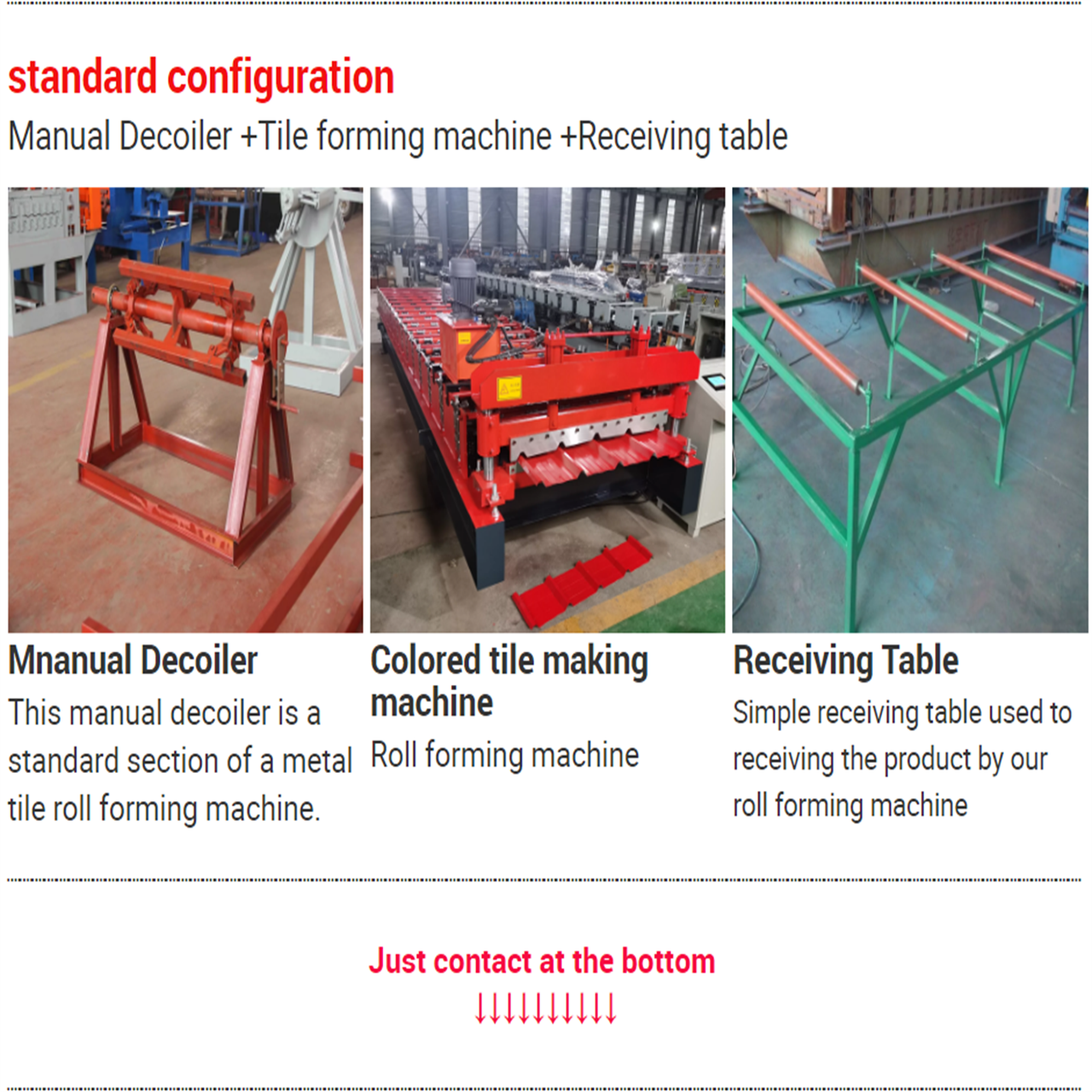
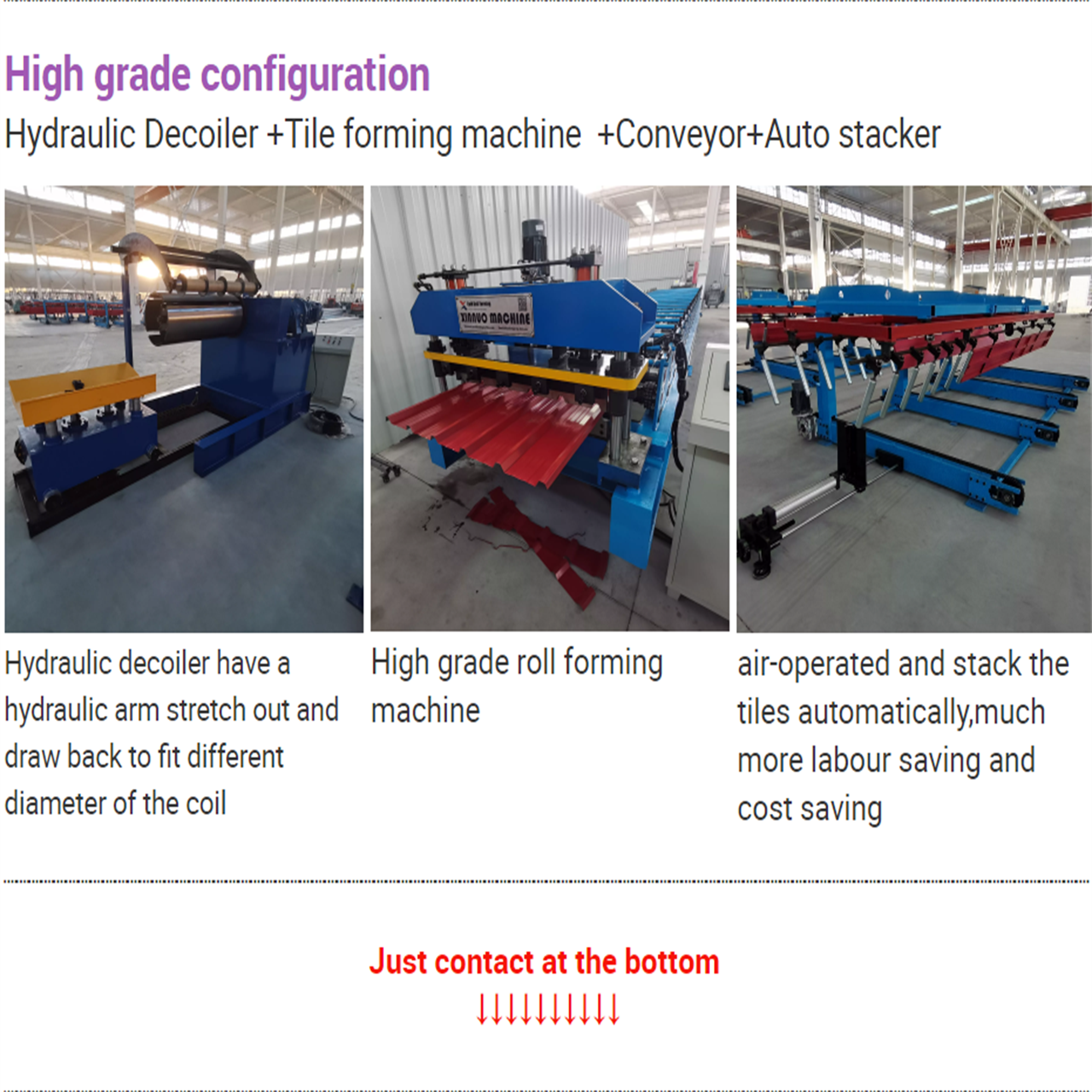
The Trapezoidal Plate Roll Forming Machine is a high-efficiency, specialized cold roll forming equipment designed to convert flat metal coils into high-precision trapezoidal profiled plates continuously and stably. It integrates feeding, roll forming, cutting, and stacking functions into one automated production line, significantly reducing manual intervention and improving production efficiency by up to 60% compared to semi-automatic models. Widely used in construction, industrial warehousing, transportation infrastructure, and renewable energy sectors, this machine is the core equipment for manufacturing trapezoidal roof panels, wall cladding, and related structural components.
Equipped with an advanced PLC control system with a user-friendly touchscreen interface, the machine allows operators to set key parameters (such as panel length, forming speed, and trapezoidal height) with one click, and can store 50+ sets of production recipes for quick switching between different specifications. The intelligent control system, combined with high-precision servo motors and hydraulic cutting technology, ensures that the cutting length tolerance is controlled within ±0.5mm, maintaining consistent profile dimensions and smooth edges without burrs. The entire operation process is simple and efficient, requiring only one operator to manage the full production line, which greatly reduces labor costs and operational errors.
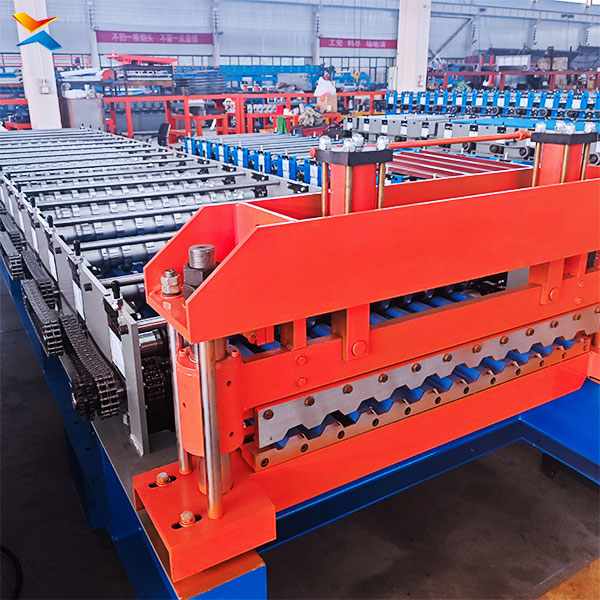
The machine features a robust structural design, with a frame made of H-beam welded steel and precision-machined forming rollers crafted from 45# steel with chrome plating or D2 hardened steel, ensuring excellent wear resistance and long service life (over 10 years) even under high-speed continuous operation. The forming section is equipped with 12-24 sequential roller stations (depending on profile complexity), which gradually bend the metal coil into the desired trapezoidal shape through incremental deformation—this cold forming process preserves the mechanical properties of the base metal, ensuring the final trapezoidal plates have strong structural rigidity, excellent water drainage, and reliable overlap performance.
This versatile machine supports a wide range of processing materials, including galvanized steel, color-coated steel (PPGI), aluminum alloy, and other metal coils, with a material thickness range of 0.2-2.0mm and a customizable panel width of 300-1200mm. The trapezoidal rib height can be adjusted between 15-80mm to meet diverse application needs, such as lightweight roofing for residential buildings, corrosion-resistant wall cladding for industrial warehouses, noise barriers for highways, and support structures for solar panels. It also supports customization of single-layer or double-layer trapezoidal panels, catering to different insulation and load-bearing requirements in construction projects.
With a production speed of 10-60 m/min (adjustable according to configuration), the machine enables continuous mass production, delivering an output capacity of 300-600 ㎡/h, which is ideal for large-scale construction projects and prefabricated housing production lines. It adopts a low-noise design (below 78 db) and is equipped with full-length safety guards and emergency stop switches, ensuring safe and stable operation in industrial environments. Additionally, the machine complies with ISO and CE certifications, comes with a 12-month warranty, and provides global on-site installation, technical training, and after-sales support, including spare parts supply and remote troubleshooting assistance.
Whether for small-scale workshops or large-scale manufacturing plants, the Trapezoidal Plate Roll Forming Machine offers a cost-effective, high-performance solution for trapezoidal plate production. Its combination of automation, precision, and durability helps enterprises improve production efficiency, reduce costs, and enhance product quality, making it an indispensable equipment in the modern metal forming and construction industries.
♦ COMPANY PROFILE:
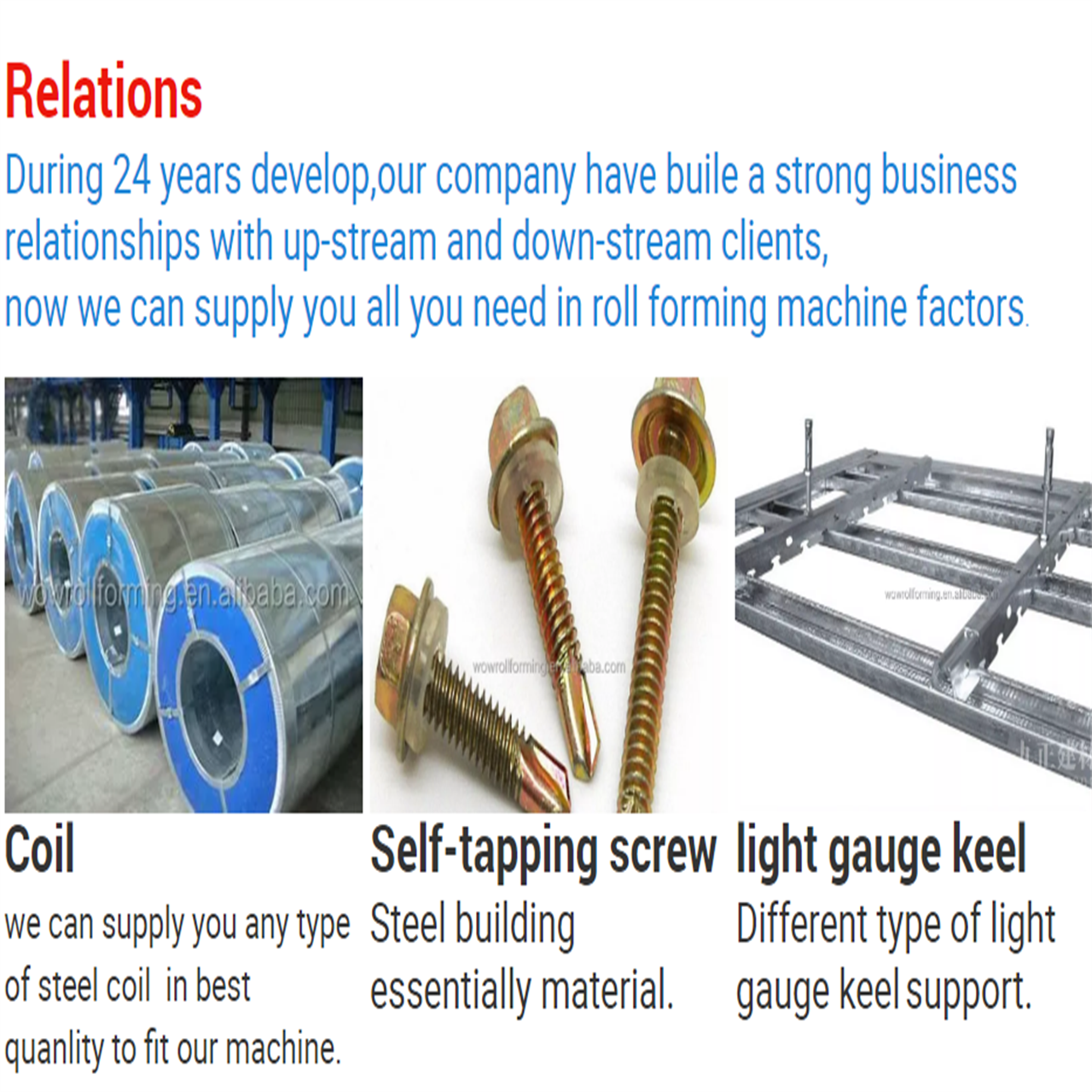
Hebei Xinnuo Roll Forming Machine Co., Ltd., not only produce different types of professional roll forming machines, but also develop intelligent automatic roll forming production lines, C&Z shape purline machines, highway guardrail roll forming machine lines, sandwich panel production lines, decking forming machines, light keel machines, shutter slat door forming machines, downpipe machines, gutter machines, etc.
Advantages of Roll Forming A Metal Part
There are several advantages of using roll forming for your projects:
- The roll forming process allows operations such as punching, notching, and welding to be performed in-line. Labor cost and time for secondary operations are reduced or eliminated, reducing part costs.
- Roll form tooling allows for a high degree of flexibility. A single set of roll form tools will make almost any length of the same cross-section. Multiple sets of tools for varying length parts are not required.
- It can provide better dimensional control than other competing metal forming processes.
- Repeatability is inherent in the process, allowing easier assembly of roll formed parts into your finished product, and minimizing problems due to “standard” tolerance build up.
- Roll forming is typically a higher speed process.
- Roll forming offers customers a superior surface finish. This makes roll forming an excellent option for decorative stainless steel parts or for parts requiring a finish such as anodizing or powder coating. Also, texture or pattern can be rolled into the surface during forming.
- Roll forming utilizes material more efficiently than other competing processes.
- Roll formed shapes can be developed with thinner walls than competing processes
Roll forming is a continuous process which converts sheet metal into an engineered shape using consecutive sets of mated rolls, each of which makes only incremental changes in the form. The sum of these small changes in form is a complex profile.


