

Die Shearing Defects in Roll Forming Cut-to-Length Lines: Twisting & Bowing Explained (No Jargon Overload)
Your roll forming line runs smoothly—until the cut piece drops, twisted like a drill bit or bowed like a small bridge. These frustrating defects occur at the die shearing station, which cuts profiled sheets to precise lengths. Ignoring them wastes material, delays production, and disrupts assembly.
The good news: twisting and bowing are avoidable. We’ll break down what they are, their causes, step-by-step fixes, and habits to prevent them—no technical jargon, just practical advice from Hebei Xinnuo’s experts.
First: What Exactly Are These Defects?
Understanding twisting and bowing first helps you quickly diagnose and fix issues, saving time on trial and error. They stem from different causes and need different solutions.
1. Twisting
Twisting is when the cut piece spins along its long axis (like a corkscrew), most common with narrow strips. During shearing, the upper blade exerts sideways “rake force”; wide sheets resist this, but narrow strips don’t. Hebei Xinnuo Tip: Twisting is likely if strips are narrower than 8x the material thickness—adjust your process early.
2. Bowing
Bowing is when the cut piece curls up/down into an arch, caused by internal material stress or misadjusted shear settings. Unlike twisting, it affects both narrow and wide profiles. Hebei Xinnuo Tip: Bowing often starts with small burrs—check blade gap first (its top cause).
Why Do These Defects Happen? (And How to Fix Them)
With 30+ years of experience, Hebei Xinnuo has identified the 7 most common causes of twisting/bowing, plus simple fixes. We’ll also highlight how our equipment and expertise prevent long-term issues.
1. Wrong Blade Gap (The #1 Culprit)
Too much gap: Metal rolls over the bottom blade, leaving burrs and causing bowing. Too little gap: Blades jam or damage each other. This is the top cause of bowing (linked to early burrs).
Fix: Set gap to 5–10% of mild steel thickness per side (the most common material). Steps: 1) Use a feeler gauge (never eyeball) after blade changes; 2) Adjust upper blade to match the 5–10% rule; 3) Test 2–3 pieces and fine-tune by 0.01mm if needed. Hebei Xinnuo’s die shears are pre-calibrated, but this check ensures consistency.
2. Too Much Rake Angle
Rake angle is the moving blade’s slope. Steeper = less cutting force (good for thick materials) but more twisting (especially on narrow strips). Shallower = flatter parts but more force.
Fix: Use the shallowest angle that cuts cleanly. Hebei Xinnuo’s guidance: Thin sheets (≤1.5mm): 1–2°; thick plates (2–5mm): 3–5°; >5mm: consult our team. Never use the same angle for thin/thick materials.
3. Strip Width Is Too Narrow (Relative to Thickness)
Narrow strips lack resistance to twisting force. Rule: Width ≥10–15x material thickness for flatness; <8:1 ratio guarantees twisting, even with a well-adjusted machine.
Fix: For strips <8:1 ratio: 1) Add a post-shear straightening station; 2) Use the minimum rake angle; 3) Increase hold-down pressure by 10–15%. For long-term reliability, contact Hebei Xinnuo for custom cutting solutions.
4. Dull Blades (A Costly Oversight)
Sharp blades = clean cuts; dull blades crush metal edges, causing stress, twisting, bowing, and scrap.
Fix: Follow Hebei Xinnuo’s maintenance standards: 1) Regrind mild steel blades every 80–100 hours (or 5,000 meters); 2) Check edges daily for wear/chips; 3) Replace blades if regrinding fails (we offer high-wear replacements); 4) Store blades dry to avoid rust.
5. Uneven or Insufficient Hold-Down Pressure
Hydraulic hold-down clamps secure material during shearing. Weak/uneven pressure causes shifting or immediate twisting.
Fix: Inspect cylinders for leaks (a common pressure issue). Ensure even pressure across the material width and log inspections. Hebei Xinnuo’s shears have pressure monitoring to simplify this.
6. Poor-Quality Coil Stock (Don’t Blame the Machine!)
Even the best shear can’t fix bad coils. Internal stress, uneven thickness, or inconsistent hardness cause distortion—operators often waste time adjusting machines instead of checking coils.
Fix: Verify coil quality certificates and measure thickness across the width. If distortion varies by coil lot, contact your supplier. Hebei Xinnuo can help source low-stress materials to minimize defects.
7. Misaligned Back Support or Squaring Arms
Crooked material (from worn back support or misaligned squaring arms) leads to twisting/bowing—an easy-to-overlook issue.
Fix: Calibrate backgauge regularly with a certified tool. Ensure squaring arms are perpendicular to the blade and tighten loose parts. Hebei Xinnuo offers on-site calibration services.
Three Habits to Keep Your Line Defect-Free
Preventing defects is better than fixing them. These simple habits, trusted by Hebei Xinnuo’s global customers, build on the fixes above:
- Write it down: Log blade changes, gap settings, and inspections to spot wear early.
- Train your team: Ensure operators understand setting importance—early burrs or cut changes mean checking blades.
- Don’t wait for defects: Schedule regular checks of hydraulic pressure, blade sharpness, and alignment.
Hebei Xinnuo is your trusted partner for eliminating shearing defects and optimizing roll forming. We go beyond machines to provide comprehensive, tailored support.
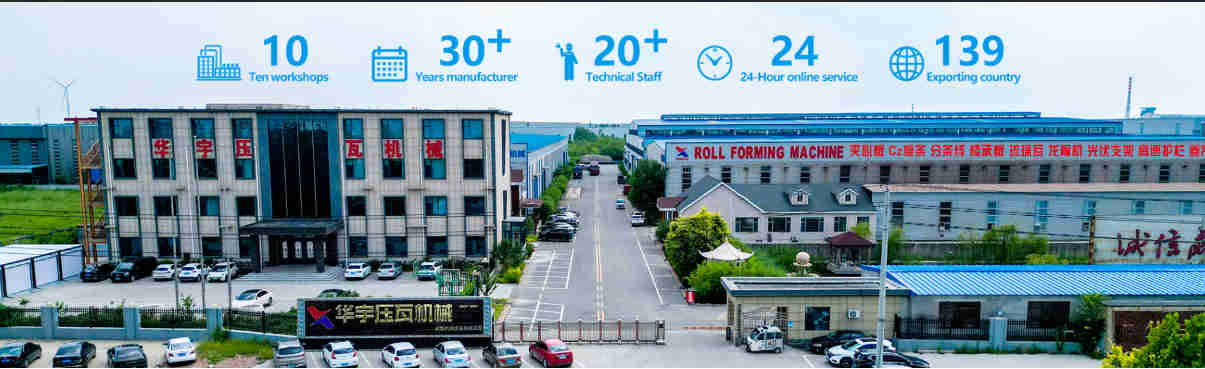
With 30+ years in cold roll forming (formerly Botou Huayu Roll Forming Machine Factory), we’re based in Botou (“China’s Casting City”), with access to top components and engineering expertise.
Our two 100,000+㎡ factories have 100+ employees and 12 R&D engineers, offering end-to-end solutions: design, manufacturing, quality control, and after-sales support—all to minimize downtime and defects.
Our products include automatic C/Z purlin machines, roof/wall panel formers, floor decking machines, double-layer lines, sandwich panel lines, and custom profile machines. All can be equipped with PLC-controlled hydraulic die shears for clean, precise, low-distortion cuts.
We produce 3,000+ sets annually, trusted by customers in 140+ countries (UAE, Russia, Egypt, etc.). At Hebei Xinnuo, we prioritize partnership to solve your problems and eliminate defects.
This guide uses our on-site experience—no fluff, just practical solutions. From defect recognition to prevention, we cover it all. Our engineers are ready to help with adjustments or custom solutions. Partner with us for consistent, high-quality production.

Post time: May-06-2026