

Both metal roll forming and press brake bending are core sheet metal fabrication processes, but they serve vastly different production scales, volume requirements, and cost structures.
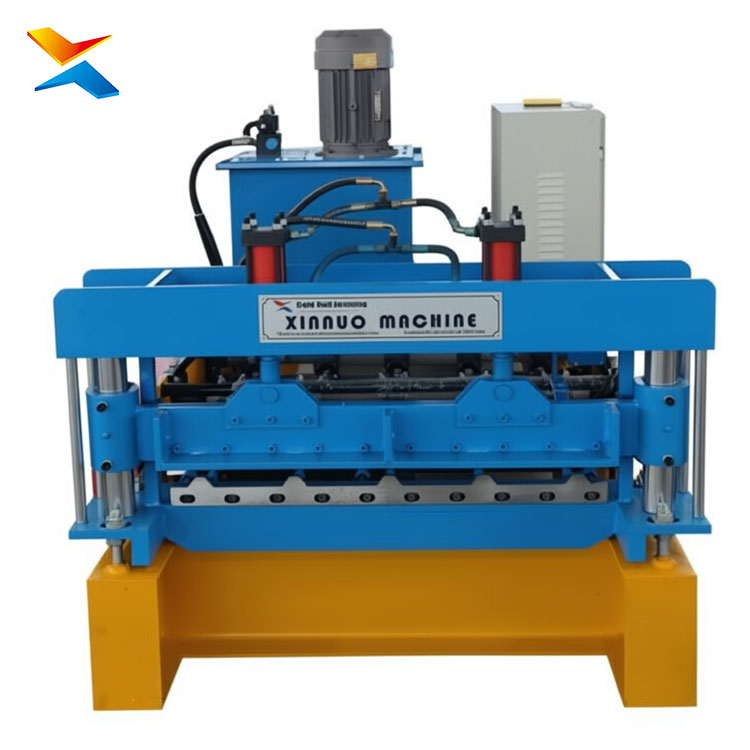
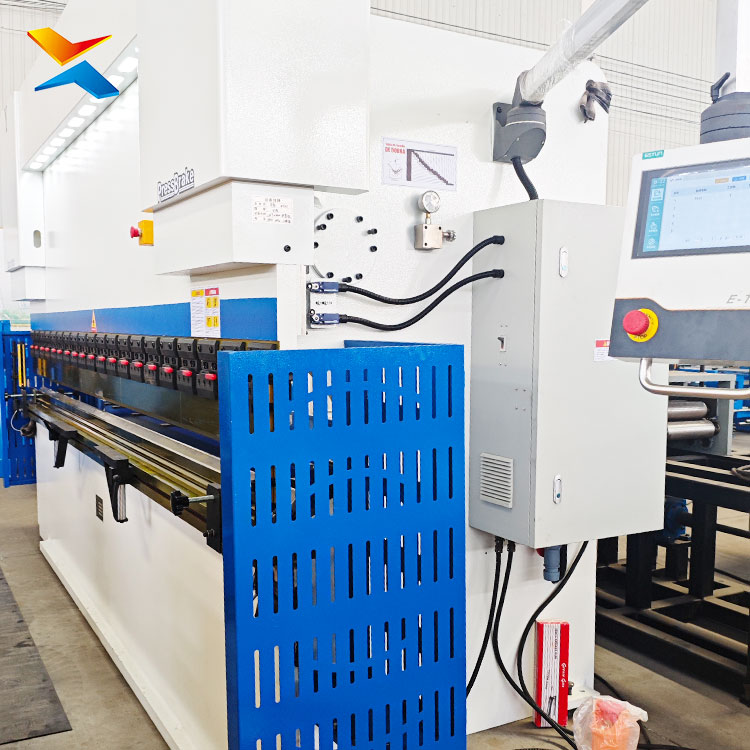
Direct Comparison Matrix
| Metric / Feature | Metal Roll Forming | Press Brake Bending |
|---|---|---|
| Production Speed | Ultra-High (20–50+ m/min continuous output) | Low–Moderate (Cycle per bend/piece) |
| Tooling & Setup Cost | High ($10k–$100k+ custom roller sets) | Low (Uses standard modular die sets) |
| Part Length Capabilities | Virtually Unlimited (Limited only by coil length) | Restricted (Constrained by bed length, e.g., 3m–6m) |
| Tolerance & Consistency | Tight & Uniform (± 0.15 mm to ± 0.5 mm) | Moderate (± 0.5 mm to ± 1.5 mm, operator-dependent) |
| Secondary Operations | Integrated In-Line (Punching, slitting, cutting) | Separate Steps (Requires offline punching/shearing) |
| Optimal Order Volume | High Volume (>5,000 linear meters or mass production) | Low to Medium Volume (1 to 1,000 custom parts) |
Detailed Breakdown
1 Production Speed & Throughput
- Roll Forming: Operates continuously from coiled stock. A single automated line can punch, shape, and cut thousands of meters of profile per hour with minimal labor intervention.
- Press Brake: Processes discrete sheet blanks one stroke at a time. Each bend typically requires manual repositioning or robot handling, resulting in significantly lower throughput.
2 Cost Analysis & Break-Even Point
- Capital & Tooling Investment: Roll forming requires high upfront investment in precision-machined roller dies and long machinery setups. Press brakes use off-the-shelf standard punches and v-dies, keeping initial setup costs low.
- Unit Cost: For high-volume production runs, roll forming achieves a far lower unit cost due to minimal labor, fast cycle times, and reduced raw material scrap. Press brake bending is more cost-effective for short-run prototypes or variable small-batch orders.
3 Tolerances & Surface Protection
- Roll Forming: Progressive, incremental bending minimizes internal stress on the metal, allowing for tight dimensional tolerances across long spans without warping or coating damage.
- Press Brake: Higher localized force per bend can lead to springback variations and material strain, making long-length consistency harder to maintain without advanced adaptive crowning systems.
Best Use Cases
★ Choose Metal Roll Forming When:
- Manufacturing long profiles with uniform cross-sections (e.g., roofing panels, C/Z purlins, solar mounting rails, highway guardrails).
- Production volume justifies higher upfront tooling investments.
- Integrated punching, embossing, and flying cutoff are required on a single continuous line.
★ Choose Press Brake Bending When:
- Fabrication involves low-volume production, custom prototypes, or highly varied shapes.
- Parts require complex, non-linear geometry or variable cross-sections that cannot pass through fixed roller sets.
- Quick lead times and low initial setup costs are critical.Automatic, Intelligent,Remote-Controlled
We deliver end-to-end turnkey solutions for the global metal forming industry.
Our comprehensive product portfolio covers a full range of professional roll forming machinery, including:
Roof and Wall Panel Roll Forming Machines
C / Z / U Purlin Production Lines
EPS and Rock Wool Sandwich Panel Production Lines
Metal Stud and Track Forming Systemswelcome to visit us or contact via whatsapp.
Post time: Oct-09-2026