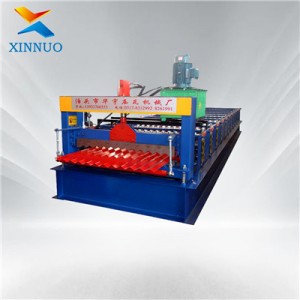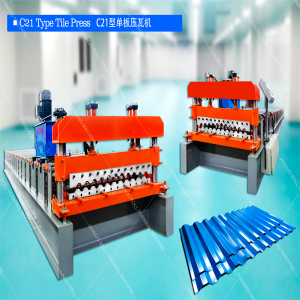

Hebei Xinnuo Shelf Roll Forming Machine – Product Details
Core Advantages
- High-Precision Forming
Adopts multi-roller progressive forming technology, with profile size error <0.3mm and scratch-free surface, fully meeting shelf load-bearing standards.
- Fully Automated Production
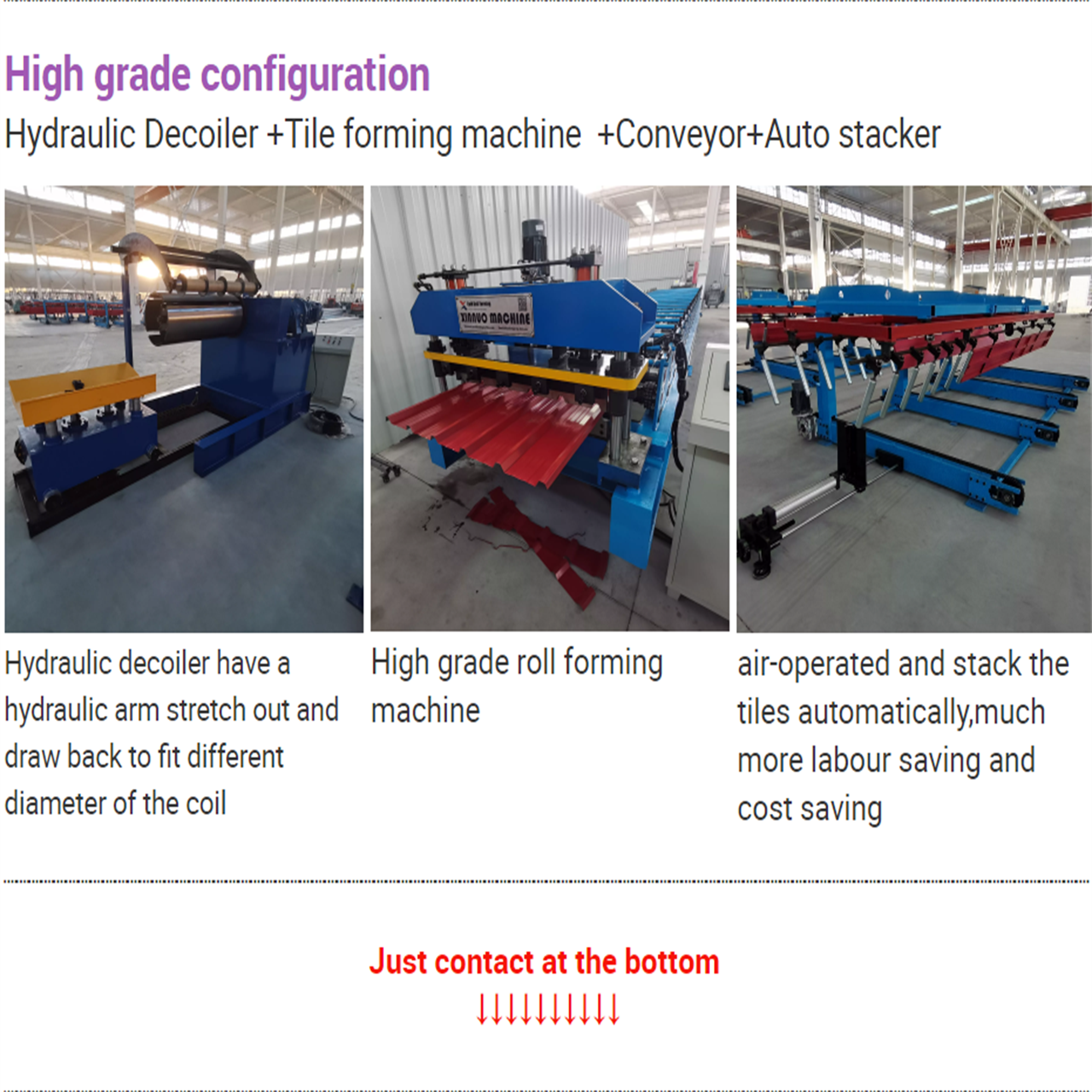
Integrates automatic feeding, leveling, forming, cutting and stacking functions. Operable by one person, reducing labor costs by 50%.
- Durable Design
Rollers are quenched with Cr12 die steel, hardness up to HRC58-62, service life exceeding 8000 hours. The frame is welded with thickened section steel for shock resistance and no deformation.
- Flexible Customization
Roller molds can be replaced to produce different specifications of shelf columns, beams and laminate frames—no need to purchase additional complete machines.
- Low Maintenance Cost
Key components use international brand parts for low failure rate. Equipped with fault self-diagnosis system to quickly locate issues and minimize downtime.
Application Scenarios
Service Guarantee
- Free mold design solutions, supporting customizations per drawings
- 12-month warranty for the whole machine, 24-month warranty for core components
- Free on-site installation, commissioning and technical training
- 7×24 global after-sales response, with local cooperative service providers for overseas clients
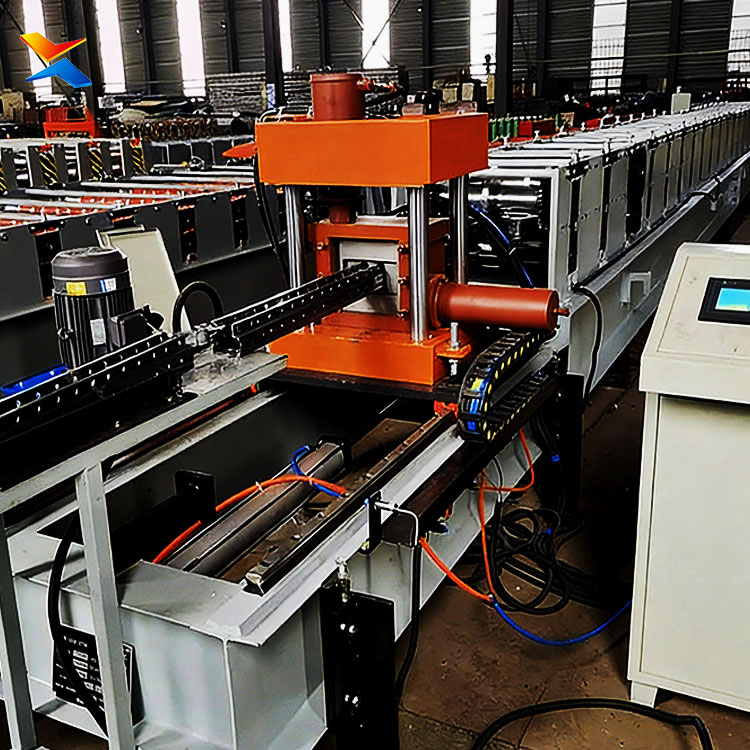
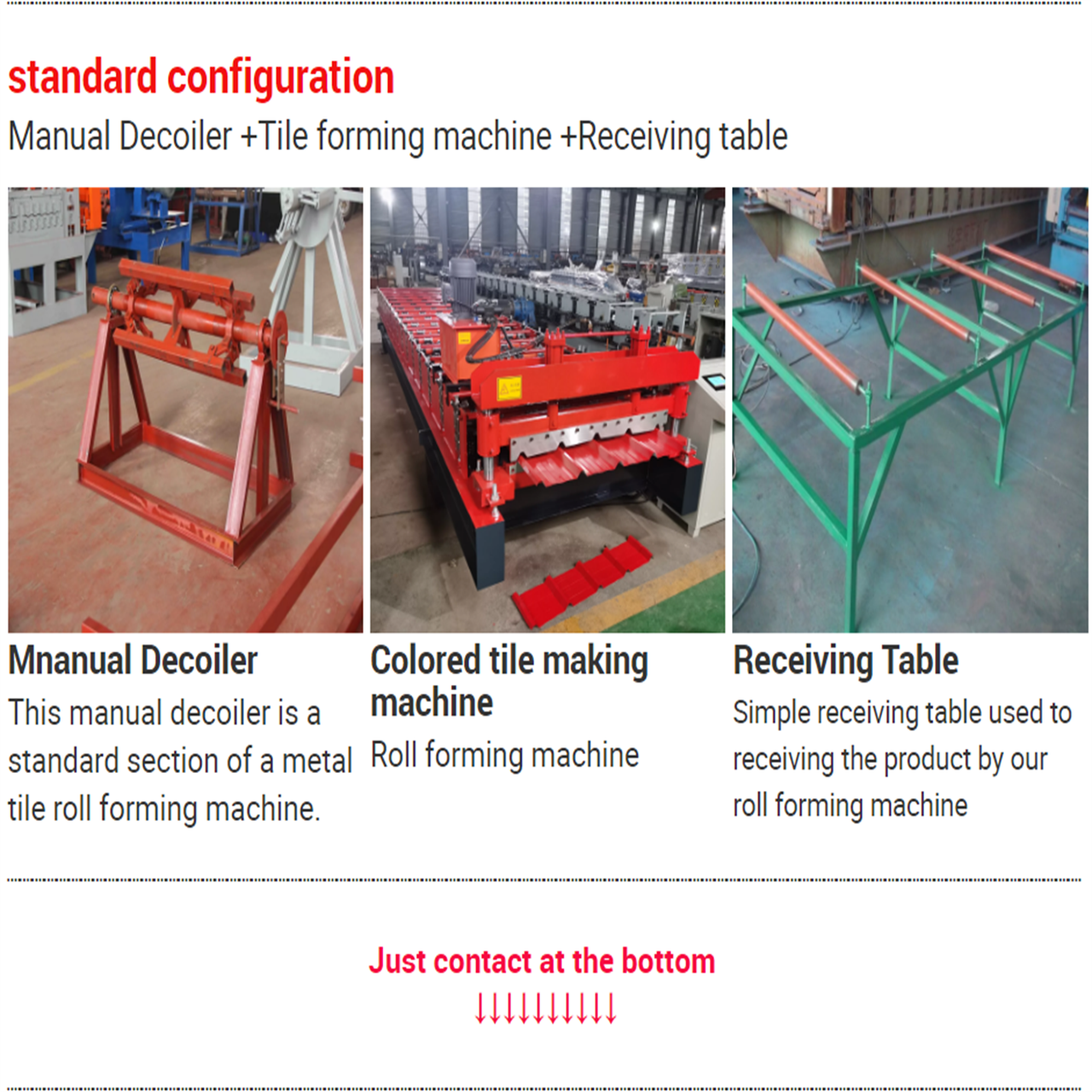

♦ COMPANY PROFILE:
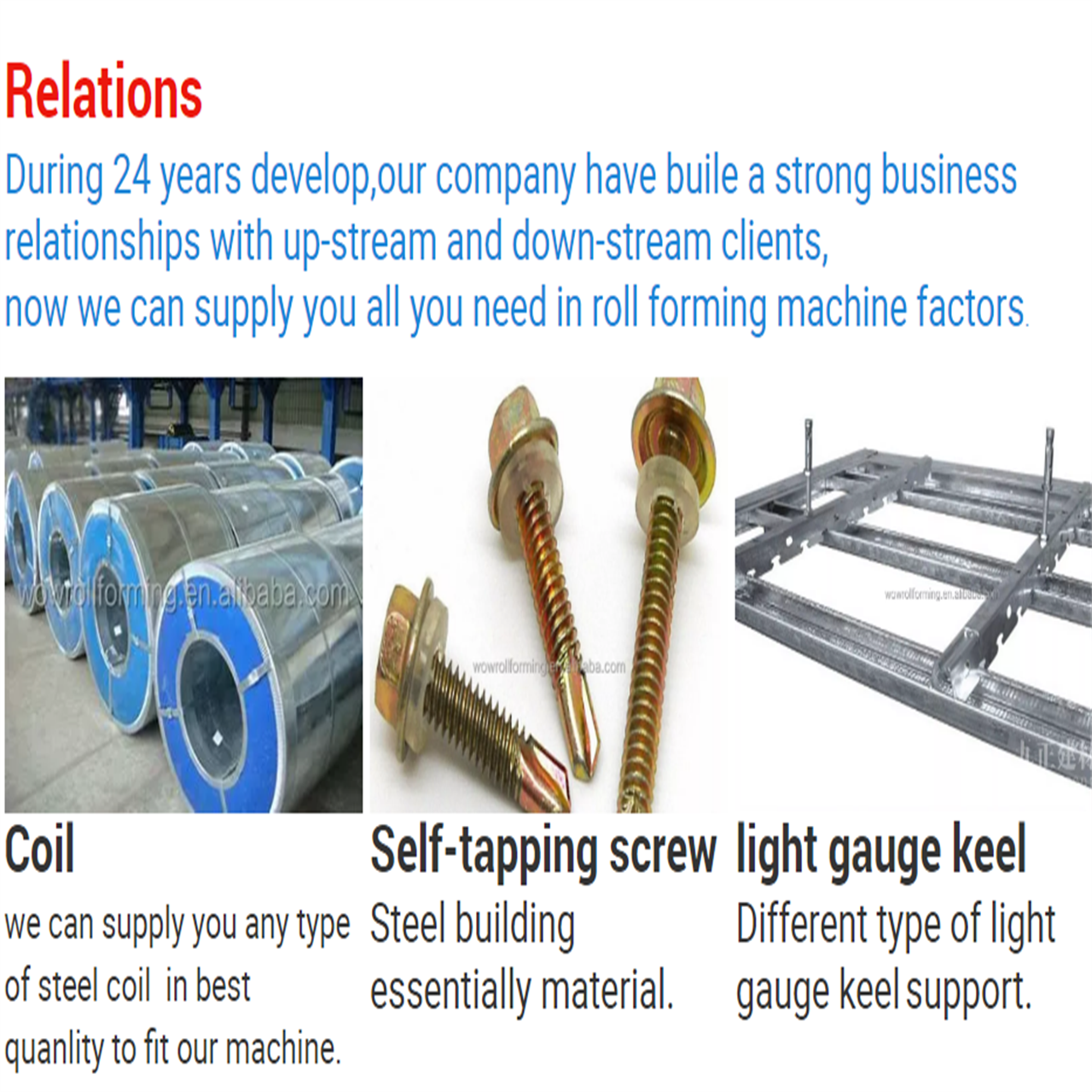
Hebei Xinnuo Roll Forming Machine Co., Ltd., not only produce different types of professional roll forming machines, but also develop intelligent automatic roll forming production lines, C&Z shape purline machines, highway guardrail roll forming machine lines, sandwich panel production lines, decking forming machines, light keel machines, shutter slat door forming machines, downpipe machines, gutter machines, etc.
Advantages of Roll Forming A Metal Part
There are several advantages of using roll forming for your projects:
- The roll forming process allows operations such as punching, notching, and welding to be performed in-line. Labor cost and time for secondary operations are reduced or eliminated, reducing part costs.
- Roll form tooling allows for a high degree of flexibility. A single set of roll form tools will make almost any length of the same cross-section. Multiple sets of tools for varying length parts are not required.
- It can provide better dimensional control than other competing metal forming processes.
- Repeatability is inherent in the process, allowing easier assembly of roll formed parts into your finished product, and minimizing problems due to “standard” tolerance build up.
- Roll forming is typically a higher speed process.
- Roll forming offers customers a superior surface finish. This makes roll forming an excellent option for decorative stainless steel parts or for parts requiring a finish such as anodizing or powder coating. Also, texture or pattern can be rolled into the surface during forming.
- Roll forming utilizes material more efficiently than other competing processes.
- Roll formed shapes can be developed with thinner walls than competing processes
Roll forming is a continuous process which converts sheet metal into an engineered shape using consecutive sets of mated rolls, each of which makes only incremental changes in the form. The sum of these small changes in form is a complex profile.