
Trapezoidal Single-Board Machine Product Description
The Trapezoidal Single-Board Machine is a high-performance, compact industrial control device integrated with trapezoidal programming functionality, designed to meet the diverse needs of small and medium-sized industrial automation scenarios. It combines the advantages of a single-board computer (SBC) and programmable logic controller (PLC), featuring stable operation, easy programming, and strong expandability, making it an ideal choice for industrial control, production lines, and intelligent equipment control[superscript].
Equipped with high-performance imported industrial-grade chips, this trapezoidal single-board machine is engineered to resist strong electromagnetic interference, ensuring reliable operation even in harsh industrial environments such as metallurgy, chemical industry, plastics, textiles, food packaging, and machine tool control[superscript][superscript]. Its core programming method supports ladder diagram (LD), which is in line with the IEC 61131-3 standard, and is compatible with Mitsubishi FXGP_WIN-C ladder diagram software, allowing users to quickly develop control systems or migrate existing programs with low learning costs and high work efficiency[superscript][superscript].
In terms of hardware performance, the trapezoidal single-board machine boasts high-speed operation capability, with a basic instruction execution speed as fast as 0.08μS per step, enabling rapid response to control signals and precise control of industrial processes. It is configured with multiple configurable input/output (I/O) ports, including photoelectrically isolated digital inputs and outputs, and some models support software-configurable analog I/O (0-10V DC), which can be flexibly connected to various sensors, actuators, and other peripheral devices to meet different control requirements[superscript]. The built-in EEPROM memory realizes power-off data retention without battery maintenance, ensuring the safety and stability of program and data storage[superscript][superscript][superscript].
The product adopts an integrated compact design with a small footprint, and is equipped with convenient mounting holes or DIN rail compatibility, enabling quick integration into existing industrial systems and saving installation space[superscript][superscript]. It supports multiple communication interfaces such as RS232, RS485, Ethernet, and USB, facilitating remote programming, monitoring, and data transmission, and can be seamlessly connected to human-machine interfaces (HMIs), IIoT gateways, and ERP systems to realize intelligent management and remote control of equipment[superscript][superscript][superscript].
With built-in 24V DC power supply, the trapezoidal single-board machine can directly power peripheral devices such as proximity sensors, reducing the need for additional power modules and simplifying the system structure[superscript][superscript][superscript]. It also integrates a watchdog circuit and full photoelectric isolation technology for I/O ports, effectively preventing system crashes caused by external interference and ensuring long-term stable operation of the equipment. The product supports expansion of up to 127 modules, allowing users to flexibly expand I/O ports, analog modules, and special function modules according to actual application needs, realizing scalable control solutions[superscript][superscript].
Whether it is used for embedded control of small machines, automatic control of production lines, or intelligent monitoring of industrial equipment, the Trapezoidal Single-Board Machine can deliver stable, efficient, and cost-effective performance. It adheres to international industrial standards, with a service life of up to 10 years and an 18-month warranty, providing users with reliable after-sales support and ensuring the continuous and stable operation of industrial production activities.
♦ COMPANY PROFILE:
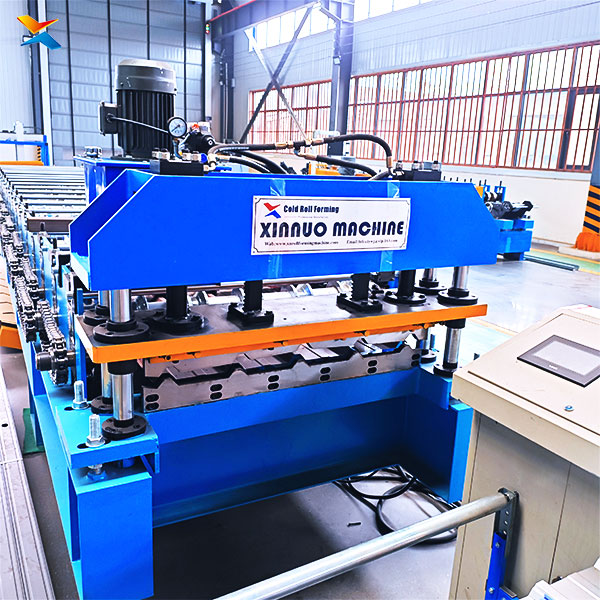
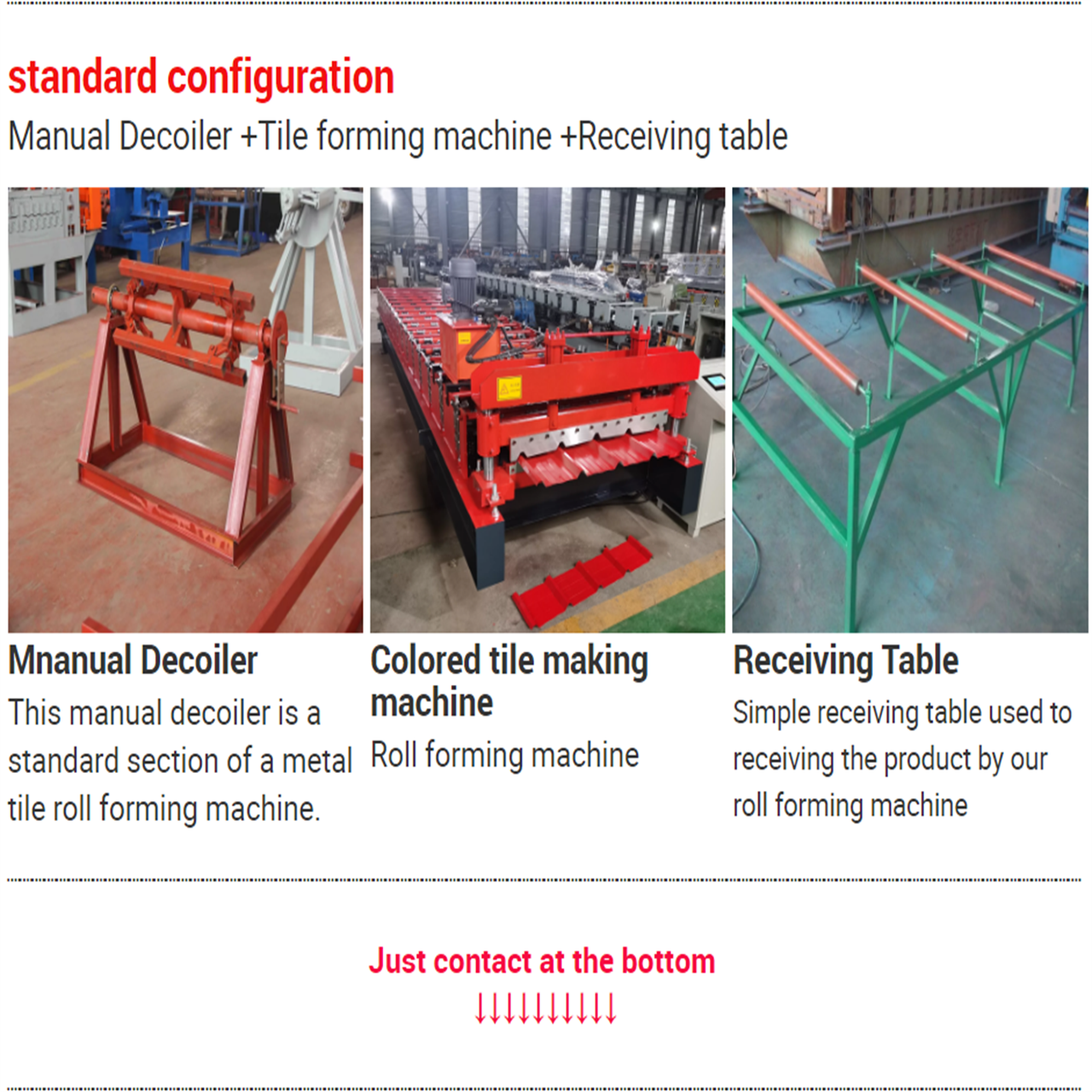
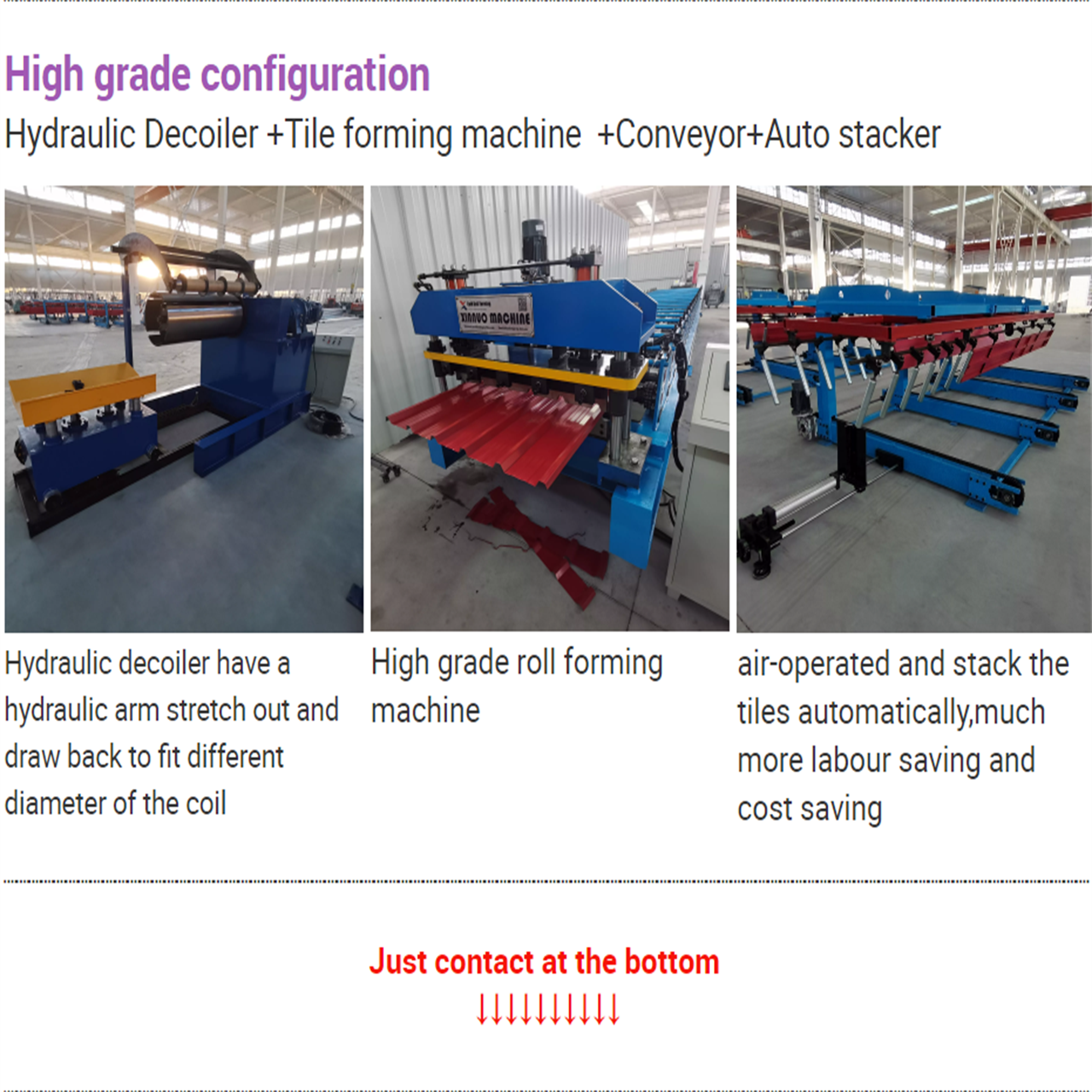
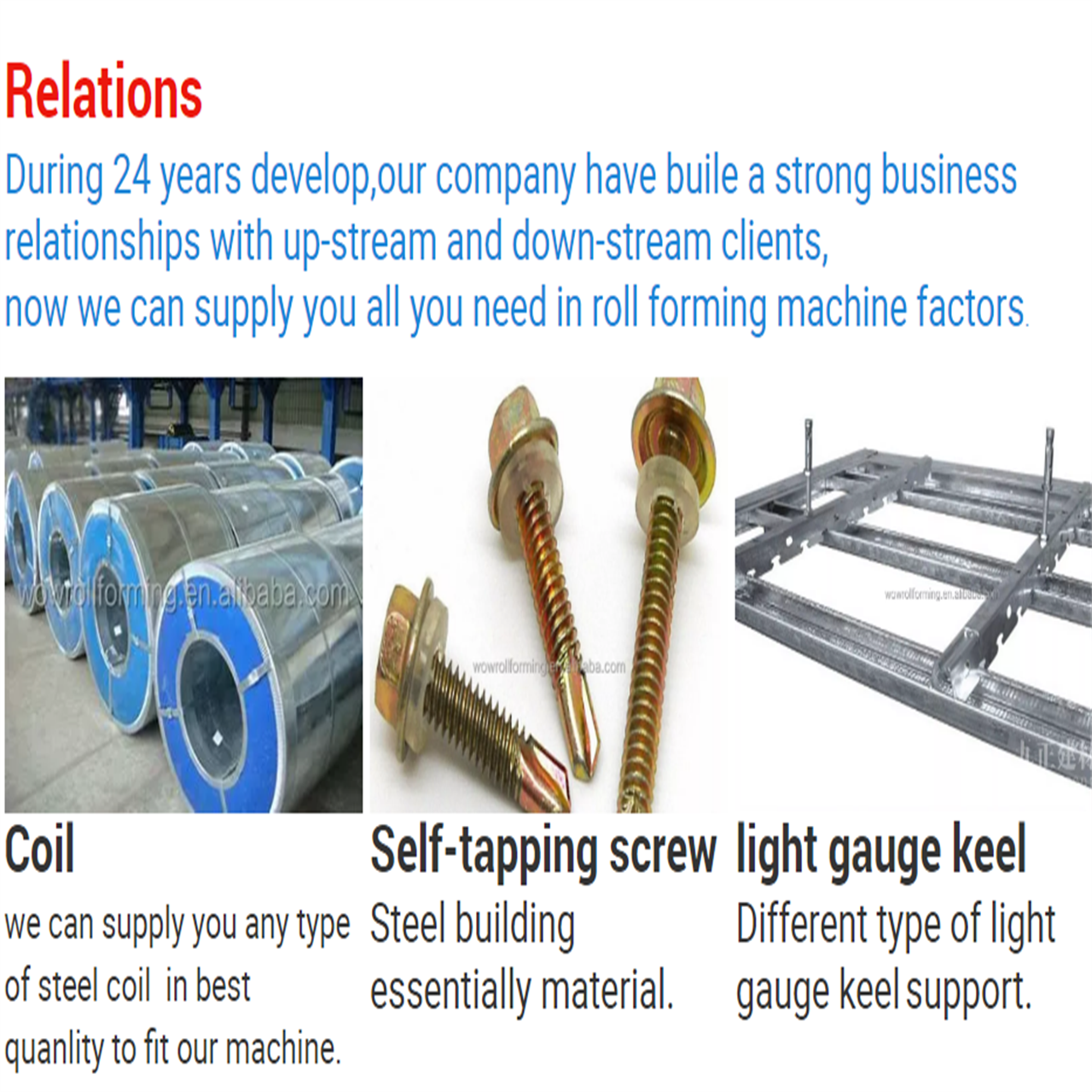
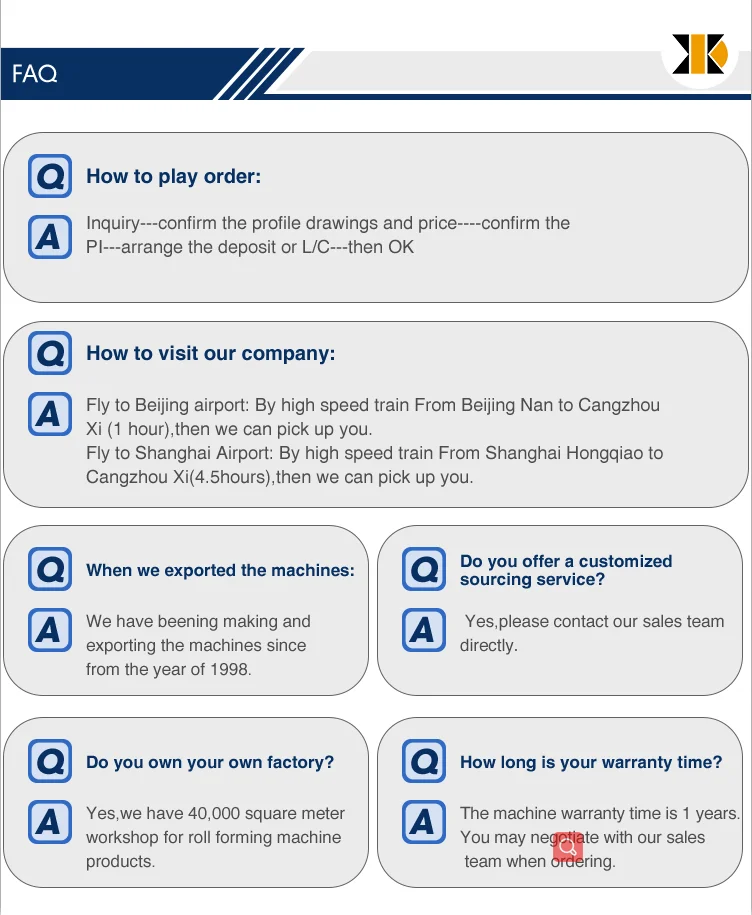
Hebei Xinnuo Roll Forming Machine Co., Ltd., not only produce different types of professional roll forming machines, but also develop intelligent automatic roll forming production lines, C&Z shape purline machines, highway guardrail roll forming machine lines, sandwich panel production lines, decking forming machines, light keel machines, shutter slat door forming machines, downpipe machines, gutter machines, etc.
Advantages of Roll Forming A Metal Part
There are several advantages of using roll forming for your projects:
- The roll forming process allows operations such as punching, notching, and welding to be performed in-line. Labor cost and time for secondary operations are reduced or eliminated, reducing part costs.
- Roll form tooling allows for a high degree of flexibility. A single set of roll form tools will make almost any length of the same cross-section. Multiple sets of tools for varying length parts are not required.
- It can provide better dimensional control than other competing metal forming processes.
- Repeatability is inherent in the process, allowing easier assembly of roll formed parts into your finished product, and minimizing problems due to “standard” tolerance build up.
- Roll forming is typically a higher speed process.
- Roll forming offers customers a superior surface finish. This makes roll forming an excellent option for decorative stainless steel parts or for parts requiring a finish such as anodizing or powder coating. Also, texture or pattern can be rolled into the surface during forming.
- Roll forming utilizes material more efficiently than other competing processes.
- Roll formed shapes can be developed with thinner walls than competing processes
Roll forming is a continuous process which converts sheet metal into an engineered shape using consecutive sets of mated rolls, each of which makes only incremental changes in the form. The sum of these small changes in form is a complex profile.


