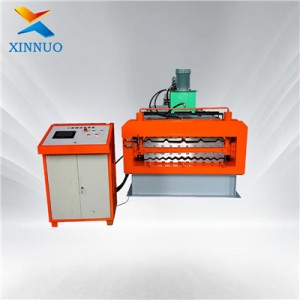


Double Layer Single Panel Forming Machine Detailed Description
1. Product Overview
The double layer single panel forming machine is a high-efficiency, high-precision automatic processing equipment specially developed for the continuous forming of metal single panels. It integrates mechanical transmission, electrical control, and hydraulic pressure (optional) systems, realizing integrated production from raw material uncoiling, leveling, feeding, double-layer synchronous forming to cutting and discharging. The machine is mainly used in the processing of various metal profiled panels, solving the problems of low efficiency, poor consistency and high labor cost of traditional single-layer forming equipment, and is an essential core equipment in the fields of construction, decoration, and light steel structure manufacturing.
2. Core Structure & Components
The machine is composed of six key parts, each with precise design to ensure stable operation and high-quality forming effect:
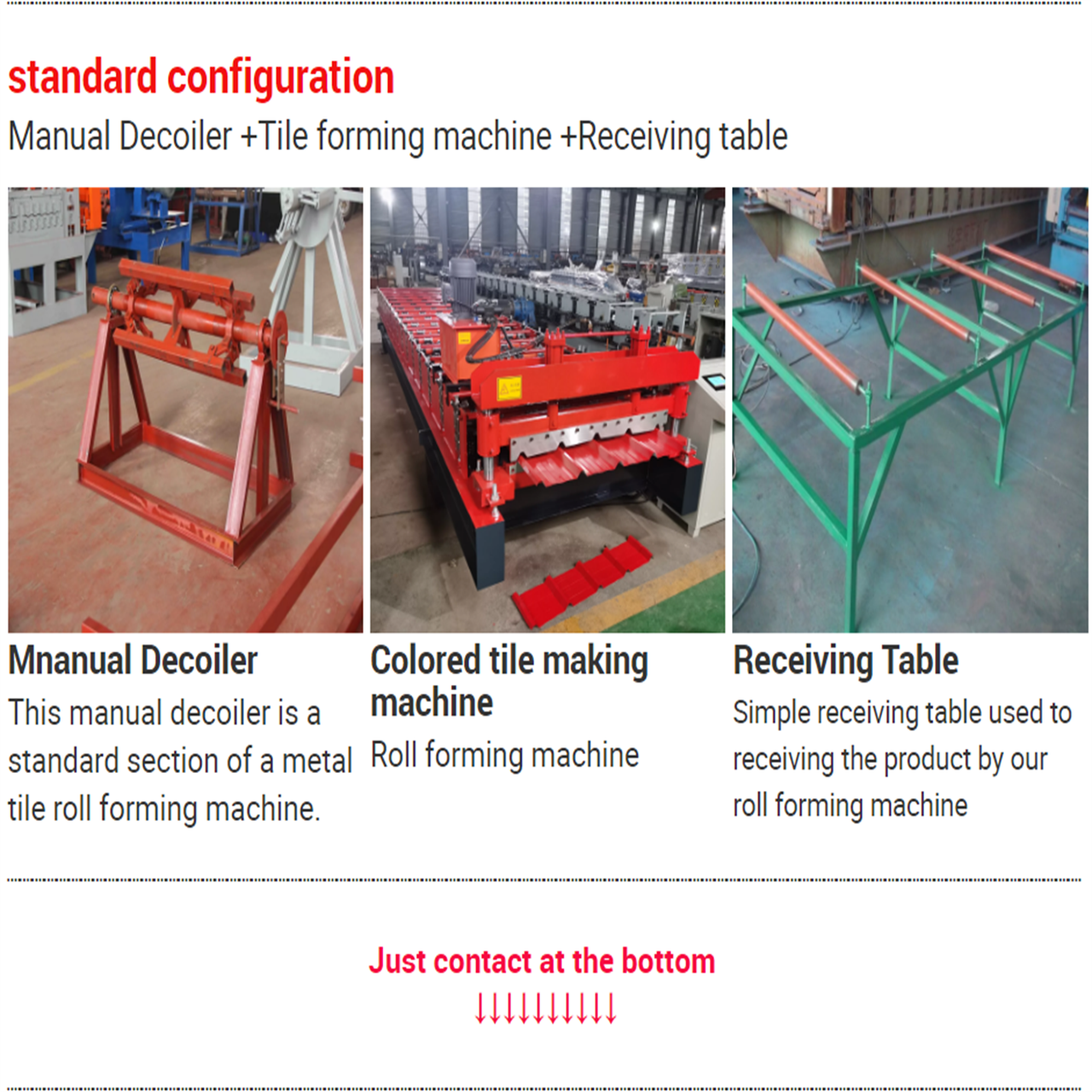
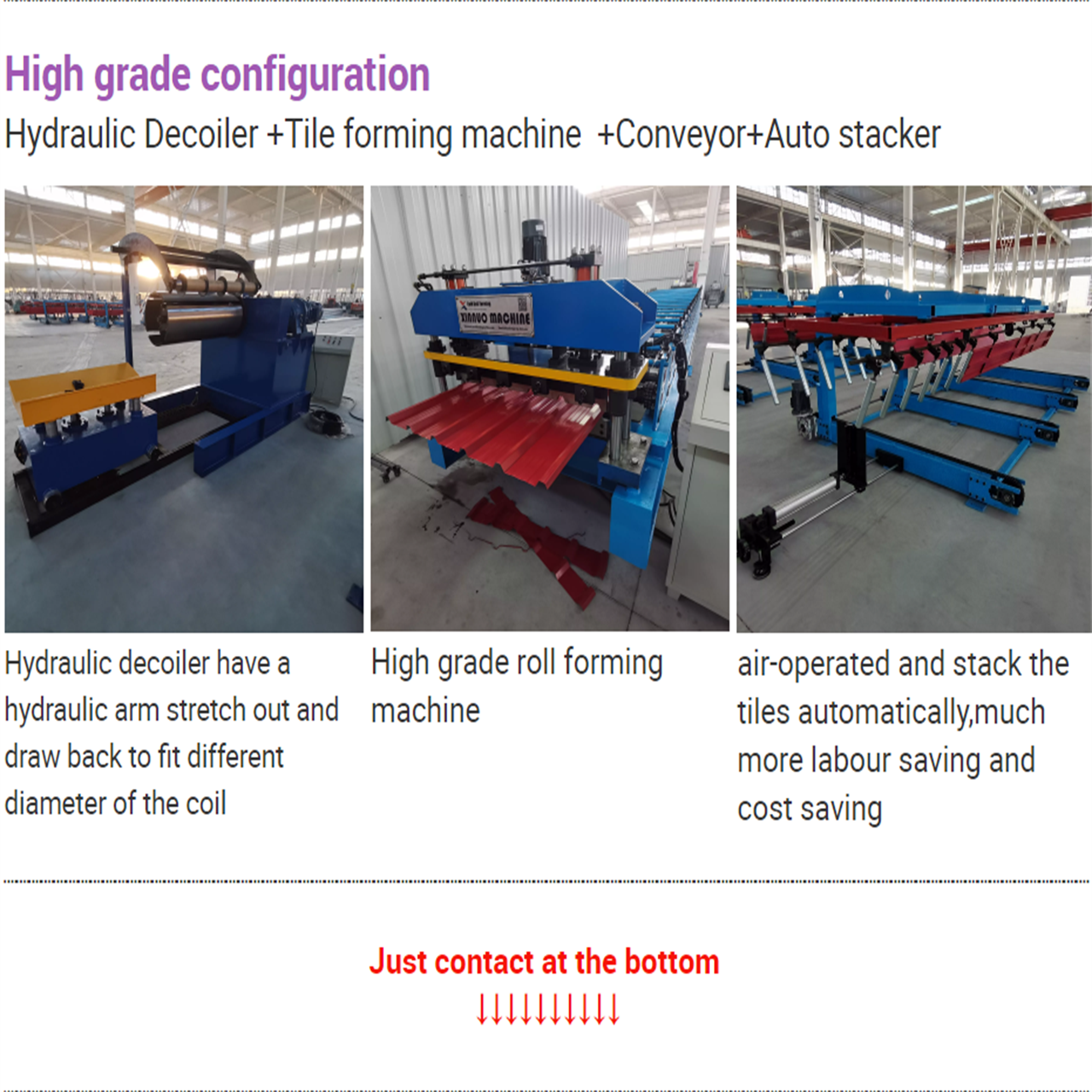
- Uncoiler: Equipped with a hydraulic expansion uncoiler (optional manual type for small models), with a maximum load capacity of 2-5 tons (customizable). It is equipped with a tension control device to prevent the raw material coil from loosening or deviating during uncoiling, ensuring stable feeding. The uncoiler is also equipped with a safety protection cover to avoid potential safety hazards during operation.
- Leveling Device: Adopts multi-roller leveling structure, with 5-9 leveling rollers made of high-quality carbon steel after quenching and tempering treatment, which can effectively eliminate the internal stress of the metal coil, correct the deformation of the raw material, and ensure the flatness of the panel before forming. The leveling gap is adjustable to adapt to different thicknesses of raw materials.
- Double-Layer Forming Unit: The core part of the machine, consisting of two sets of independent forming rollers (upper and lower layers), which can complete the forming of two different specifications of single panels at the same time or the same specification of panels with double-layer synchronous forming. The forming rollers are processed by precision CNC lathe, with high surface finish and wear resistance, and the forming profile is accurate and consistent. The forming speed is stepless adjustable, meeting different production needs.
- Feeding & Guiding Device: Equipped with a precision feeding roller and a guiding baffle, the feeding accuracy is controlled within ±0.5mm, effectively preventing the raw material from deviating during the forming process. The feeding roller is covered with wear-resistant rubber, which can increase friction and avoid scratching the surface of the metal panel.
- Cutting System: Adopts hydraulic cutting or mechanical cutting (optional), with a cutting blade made of high-speed steel, which is sharp and durable. The cutting is smooth, no burrs, and the cutting length can be set freely through the control system, realizing automatic fixed-length cutting. The cutting device is equipped with a buffer structure to reduce the impact on the machine during cutting and extend the service life.
- Electrical Control System: Adopts PLC touch screen control, with a simple and intuitive operation interface. All parameters (forming speed, cutting length, feeding speed, etc.) can be set and adjusted on the touch screen, and the operation is simple and easy to learn. The system is equipped with fault alarm function, which can timely prompt the fault location and cause, facilitating maintenance. It also supports automatic and manual operation modes, which is flexible and convenient.
3. Working Principle
The working process of the double layer single panel forming machine is fully automatic, with clear steps and high continuity:
- First, place the metal coil (such as color steel coil, galvanized coil, aluminum coil) on the uncoiler, and fix it with the expansion device to ensure that the coil does not shake during operation.
- Start the machine, the uncoiler starts to uncoil, and the raw material enters the leveling device through the guiding roller. The leveling roller corrects the deformation of the raw material and makes it flat.
- The flattened raw material is sent to the double-layer forming unit through the feeding device. The upper and lower forming rollers press the raw material according to the preset profile, and the raw material is gradually formed into the required single panel shape under the continuous rolling of the forming rollers.
- After the forming is completed, the panel is sent to the cutting device. According to the preset cutting length, the cutting system performs automatic fixed-length cutting, and the cut panels are discharged through the discharging roller to complete a production cycle.
- The whole process is controlled by the PLC system, which realizes synchronous operation of each part, high production efficiency, and ensures that each panel has consistent size and shape.
4. Technical Parameters (Standard Model)
|
Parameter Name
|
Specification
|
|---|---|
|
Raw Material Thickness
|
0.3-1.2mm (customizable for 1.5mm)
|
|
Raw Material Width
|
500-1250mm (customizable)
|
|
Forming Speed
|
0-15m/min (stepless adjustable)
|
|
Cutting Length
|
1000-6000mm (adjustable, custom longer length available)
|
|
Uncoiler Load Capacity
|
2-5 tons
|
|
Power
|
5.5-11KW (depending on model)
|
|
Voltage
|
380V/50Hz (customizable for 220V/60Hz)
|
|
Machine Dimension (L×W×H)
|
6000×1500×1800mm (customizable)
|
|
Weight
|
2500-4500kg (depending on model)
|
5. Product Advantages
- High Production Efficiency: Double-layer synchronous forming design can process two panels at the same time, which is 1.8-2 times more efficient than traditional single-layer forming machines, greatly reducing production time and improving output.
- Precise Forming Quality: The forming rollers are processed by precision CNC equipment, with high precision; the PLC control system ensures stable operation of each part, the formed panels have consistent size, smooth surface, no deformation, and meet high-standard construction requirements.
- Easy Operation & Maintenance: Touch screen operation interface, simple and intuitive, no professional technical personnel are required; the machine structure is reasonable, each part is easy to disassemble and assemble, and daily maintenance is simple, reducing maintenance costs.
- Strong Adaptability: It can process various metal materials (color steel, galvanized steel, aluminum, etc.) and various specifications of single panels; the forming profile and cutting length can be customized according to customer needs, with strong flexibility.
- Energy Saving & Environmental Protection: Adopts high-efficiency motor and optimized transmission structure, low energy consumption; no noise, no pollution during operation, in line with environmental protection standards.
- Durable & Reliable: Key components (forming rollers, cutting blades, motors) are made of high-quality materials, with strong wear resistance and long service life; the machine is equipped with multiple safety protection devices, ensuring safe and stable operation.
6. Application Scenarios
The double layer single panel forming machine is widely used in various fields that require a large number of metal single panels, mainly including:
- Construction Industry: Production of roof panels, wall panels, partition panels for industrial workshops, warehouses, supermarkets, stadiums, residential buildings, etc.
- Decoration Industry: Processing of decorative panels, ceiling panels, wall decoration panels for indoor and outdoor decoration projects.
- Light Steel Structure Manufacturing: Production of profiled panels for light steel houses, prefabricated houses, mobile homes, etc.
- Other Fields: Processing of metal panels for refrigeration warehouses, greenhouses, billboards, and other equipment.
7. After-Sales Service
We provide comprehensive after-sales service to ensure that customers can use the machine with confidence: 1. Free installation and commissioning by professional technicians; 2. Free operation and maintenance training for customer staff; 3. 12-month quality guarantee period, free replacement of damaged parts (excluding wearing parts); 4. 24-hour online technical support, timely solution to equipment operation problems; 5. Supply of wearing parts for a long time at preferential prices.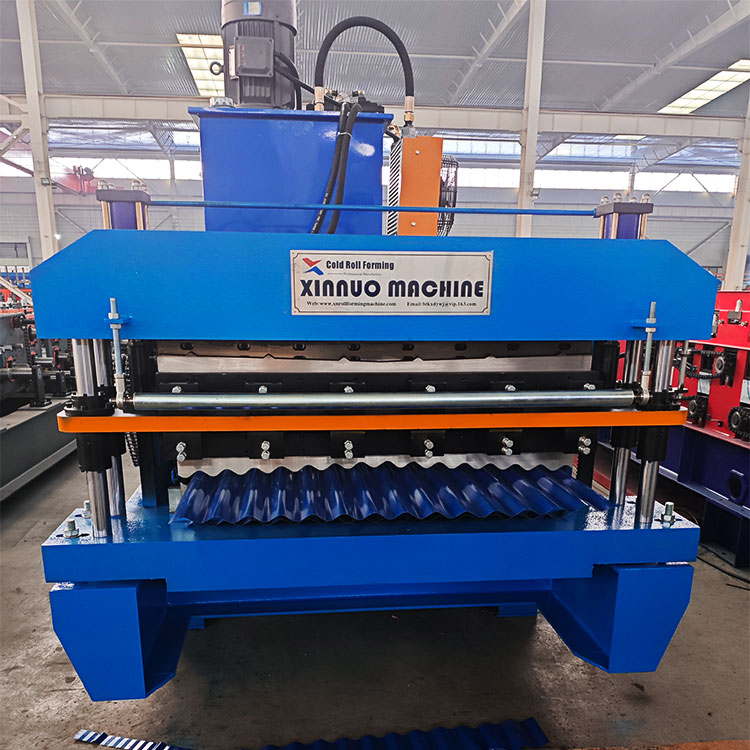



♦ COMPANY PROFILE:
Hebei Xinnuo Roll Forming Machine Co., Ltd., not only produce different types of professional roll forming machines, but also develop intelligent automatic roll forming production lines, C&Z shape purline machines, highway guardrail roll forming machine lines, sandwich panel production lines, decking forming machines, light keel machines, shutter slat door forming machines, downpipe machines, gutter machines, etc.
Advantages of Roll Forming A Metal Part
There are several advantages of using roll forming for your projects:
- The roll forming process allows operations such as punching, notching, and welding to be performed in-line. Labor cost and time for secondary operations are reduced or eliminated, reducing part costs.
- Roll form tooling allows for a high degree of flexibility. A single set of roll form tools will make almost any length of the same cross-section. Multiple sets of tools for varying length parts are not required.
- It can provide better dimensional control than other competing metal forming processes.
- Repeatability is inherent in the process, allowing easier assembly of roll formed parts into your finished product, and minimizing problems due to “standard” tolerance build up.
- Roll forming is typically a higher speed process.
- Roll forming offers customers a superior surface finish. This makes roll forming an excellent option for decorative stainless steel parts or for parts requiring a finish such as anodizing or powder coating. Also, texture or pattern can be rolled into the surface during forming.
- Roll forming utilizes material more efficiently than other competing processes.
- Roll formed shapes can be developed with thinner walls than competing processes
Roll forming is a continuous process which converts sheet metal into an engineered shape using consecutive sets of mated rolls, each of which makes only incremental changes in the form. The sum of these small changes in form is a complex profile.