

Product Description of Trapezoidal Single Board Forming Machine
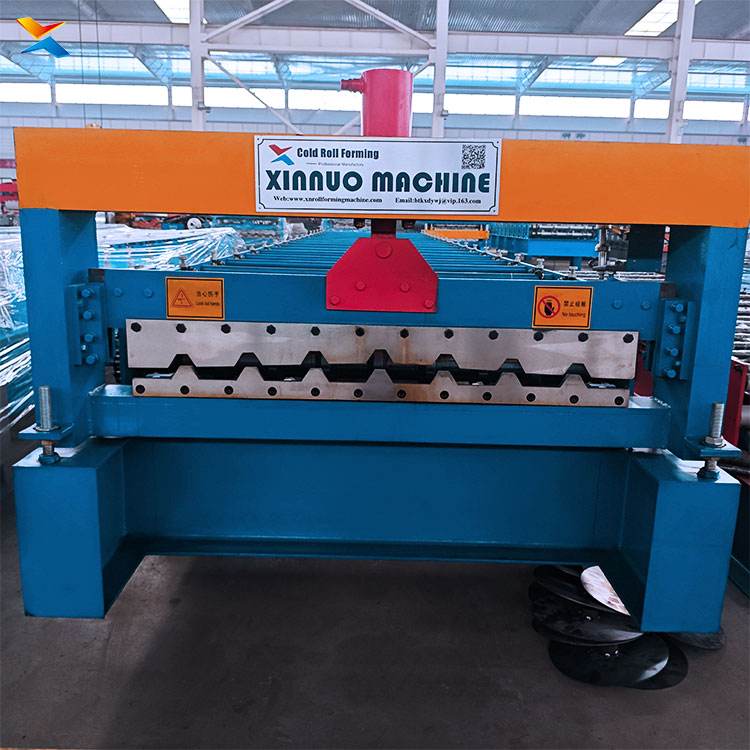
The trapezoidal single board forming machine (also known as trapezoidal tile press or trapezoidal cold bending forming machine) is an automatic production equipment specially designed for cold bending forming of metal sheets. Its core function is to process metal coils such as color-coated steel sheets, galvanized sheets and aluminum-magnesium-manganese coils into trapezoidal cross-section building single boards in one go through a multi-pass continuous roll forming process. It is widely used in the roof and wall enclosure systems of various industrial and civil buildings, serving as core equipment in modern metal building material production. It integrates multiple advantages including high-efficiency mass production, high-precision forming and easy operation, adapting to both large-scale production and personalized customization needs.
I. Core Structure and Working Principle
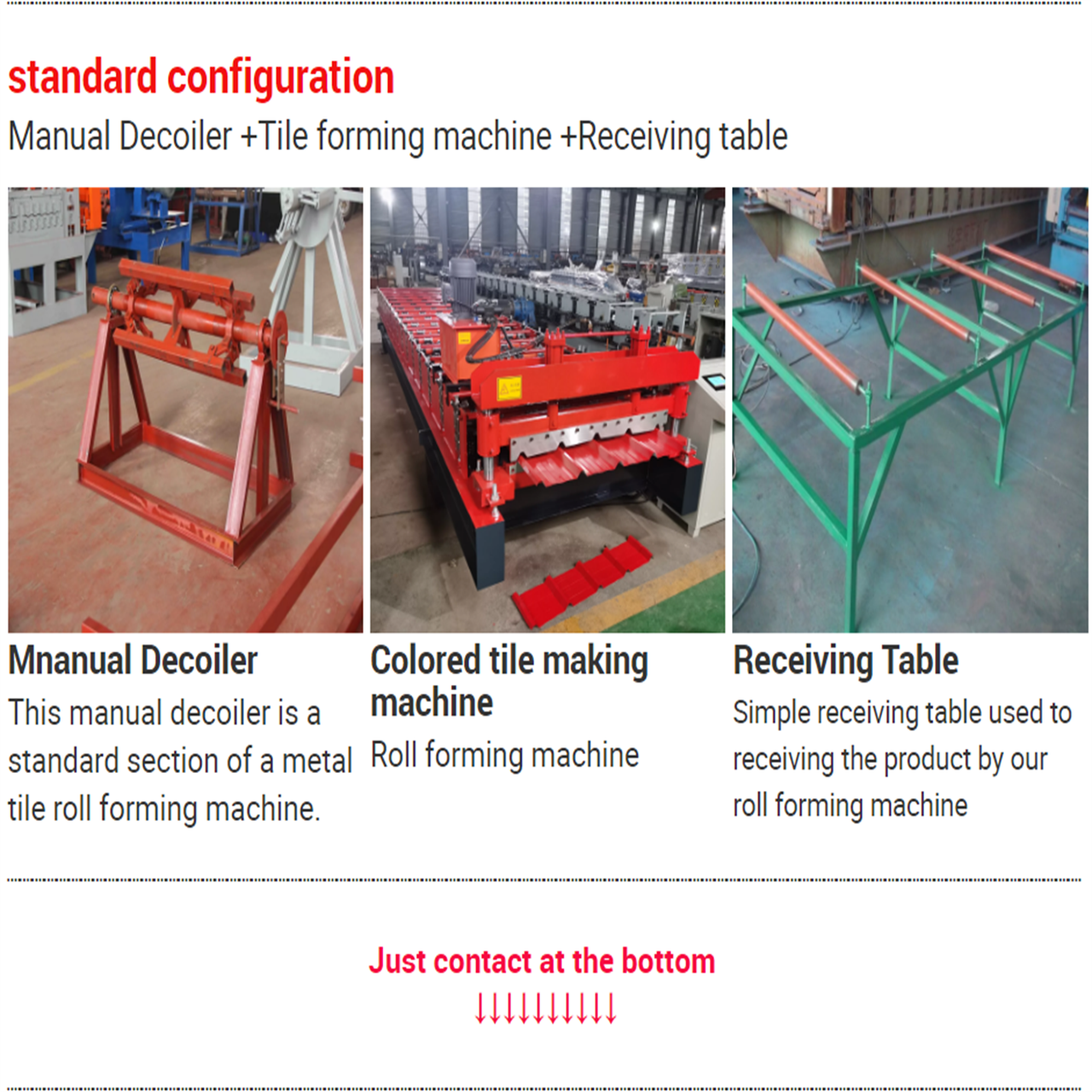
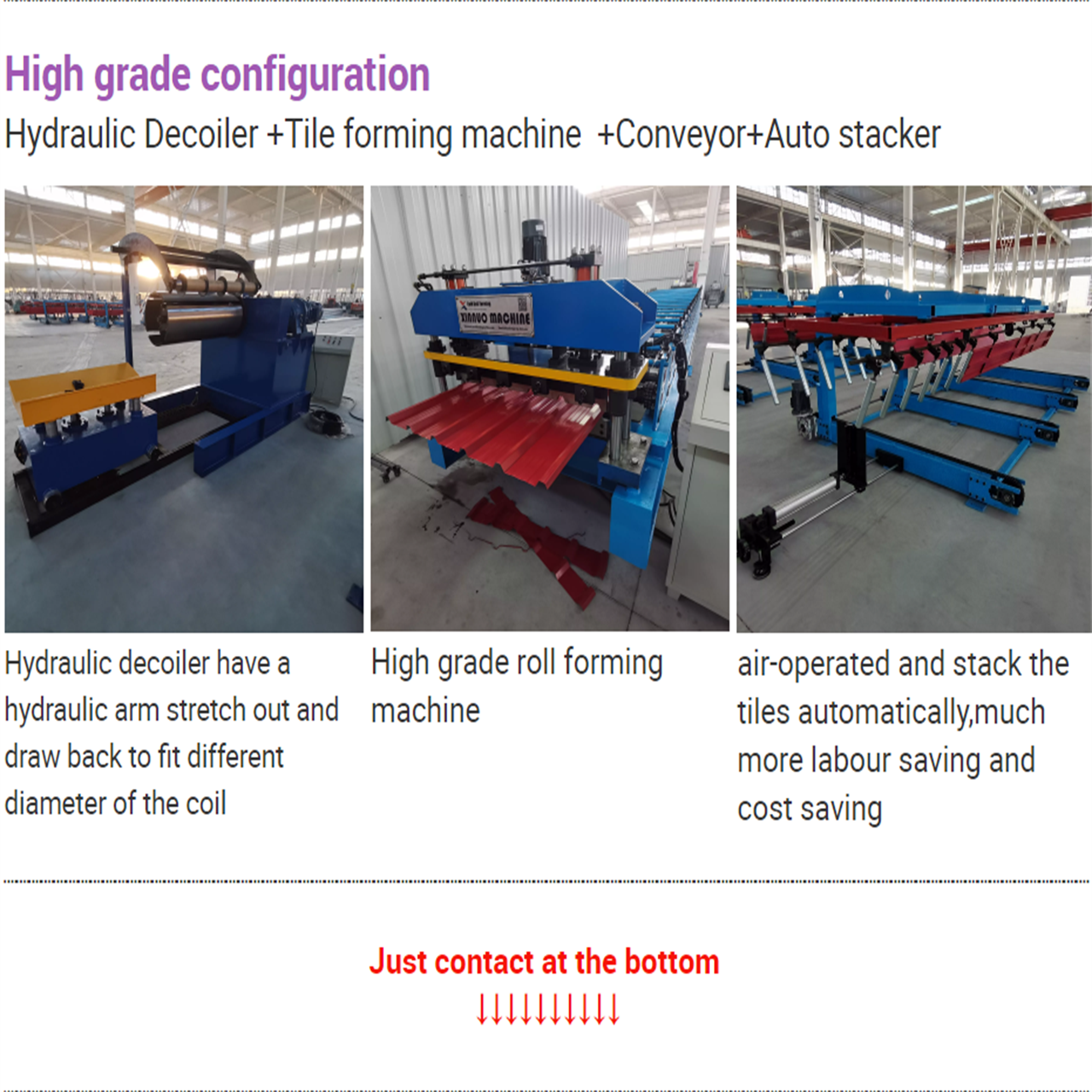
The whole equipment consists of five core components: feeding guide platform, forming main machine, shearing system, hydraulic station and PLC control system. All modules work together to realize the full-process automatic operation from raw material input to finished product output. Based on cold bending forming technology without high-temperature heating, the working principle is as follows: metal coils are smoothly fed into the forming main machine through the uncoiler, gradually rolled and shaped into the preset trapezoidal cross-section by 13-22 passes of high-strength rolls, then cut to a fixed length by the hydraulic or servo tracking shearing system, and finally output trapezoidal single boards with uniform specifications and flat surfaces. The whole process requires no manual intervention, effectively avoiding errors and losses caused by manual operation.
II. Core Performance and Technical Advantages
(1) High-Precision Forming with Stable and Controllable Quality
It adopts Cr12MoV alloy molds combined with vacuum quenching technology, matched with rolls precision-machined from high-quality 45# steel. After hard chrome plating, the hardness can reach 55-58HRC, featuring strong wear resistance and not easy to deform. This ensures that the surface of the sheet has no scratches or waves during the forming process, the trapezoidal cross-section size is uniform, the error of wave peak height and peak spacing is ≤±0.5mm, and the splicing and meshing are tight, fundamentally solving hidden dangers such as roof water seepage and leakage. The scientific ratio of forming passes ensures uniform force and sufficient stress release of the sheet, and the finished product has strong rigidity, excellent bending resistance and wind load resistance, which can meet the structural requirements of different buildings.
(2) Fully Automatic Control for High Efficiency and Labor Saving
It is equipped with an imported or well-known brand PLC control system and a 7-inch touch screen, which realizes intelligent parameter setting, automatic counting, fault alarm and other functions. The operation is simple and easy to learn, and ordinary workers can get on the job after simple training. The feeding, forming, cutting and other links are fully automated, which greatly improves production efficiency, reduces labor costs, and avoids the influence of human factors on product quality. At the same time, it supports stepless speed regulation, which can adjust the production speed according to actual needs, further improving production flexibility and adaptability.

♦ COMPANY PROFILE:
Hebei Xinnuo Roll Forming Machine Co., Ltd., not only produce different types of professional roll forming machines, but also develop intelligent automatic roll forming production lines, C&Z shape purline machines, highway guardrail roll forming machine lines, sandwich panel production lines, decking forming machines, light keel machines, shutter slat door forming machines, downpipe machines, gutter machines, etc.
Advantages of Roll Forming A Metal Part
There are several advantages of using roll forming for your projects:
- The roll forming process allows operations such as punching, notching, and welding to be performed in-line. Labor cost and time for secondary operations are reduced or eliminated, reducing part costs.
- Roll form tooling allows for a high degree of flexibility. A single set of roll form tools will make almost any length of the same cross-section. Multiple sets of tools for varying length parts are not required.
- It can provide better dimensional control than other competing metal forming processes.
- Repeatability is inherent in the process, allowing easier assembly of roll formed parts into your finished product, and minimizing problems due to “standard” tolerance build up.
- Roll forming is typically a higher speed process.
- Roll forming offers customers a superior surface finish. This makes roll forming an excellent option for decorative stainless steel parts or for parts requiring a finish such as anodizing or powder coating. Also, texture or pattern can be rolled into the surface during forming.
- Roll forming utilizes material more efficiently than other competing processes.
- Roll formed shapes can be developed with thinner walls than competing processes
Roll forming is a continuous process which converts sheet metal into an engineered shape using consecutive sets of mated rolls, each of which makes only incremental changes in the form. The sum of these small changes in form is a complex profile.


