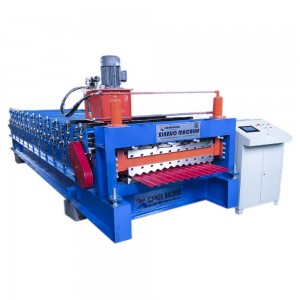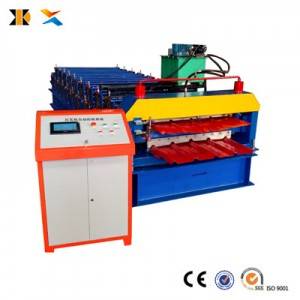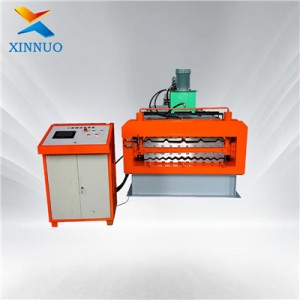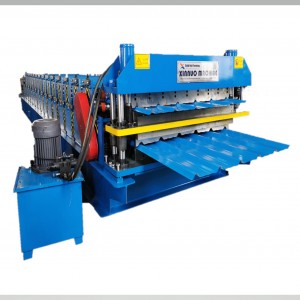



Double-Layer Single-Sheet Forming Machine Details
- Main Components
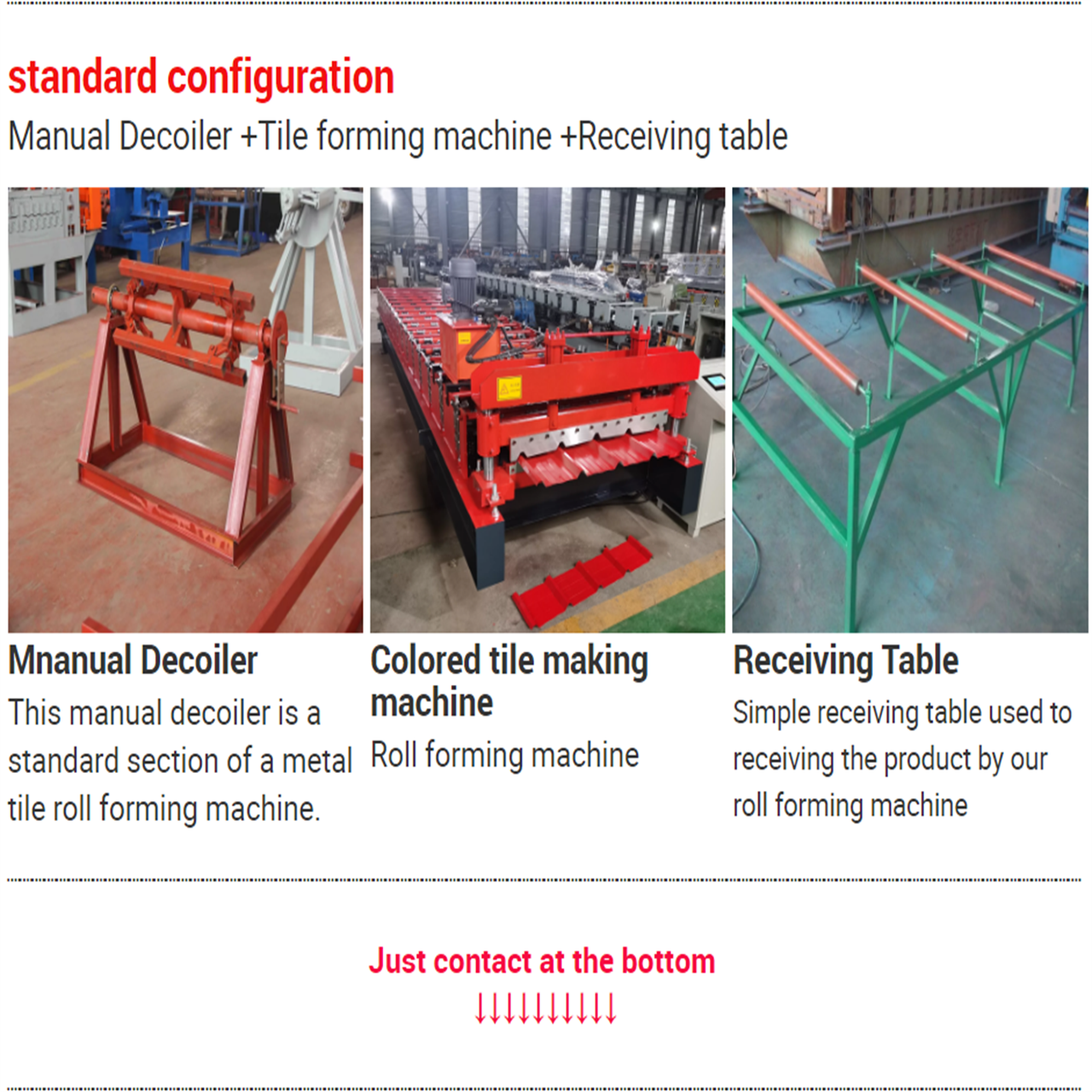
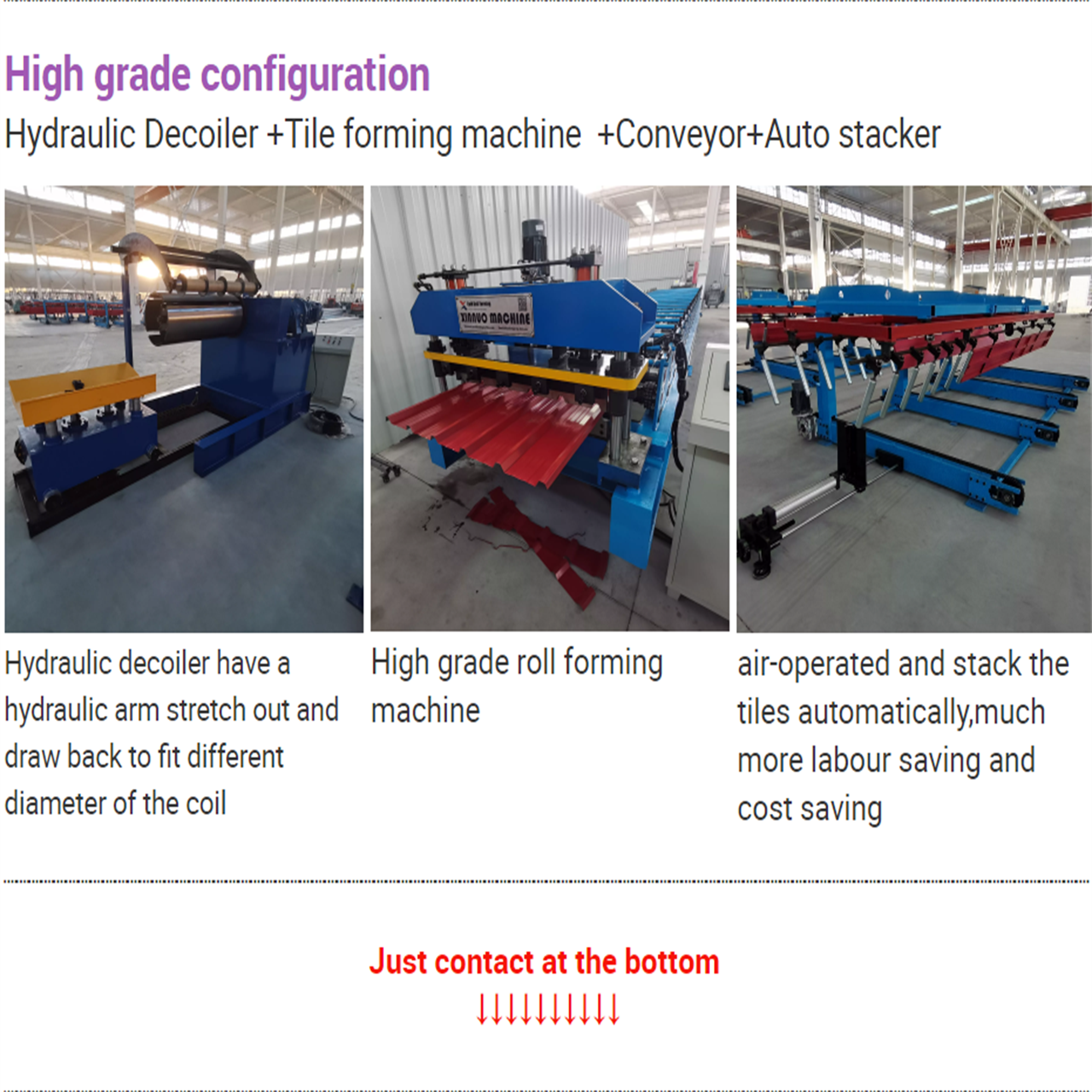
- Uncoiler: Serves as the feeding mechanism to precisely unwind metal coils (e.g., steel coils, aluminum coils) and provide continuous sheet supply for subsequent processing.
- Leveling Device: Levels the unwound metal sheets to ensure flat surfaces free from bending or warping, laying a solid foundation for forming.
- Pre-shearing Unit: Precisely cuts the leading edge of metal sheets for neat and consistent starting ends before entering the forming system.
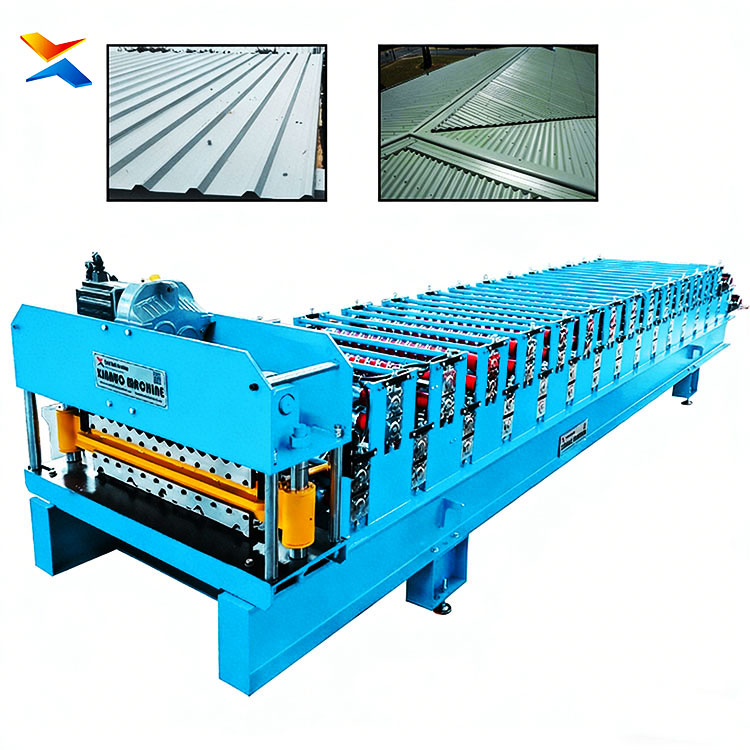
- Double-Layer Roll Forming System: The core part of the machine, composed of two sets of forming rolls. It simultaneously forms the upper and lower layers of sheets through multiple rolling processes, turning flat sheets into desired complex shapes.
- Hydraulic Cutting Unit: After forming, it precisely cuts the double-layer sheets to preset lengths via hydraulic power, ensuring finished products meet size requirements.
- Discharge Table: Receives formed and cut double-layer sheets, facilitating stacking, collection, and subsequent handling by workers.
- PLC Control System: The control center of the machine. It accurately controls parameters like running speed, forming pressure, and cutting length, enabling automated operation and fault diagnosis.
- Equipment Features
- High Efficiency: Produces two panel layers in one run, significantly improving efficiency compared with traditional single-layer machines.
- Multi-purpose: Some models can produce double-layer sheets of different specifications and shapes by changing molds or adjusting parameters, meeting diverse production needs.
- High Automation: Equipped with a PLC control system for automated operation, reducing manual intervention and enhancing production precision and stability.
- Space-Saving: The double-layer design integrates the functions of two single-layer machines into one, covering a small footprint and optimizing factory layout and space utilization.
- Technical Parameters
- Processable Materials: Common materials include color-coated steel plates, galvanized steel plates, aluminum plates, etc. For example, some models are applicable to PPGI, GI, aluminum, etc.
- Material Thickness: Generally handles metal sheets with a thickness of 0.28–0.8mm; the applicable range varies by model.
- Sheet Width: For instance, the input width can reach 1200mm, and the formed width is 1000mm.
- Production Speed: Usually 12–18m/min, depending on the equipment model and sheet specifications.
- Power: The total power varies by model; e.g., some models have a total power of 3+3KW.
- Application Fields
Widely used in the construction industry for roofing and wall enclosure structures of factories, warehouses, gymnasiums, etc. It is also applied in the production of insulation boards for HVAC systems and sheet processing in home appliance manufacturing, transportation, and other industries.

♦ COMPANY PROFILE:
Hebei Xinnuo Roll Forming Machine Co., Ltd., not only produce different types of professional roll forming machines, but also develop intelligent automatic roll forming production lines, C&Z shape purline machines, highway guardrail roll forming machine lines, sandwich panel production lines, decking forming machines, light keel machines, shutter slat door forming machines, downpipe machines, gutter machines, etc.
Advantages of Roll Forming A Metal Part
There are several advantages of using roll forming for your projects:
- The roll forming process allows operations such as punching, notching, and welding to be performed in-line. Labor cost and time for secondary operations are reduced or eliminated, reducing part costs.
- Roll form tooling allows for a high degree of flexibility. A single set of roll form tools will make almost any length of the same cross-section. Multiple sets of tools for varying length parts are not required.
- It can provide better dimensional control than other competing metal forming processes.
- Repeatability is inherent in the process, allowing easier assembly of roll formed parts into your finished product, and minimizing problems due to “standard” tolerance build up.
- Roll forming is typically a higher speed process.
- Roll forming offers customers a superior surface finish. This makes roll forming an excellent option for decorative stainless steel parts or for parts requiring a finish such as anodizing or powder coating. Also, texture or pattern can be rolled into the surface during forming.
- Roll forming utilizes material more efficiently than other competing processes.
- Roll formed shapes can be developed with thinner walls than competing processes
Roll forming is a continuous process which converts sheet metal into an engineered shape using consecutive sets of mated rolls, each of which makes only incremental changes in the form. The sum of these small changes in form is a complex profile.